Pune
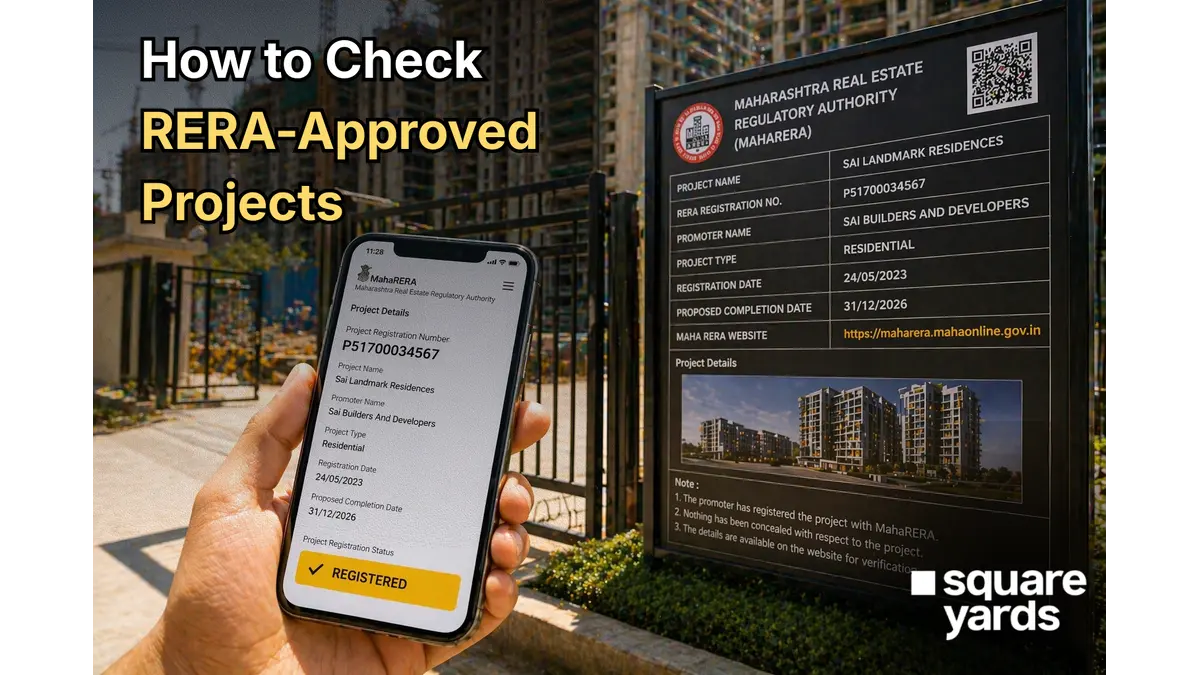
Since its enactment in 2016, the Real Estate (Regulation and Development) Act — commonly known as RERA — has transformed India’s real estate landscape. Buyers now have a powerful tool to verify projects, ensure builder accountability, and protect their investments.
This guide explains exactly how to check if a project is RERA approved, what information you can access, and also clarifies the critical difference between a Sale Agreement vs Sale Deed — two documents at the heart of every property transaction.
RERA mandates all residential real estate projects with more than 8 apartments or exceeding 500 sq. mt. of land to be registered with the state RERA authority before launch. This protects buyers by ensuring:
Each state has its own RERA authority and portal. Key portals include:
|
State |
RERA Portal |
|
Maharashtra (MahaRERA) |
maharerait.maharashtra.gov.in |
|
Delhi (DRERA) |
rera.delhi.gov.in |
|
Karnataka (K-RERA) |
rera.karnataka.gov.in |
|
Haryana (HARERA) |
haryanarera.gov.in |
|
UP (UPRERA) |
up-rera.in |
|
Gujarat (GUJRERA) |
gujrera.gujarat.gov.in |
|
Tamil Nadu (TNRERA) |
tnrera.in |
|
Telangana (TSRERA) |
rera.telangana.gov.in |
On the portal’s homepage, navigate to ‘Registered Projects’ or ‘Search Projects.’ You can search by:
Once you find the project, verify:
|
Always cross-check the RERA number on the developer’s brochure, advertisements, and agreement — it should match the registration on the portal exactly. |
Two documents that every property buyer must understand are the Sale Agreement (Agreement to Sell) and the Sale Deed. These are often confused but serve very different legal purposes.
|
Feature |
Agreement to Sell / Sale Agreement |
Sale Deed |
|
Definition |
Contract to sell in the future on agreed terms |
Final transfer of ownership |
|
Legal effect |
Creates a right to sell, not ownership transfer |
Transfers legal title to the buyer |
|
Registration |
Optional but advisable |
Mandatory at the Sub-Registrar’s office |
|
Stamp Duty |
Nominal (varies by state) |
Full stamp duty applicable |
|
Timing |
Signed at the beginning of the deal |
Signed at the conclusion of the deal |
|
Can it be cancelled? |
Yes, with penalty clauses |
Very difficult to reverse |
|
Possession transfer? |
No (usually) |
Yes, possession transfers with the deed |
Deed of Assignment: Used when the original buyer of an under-construction flat transfers their rights to a new buyer before possession. The builder’s NOC is usually required.
Sale and Purchase Agreement: A comprehensive agreement signed in most jurisdictions that combines the terms of sale with the commitment to complete, — similar to India’s Agreement to Sell.
|
Browse RERA-registered projects across India on SquareYards.com. Every listing is verified for legal compliance, builder credibility, and construction status. |
Yes, for residential projects with more than 8 units or land exceeding 500 sq. mt. Some states have extended this to all projects. Commercial projects are also covered.
No. Selling, advertising, or collecting booking amounts before RERA registration is illegal and can lead to penalties up to 10% of the project cost.
An agreement to sell is a promise to transfer ownership in the future on agreed conditions. A sale deed is the actual legal instrument that transfers ownership, and it must be registered.
Enter the registration number on the official state RERA portal. The project details, builder name, completion date, and approved plans will match what the builder has shown you.
Buyers can claim interest at the SBI MCLR rate + 2% for every month of delay. Alternatively, buyers can seek a full refund with interest by filing a complaint on the RERA portal.