Pune
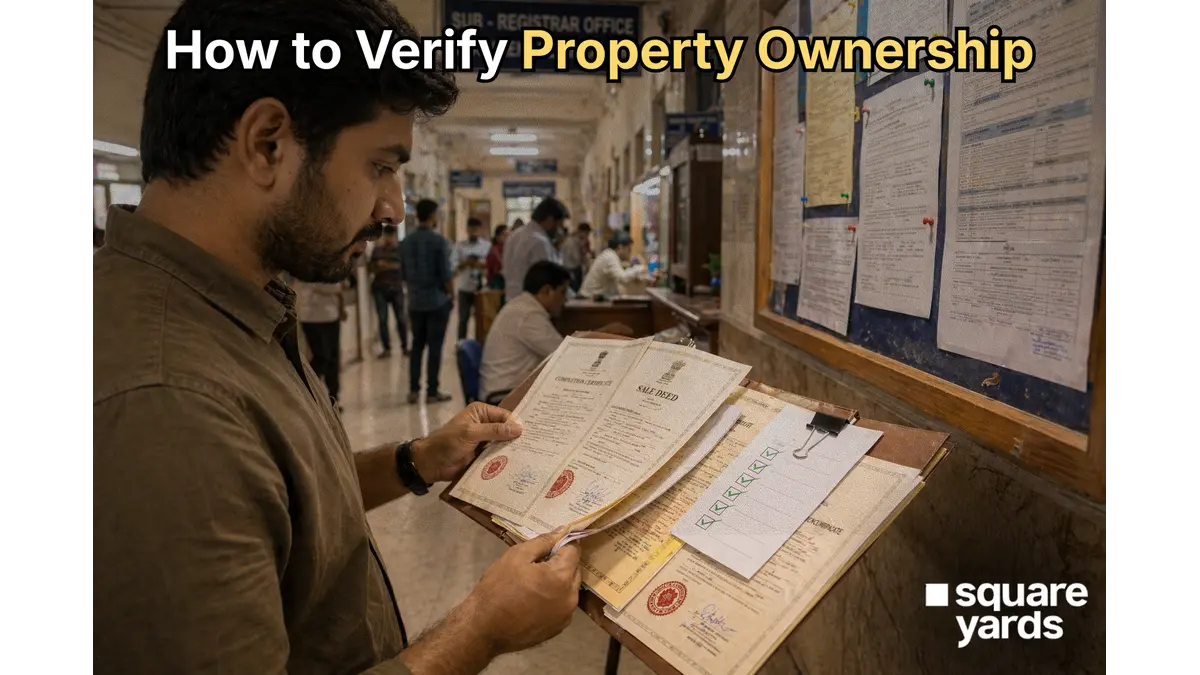
Property fraud is one of India’s most prevalent financial crimes. Duplicate sale deeds, forged ownership documents, and impersonation by fraudulent sellers have cheated thousands of buyers out of crores. Knowing how to verify property ownership before you sign or pay anything is your first and most powerful defence.
This guide provides a thorough, step-by-step approach to verifying property ownership — both online and offline — across India.
Every state maintains digitised land records accessible to the public. These records show the registered owner, survey details, and land use.
|
State |
Land Records Portal |
Record Type |
|
Maharashtra |
mahabhulekh.maharashtra.gov.in |
7/12, Property Card |
|
Karnataka |
bhoomi.karnataka.gov.in |
RTC (Pahani) |
|
UP |
upbhulekh.gov.in |
Khatauni, Khasra |
|
Rajasthan |
apnakhata.raj.nic.in |
Jamabandi |
|
MP |
mpbhulekh.gov.in |
Khasra, Khatauni |
|
Gujarat |
anyror.gujarat.gov.in |
7/12, 8A |
|
Punjab/Haryana |
jamabandi.nic.in |
Fard, Mutation |
The Index II from the Sub-Registrar’s office is a critical document listing all registered transactions on a property. You can access this at:
Search by property address, survey number, or owner name. The Index II shows all sale deeds, mortgages, gifts, and releases registered on the property.
An EC from the Sub-Registrar’s office shows all financial transactions (loans, mortgages, liens) registered against the property for a specified period. Request at least 15 years of EC for any property.
If buying from a company or builder, verify ownership through the MCA21 portal (mca.gov.in) to confirm the company is solvent, active, and the authorised representative has power of attorney.
|
Always request original documents, not photocopies. Verify the owner’s identity by cross-checking Aadhaar and PAN details with the documents. |
Check for a registered Will, Probate, or Succession Certificate. All legal heirs must sign the sale deed — partial consent is insufficient.
Verify the Power of Attorney (PoA) is registered, notarised, and attested by the Indian Embassy or Consulate. Confirm the NRI’s identity through passport and OCI/PIO card.
Search the e-Courts portal (ecourts.gov.in). Any court order on the property will appear here. Do not proceed with the purchase until litigation is fully resolved.
|
SquareYards verifies the ownership and legal status of listed properties through its dedicated legal team. Explore verified listings at SquareYards.com and buy with confidence. |
Yes. State land records portals allow free public access to ownership records. Sub-Registrar portals charge nominal fees for Index II and EC.
This is a serious red flag. Mutation may not be completed. Investigate further — the seller may not have legal ownership, or the transfer may be disputed.
Check for a government-issued Land Use Conversion Order. Agricultural land can only be sold for residential/commercial use after official conversion, which must appear in the title chain.
No. A PoA authorises someone to act on behalf of the owner but does not transfer ownership. Always verify that the actual owner is the registered holder and obtain their consent.
Contact the Sub-Registrar’s office where the document was originally registered. A certified copy of the sale deed can be obtained for a fee — this is legally equivalent to the original.