
The Union Budget 2026 marks a decisive shift in India’s economic approach, from short-term support to long-term structural growth. For the real estate sector, this transition matters more than any single tax relief or housing scheme. It positions housing as a natural outcome of infrastructure expansion, industrial development and urban transformation.
Instead of treating real estate as a standalone industry, the Budget integrates it into a broader economic framework. Infrastructure investment, manufacturing growth, urban planning reforms, and financial market deepening together shape the next phase of property demand.
Infrastructure remains the primary catalyst. Continued spending on highways, freight corridors, metro rail networks and multimodal connectivity is expanding the physical reach of cities. As travel time decreases, residential demand shifts toward well-connected outer areas and emerging corridors. This decentralisation creates new residential micro-markets, improves affordability and eases pressure on crowded urban cores.
The concept of City Economic Regions strengthens this model. By aligning employment centres, transport infrastructure, and civic services within defined growth corridors, development is likely to spread more evenly rather than clustering in a single city centre. Over time, this planning approach can stabilise both residential and commercial property demand.
The Budget’s push towards manufacturing and industrial clusters is another important driver. Textile parks, logistics hubs and mineral-based zones are expected to generate employment across Tier-II and Tier-III cities. Each new industrial cluster creates sustained demand for ownership and rental housing, helping distribute real estate growth beyond metros and building healthier regional markets.
Financial market reforms further support the sector. Greater backing for REITs, corporate bonds and municipal bonds improves long-term capital access. When cities can raise funds independently for infrastructure, project execution becomes faster and more predictable. Lower uncertainty benefits developers and builds confidence among homebuyers and investors alike.
Coordination between the Centre and State authorities also plays a role in reducing regulatory risk. More predictable approvals and funding mechanisms improve project viability and market stability.
Sustainability is emerging as a core theme. Energy-efficient homes, responsible construction practices and long-term operating savings are increasingly influencing buyer choices. What was once a value addition is now becoming a central factor in residential and commercial development decisions.
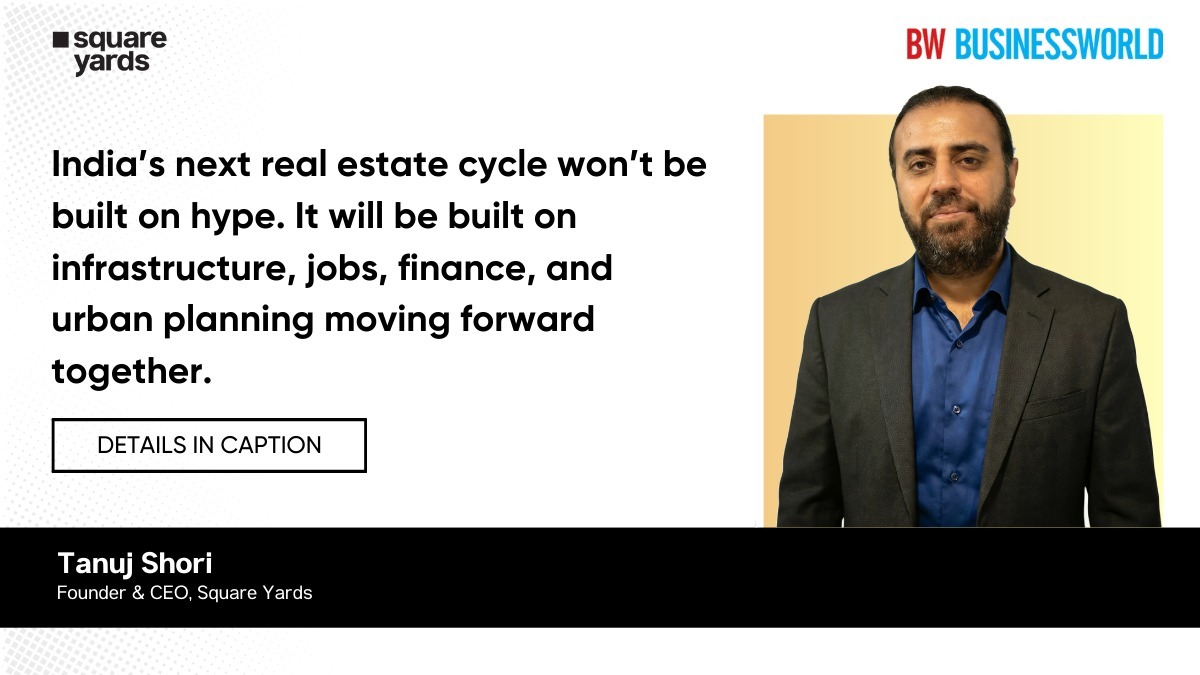
As Tanuj Shori, Founder and CEO of Square Yards, notes, “Union Budget 2026 positions housing not as a standalone policy area, but as an outcome of infrastructure growth, job creation and financial stability. When employment, connectivity and urban planning move together, real estate demand becomes more durable and less dependent on short-term incentives.”
Overall, Union Budget 2026 lays the foundation for a more stable, infrastructure-led and employment-backed housing cycle. Growth is expected to be driven by genuine demand emerging from stronger cities, expanding industrial corridors and improving financial systems. Rather than relying on temporary stimulus, India’s property market is now aligned with deeper structural reforms that can shape the next phase of urban expansion.
Read more-
BW Businessworld: https://bit.ly/4a6CU5c
Published Date: Feb 10, 2026