For NRIs, investing in Indian real estate can be rewarding, but it demands careful groundwork. The first priority is due diligence: ensuring clear title, verifying builder approvals, and understanding state-specific stamp-duty rules. Many compliance issues also arise at the purchase stage, particularly with TDS deductions, FEMA reporting, and cross-border disclosure. A structured checklist and professional guidance often help avoid common lapses.
Managing property from abroad presents its own challenges. NRIs frequently struggle with maintenance transparency and end up accepting below-market rents. Digital property-management platforms, rental-benchmarking tools, and standardized service reports can improve visibility and strengthen negotiations. Before selling, it is equally important to prepare proper documentation, obtain certified valuations, and plan taxes in advance to ensure smooth repatriation of funds.
Meanwhile, the Indian real-estate sector itself is adjusting to revised labour-law compliance requirements. Developers view this as a gradual transition, one that calls for improved documentation, stronger HR systems, and clearer contractor oversight. Some uptick in administrative costs and short-term scheduling adjustments is expected. Yet, as practices become more uniform, the industry anticipates steadier workflows and more predictable project timelines.
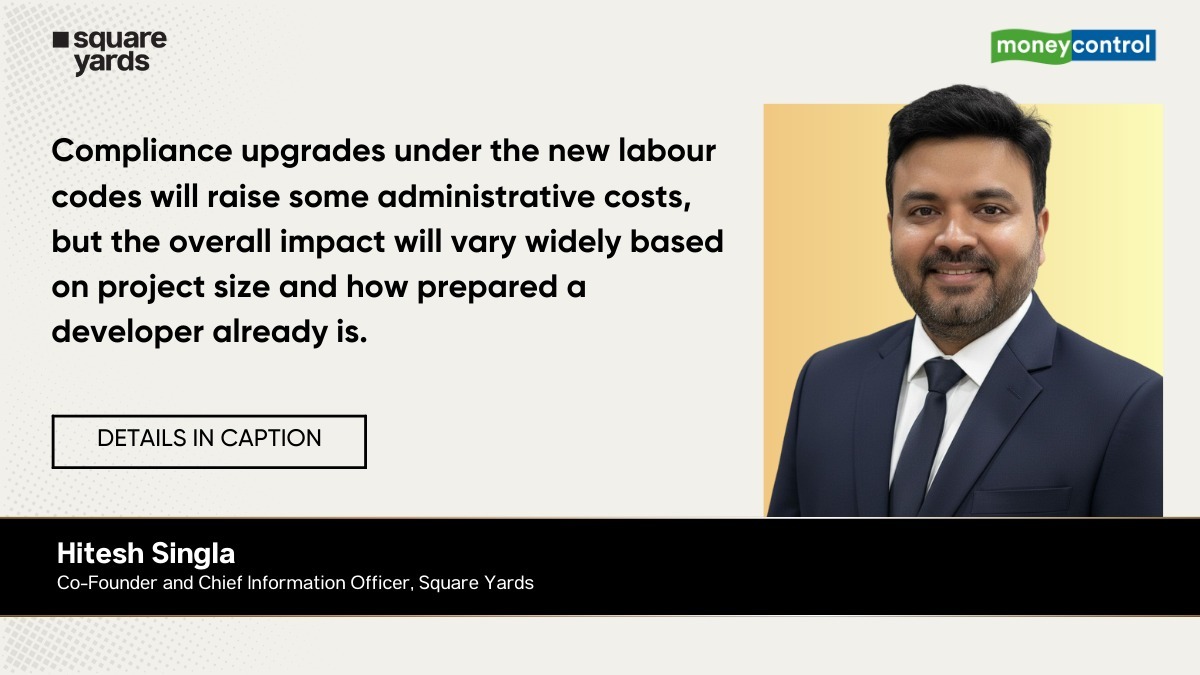
Hitesh Singla, Co-Founder and Chief Information Officer at real estate consultancy firm Square Yards, said that companies are currently assessing the clarity and applicability of the new provisions across diverse project scales.
Singla said that the potential impact on costs is being evaluated, and most stakeholders expect some level of adjustment during the initial transition.
Read more-
Moneycontrol Hindi: https://bit.ly/48gWR7a
Published Date: 28 Nov, 2025