
Forget the dull details of foreign direct investment. This huge influx of capital is actively changing cities and controlling economic futures. Indian property has transformed into a high-performance, appealing asset for global buyers in 2025.
What was the breaking point? The moment policy clarity finally defeated bureaucratic confusion. This flow of capital isn’t just funding projects; it’s enforcing new standards, demanding faster builds, and driving the strategic search for the best investment opportunities in real estate in India.
Here, we simplify the rules, map out exactly where this powerful money is landing, and show the true impact of foreign direct investment in India.
Table of contents
The End of “Wait and Watch”: Why the FDI in India Surged
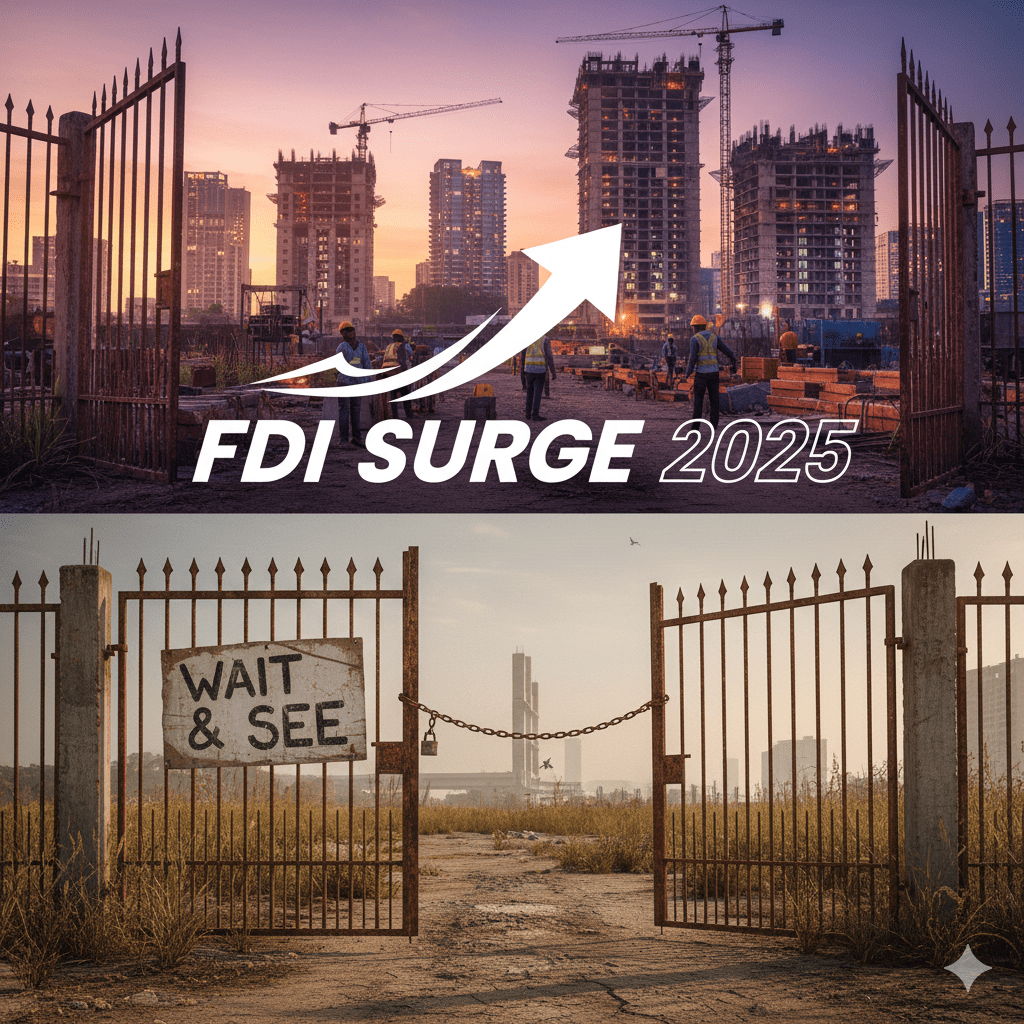
For years, investing in Indian property meant adopting a wait-and-watch approach. That era, however, is over. You might ask, “What is foreign direct investment?” It’s simply foreign capital, the long-term kind, often coming as equity investment, that commits to the success of a development or company.
The Real Advantage: More Than Just Cash
The market’s reliability didn’t appear by accident; it’s a policy victory. The relaxation of the foreign direct investment policy in India created the runway for growth.
The core advantages of foreign direct investment are operational, not just financial:
- Global Pressure: Overseas funds enforce world-class standards, demanding better project management and global accountability.
- The Development Boom: Large-scale projects backed by this capital accelerate infrastructure development and flood local job markets with reliable employment.
- Sector Hardening: Stable, multi-year funding solidifies key segments, making the commercial and warehousing sectors resilient to minor market shocks.
This renewed investor confidence in India 2025 is rooted in a fundamental truth: the market has traded mere speculation for predictable, measurable returns.
Following the Giants: Where FDI in India Lands Now
The Indian real estate market 2025-26 is currently operating with a laser focus. Foreign direct investment in Indian real estate isn’t scattered widely, but it’s focused on targets that guarantee predictable returns. This surgical approach is what defines India’s real estate sector growth in 2025.

1. The Undisputed King: Commercial Property
High-quality office spaces, such as Grade A assets, are the primary attraction, soaking up billions across major cities.
- Strong Returns: Leases are secure, and demand remains relentless because global tech and service hubs continue their expansion.
- REITs: A REIT (Real Estate Investment Trust) is like a mutual fund for property. It allows global funds to buy a low-risk share of highly profitable, fully leased buildings without having to manage the construction chaos.
2. The New Frontier: Logistics and Data Centres
Fuelled by the boom in e-commerce and by changes in manufacturing, this area is no longer a niche but a central, powerful part of the market.
- Logistics: The e-commerce explosion requires vast, high-tech warehouses near highways and ports. This segment offers scalable land and clear, long-term leasing cycles.
- Data Centres: Secure data facilities are critical, given the vast storage demands of AI and cloud services. Foreign investor groups highly value these deals because tenants typically sign 15- to 20-year contracts, securing income stability for decades.
3. Stability in Scale: Homes and Greenfield Investment
The housing market is appealing where developers commit to transparent practices and strong compliance.
- Mid-Income Housing: Consistent demand keeps the segment active. Better rules mean projects are less messy and more predictable than before.
- Greenfield Projects: These are large-scale projects (such as a large township) built from scratch. It appeals to investors who want to integrate modern design and sustainable features right from the very beginning.
Ending Red Tapism: How the Rules Got Simple for FDI in India

The confidence of the foreign investor hinges on regulatory clarity. The government has focused on establishing consistent rules, primarily through two main routes for foreign direct investment in India.
The Two Ways to Invest
The rules for FDI in construction development determine how you enter the market:
|
Route Type |
Where It Applies |
What It Means for Investors |
|
Automatic Route FDI |
Used for most construction, finished buildings, and REIT-linked holdings (allows 100 per cent foreign ownership). |
Provides the quickest entry and requires the least paperwork. This is the standard path. |
|
Government Approval Route for FDI |
Used for projects on restricted land or requiring special permission. |
Requires a brief review by government authorities before funds can be released. |
It’s vital to know that FDI limits in different sectors are mostly stable, allowing 100 per cent foreign ownership in construction. However, specific FDI-prohibited sectors in India remain closed to stop speculation (e.g., land trading and brokerage).
What Investors Must Still Watch Out For
While the system is much cleaner, investors must still plan for a few issues that can affect project timing:
- Thorough Checks (Due Diligence): Even with better digital systems, checking land titles and ownership records can vary by state. A thorough, independent legal review is still essential before committing money.
- Local Delays: While national rules are clear, getting local construction and environmental permits from municipal bodies can still cause unexpected delays.
- Currency: Since property projects take years, investors must monitor currency changes and global interest rates, as these can affect the final profit margin.
Final Word: Growth Is Now Locked In
India’s real estate sector growth in 2025 is defined by predictability. Foreign direct investment in Indian real estate has reached a strategic tipping point where long-term money is committed because the rules are dependable, the demand is real, and the policy framework is supportive.
The key message for any foreign investor is that the risks are now measurable, and the reward is substantial. With stable office leasing, clear housing delivery, and high momentum in logistics, the foundation for multi-year capital commitment is stronger than it has ever been.
Frequently Asked Questions
What does Foreign Direct Investment in Indian real estate mean?
It’s simply long-term foreign money coming into India. Unlike quick stock market bets, FDI is patient capital committed to real-world projects, such as building an office tower or a massive warehouse. It’s about securing a lasting stake in the property market’s success.
Why is the Indian market safer for international funds in 2025?
The stability comes from clear rules. When regulatory bodies overcome legal delays and ensure transparency, the government has significantly reduced bureaucratic friction and clarified India’s foreign direct investment policy, boosting investor confidence and making the market feel much more predictable.
Where is the FDI landing right now in real estate?
The capital is highly focused. It primarily flows into high-yield, stable assets like Grade A Commercial Offices in major metro hubs. The second biggest target is the Logistics and Data Centre segments, which offer multi-year, reliable contracts driven by e-commerce and digital growth.
Who are these foreign investors investing in India?
The money primarily comes from institutional giants: sovereign wealth funds (funds managed by foreign governments), pension funds (retirement money), and major global private equity firms. These groups prioritise assets that guarantee stable returns over the long term.
When did the rules actually become simpler?
The push for simplicity unfolded in phases from late 2024 through early 2025. Key changes, such as the digital streamlining of paperwork and clearer reporting standards, weren’t a single announcement but a series of updates that collectively made the process of obtaining FDI approvals faster and less complicated.