Mumbai
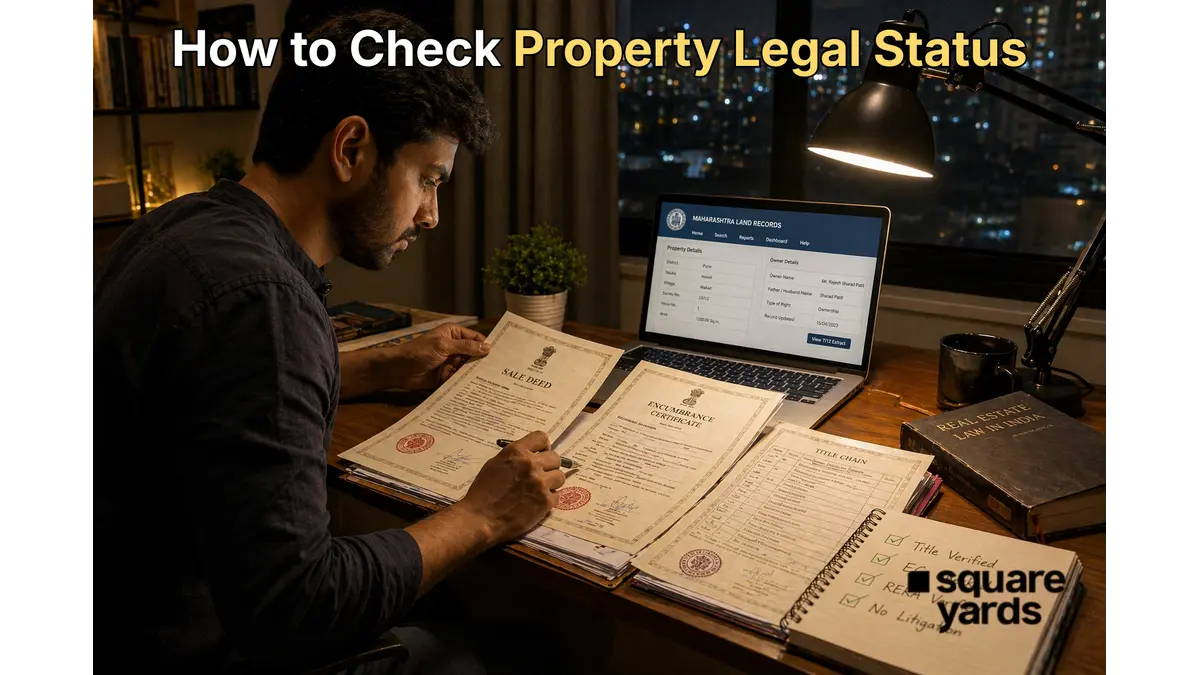
Before investing your hard-earned money in a property, knowing how to check if your property is legally clear is absolutely non-negotiable. Property fraud cases in India run into thousands annually, with buyers losing crores to disputed titles, encroachments, and illegal constructions.
This expert guide walks you through every method — online and offline — to verify a property’s legal status, ensuring you make a safe and informed purchase.
India’s property records are managed at the state level. Here are the key online portals for different states:
|
State |
Portal |
What You Can Check |
|
Maharashtra |
igrmaharashtra.gov.in |
Index II, Property Card, EC |
|
Delhi |
dlrc.delhi.gov.in |
Property records, mutation |
|
Karnataka |
kaveri.karnataka.gov.in |
EC, RTC, market value |
|
Tamil Nadu |
tnreginet.gov.in |
EC, document search |
|
UP |
igrsup.gov.in |
Sale deed, market value |
|
Telangana |
registration.telangana.gov.in |
EC, property details |
Request all sale deeds and title documents going back at least 30 years. An unbroken chain of ownership without gaps or disputes is the mark of a clean title.
The Encumbrance Certificate reveals all financial transactions registered against the property — mortgages, loans, liens, or pending liabilities. A property with no encumbrances will have a Nil EC.
For under-construction projects, check the RERA registration number on your state’s RERA portal. This confirms the project is legally approved and the developer is authorised to sell.
Search the e-Courts portal (ecourts.gov.in) using the property address or owner name to check if the property is involved in any civil or criminal litigation.
Verify that the building plan has been approved by the local municipal authority (BMC, GHMC, BBMP, etc.) and that construction is within approved limits.
Check 7/12 extracts (Maharashtra), RTC Pahani (Karnataka), or Jamabandi (North India) to confirm the land use classification (residential, agricultural, commercial).
|
Agricultural land converted for residential or commercial use requires a ‘Conversion Order’ from the revenue department. Without this, construction is illegal. |
|
SquareYards offers legal due diligence assistance through its network of trusted property lawyers. Connect with a legal expert before your next purchase at SquareYards.com. |
Visit your state’s land records or sub-registrar portal and search by survey number or owner name. The Encumbrance Certificate and property index are generally available free or at a nominal charge.
A clear title means the property has no pending loans, litigations, disputes, or encumbrances. The seller has undisputed legal ownership and the right to sell.
Visit igrmaharashtra.gov.in to check the Index II records and EC. Also, check the 7/12 extract on MahaRera or the Maharashtra land records portal.
Yes. The National e-Courts portal (ecourts.gov.in) allows you to search for civil and criminal cases using the owner’s name or property address to check for pending litigation.
Index II is a computerised document from the Sub-Registrar’s office listing all registered transactions — sale deeds, mortgages, gift deeds — on a property. It is a key tool for verifying legal status.