Squareyards Logo
DataIntelligence
New Advertise with us Sell or Rent Property
Login

What is Builder Floor Apartment

  • Author: Shivam Chanana Updated: 1 April 2026
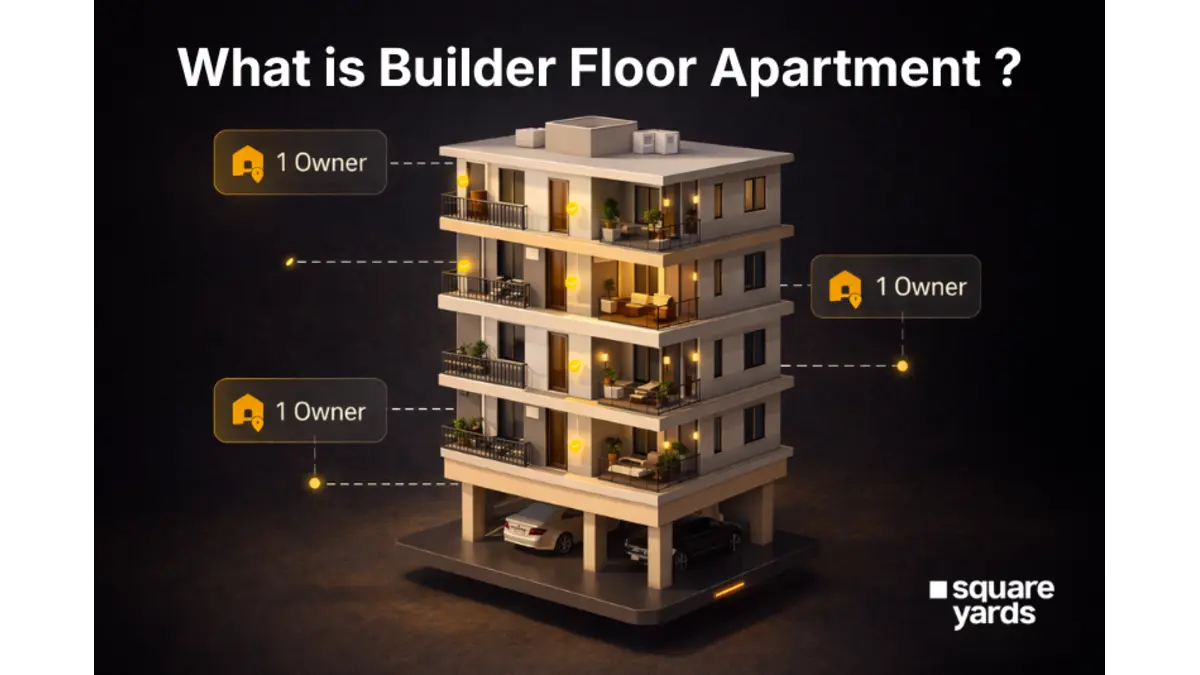
A builder floor apartment (also called an independent builder floor) is a residential unit occupying an entire floor of a low-rise building — typically a 3 to 4 storey stilt-plus-3 structure — where each floor is independently owned. Builder floors are common in Delhi NCR and offer villa-like privacy with apartment-level pricing, no society maintenance, and independent ownership of an entire floor.

A builder floor apartment is a type of low-rise residential unit where each floor of a building—typically a 3 to 4 storey structure—is independently owned and occupied by a single family. Unlike conventional high-rise apartments where multiple units share a floor, a builder floor gives you complete ownership and exclusive use of an entire floor in a stilt-plus-3 or ground-plus-3 building.

Builder floors are most popular and widely available in Delhi NCR markets—particularly in Gurugram, Noida, Ghaziabad, Faridabad, and residential colonies across South Delhi. They represent a unique hybrid between an independent house (villa) and a standard apartment—offering the privacy and independence of a house at a price point significantly lower than buying a standalone villa or plot in the same locality.

Builder floors are also referred to as “independent builder floors” and are increasingly offered by branded developers as premium low-rise residential alternatives in peri-urban growth corridors. This guide explains the complete meaning, structure, features, advantages, and buying considerations for builder floor apartments in India.

Step-by-Step Guide

  1. Understand the Builder Floor Structure: A builder floor is a multi-storey low-rise building (typically G+3 or stilt+3 — ground or stilt floor plus 3 upper floors) where each floor is a single, self-contained residential unit. The entire floor — all bedrooms, halls, kitchen, bathrooms, and balconies — belongs exclusively to one owner. There is no horizontal sharing of any space with neighbours on the same floor.
  2. Know How Builder Floors Differ from Apartments: In a high-rise apartment complex: multiple units exist on each floor, sharing lobbies, corridors, and lifts. In a builder floor: you own an entire floor — it is your exclusive space, exactly like owning the entire floor of a house. No shared walls (beyond floors and ceilings between units). Direct, often independent staircase access. No high-rise society maintenance charges.
  3. Understand Ownership and Legal Title: Builder floors are typically sold on a leasehold or freehold basis depending on the city. In Gurugram, most builder floors are sold on leasehold land (30–90 year lease from state authority). In Delhi’s residential colonies, they are often on freehold land. Verify land title, RERA registration (mandatory for new projects), and clear ownership chain before purchase.
  4. Check the Floor Plan and Configuration: Builder floors in Delhi NCR are typically 2 BHK, 3 BHK, or 4 BHK configurations with carpet areas ranging from 800 sq ft to 2,500+ sq ft. Premium builder floors in South Delhi localities can offer 3,000–5,000 sq ft per floor. Check floor plan for natural light, ventilation, bedroom placement, and kitchen/utility access.
  5. Evaluate Pricing vs Comparable Apartment: Builder floors command a significant pricing advantage over independent villas in the same locality while offering similar privacy and independence. In Gurugram sectors, a 3 BHK builder floor may be priced at ₹60–₹1.2 crore compared to ₹2–₹4 crore for an independent villa in the same sector. Ground floor units with terrace rights are typically priced 10–15% above upper floors.
  6. Verify RERA Registration and Builder Approvals: New builder floor projects with more than 8 units must be RERA-registered. Verify RERA number, sanctioned plan, completion certificate, and occupancy certificate for completed builder floors. In resale transactions, verify clear title, encumbrance certificate, and that all floors have been constructed as per approved plan.
  7. Assess Home Loan Eligibility: Banks offer home loans for builder floor apartments with RERA registration and clear land title. For leasehold land, some banks have specific restrictions — verify with your lender. Home loans are available up to 75–80% of property value for builder floors from leading banks including SBI, HDFC, ICICI, and Axis Bank.

Key Factors / Checklist

  • Entire floor (single unit per floor) occupancy confirmed in allotment
  • Land type — freehold vs leasehold — verified with documentation
  • RERA registration number verified on state portal
  • Approved floor plan matches actual construction
  • Staircase access — independent or shared — confirmed
  • Ground floor or top floor terrace rights documented
  • Parking allocation — covered or open — confirmed in agreement
  • No shared walls or corridors with neighbours confirmed
  • Water supply — municipal or tanker dependency — assessed
  • Backup power provision for the unit evaluated
  • Maintenance responsibility — independent or through RWA — clarified
  • Encumbrance certificate obtained for resale builder floor purchases

Expert Tips

  • Ground floor with terrace rights offers the best value: In most builder floors, the ground floor or stilt floor unit comes with a private terrace on top — essentially your own private rooftop. This is highly sought after and ideal for families with children or those who enjoy outdoor space.
  • South-facing builder floors have better natural light: Unlike high-rise apartments where orientation affects only a few rooms, in a builder floor the entire floor’s light quality is determined by its orientation. South or east-facing builder floors have natural light throughout the day.
  • Check the staircase design: In a 4-floor builder floor building, the staircase is the primary means of access. A well-designed, spacious marble or granite staircase significantly improves the premium feel of the building versus a narrow, poorly lit one.
  • Resale is often faster than high-rise apartments: Builder floors in established Delhi NCR colonies have a very active secondary market. Buyers who prioritise privacy and hate society politics consistently prefer builder floors — making them highly liquid in their target market.
  • Choose builder floor over apartment if you have elderly family: Ground or first floor builder floors eliminate elevator dependency entirely — a major quality-of-life advantage for elderly family members.

Common Mistakes to Avoid

  • Ignoring water supply infrastructure: In many independent builder floor developments, water is supplied by tanker or private borewells — not municipal connection. This can be both costly and unreliable. Verify water source before purchase.
  • Not checking building age for resale purchases: Older builder floors (10+ years) may have structural issues, waterproofing problems, or outdated electrical wiring. Always commission an independent structural audit for resale builder floors.
  • Overlooking parking arrangements: Builder floors sometimes have inadequate or undesignated parking — leading to disputes. Ensure your parking is allocated, covered, and documented in the agreement.
  • Assuming all floors are equal in price: Floor preferences vary by buyer. Ground floor units (with garden/terrace rights) and top floor units (with terrace access) often command premiums over middle floors. Price your expectations accordingly.
  • Not checking leasehold tenure remaining: For leasehold land builder floors in Gurugram, verify the remaining lease tenure. A lease with fewer than 30 years remaining significantly impacts home loan eligibility and resale value.

Conclusion

Builder floor apartments offer a compelling alternative to high-rise living for Indian families seeking privacy, space, and independence without the premium of a standalone villa. Understanding the meaning, legal structure, and buying considerations of a builder floor apartment allows you to evaluate this property type accurately against conventional apartment options.

Browse verified builder floor apartments for sale on SquareYards, with listings across Delhi NCR, Gurugram, Noida, and other key markets. Our advisors specialise in builder floor transactions and can guide you through title verification, home loan processing, and RERA compliance checks.

Frequently Asked Questions

What is a builder floor apartment?

A builder floor apartment is a residential unit that occupies an entire floor of a low-rise building — typically a 3 to 4 storey structure. Each floor is independently owned by a single family, offering villa-like privacy and autonomy without the high cost of a standalone independent house. Builder floors are most popular in Delhi NCR markets.

What is the difference between a builder floor and a flat?

A flat (or apartment) in a high-rise building has multiple units on each floor sharing lobbies, corridors, and lifts. A builder floor occupies the entire floor exclusively — no shared spaces with neighbours at the same level. Builder floors offer more privacy, independent access, and lower maintenance burden compared to high-rise apartment living.

What is an independent builder floor?

An independent builder floor refers to a builder floor unit that has completely independent or semi-independent access — either a dedicated staircase or an independent main entrance. The term emphasises the autonomy of the unit from other floors. It is the standard marketing terminology in Gurugram and Delhi NCR real estate.

Are builder floor apartments good investment?

Builder floors in established Delhi NCR localities like Gurugram, Noida, and South Delhi offer excellent value — combining villa-like privacy at apartment pricing. They have good rental demand from families and HNI tenants. However, appreciation can lag high-rise apartments in rapidly developing areas where high-rise developments dominate new supply.

Is stamp duty the same for builder floors as regular apartments?

Yes, stamp duty for builder floor apartments follows the same state-specific rates as regular apartments — typically 4–7% of the transaction value, plus 1% registration. In Delhi, stamp duty is 4% for women buyers and 6% for men. In Haryana (Gurugram), it is 5–7% depending on property value and location.

Related Links

Ready to List Your Property?

Join thousands of successful property owners who have listed their properties for free

  • Create listing in minutes
  • Get direct buyer/tenant Enquiries
  • Close deals faster, stress-free
Country/City