Across many Indian cities and towns, plots are smaller, flats are compact, and families share limited space. In such homes, a good small house design is not only about style. It affects comfort, privacy, storage and how free you feel when you walk around.
In a small home, little things matter the most. How your door opens, the depth of your sofa, and the positioning of your window all these things decide how your space feels. If you put proper planning into these things, your home can feel softer and more open rather than a tight place. Today, you will find ideas that suit Indian living. The way your front looks from the outside, and the simplest and most budget-friendly choices that work.
Table of contents
What do You Actually Mean by Small House Design?
Small house design is nothing major, just a process of making your compact home look attractive and where every part has a clear use. Rather than stuffing your extra furniture in corners, with planning, you can design the layout so that movement, storage and comfort are balanced.
In a small home, you cannot hide weak planning. If the layout is awkward, you feel it every day. If storage is poor, clutter shows up quickly. If the furniture is wrong, the room feels blocked. But if you do proper planning, that will give you many years of living without constant fixes.
Good house design also helps light reach deeper into the house. It brings fresh air into rooms that might otherwise feel stale. It even affects running costs, because you use space and materials more wisely.
Common Small House Design Challenges
There are several issues that come up while designing a house. Here are some of them with which you might relate:
- Rooms that do not have sufficient daylight.
- Cupboards that are too small or placed in odd spots
- Corridors that feel narrow and wasted
- Furniture that is too large for the room size
- No clear idea where to keep daily items
Beautiful Small House Design Ideas That Work
A lot of us look around the house and think, “If I had a bit more space, I would make this place look so much better.” But the truth is, you can do a lot with the space you already have. You just need the right ideas. So let me walk you through some simple, practical tricks for each key area of your home.
Turning a Small Living Room into Your Best Room
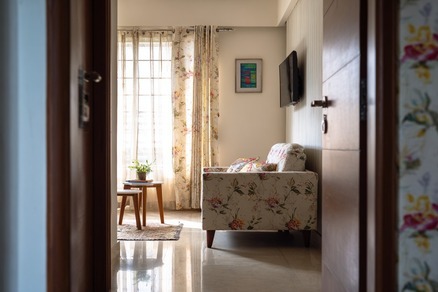
The living room usually does many jobs. It is a place to sit with guests, watch television, work on a laptop or even eat a quick meal. Major things are done in the living room. In a good small house interior design, the living room is open and does not feel messy.
Pick a sofa that fits the width of the room. Slim arms and visible legs keep the view light. If possible, choose a sofa with storage inside the base. A simple wall-mounted television unit saves your floor space. You can also add one or two nesting tables that move easily when you need more floor area.
Keep windows free from heavy furniture. Use light curtains that pull back neatly. A mirror placed opposite a window can bounce light further into the room.
Bedroom That Brings Quiet Comfort
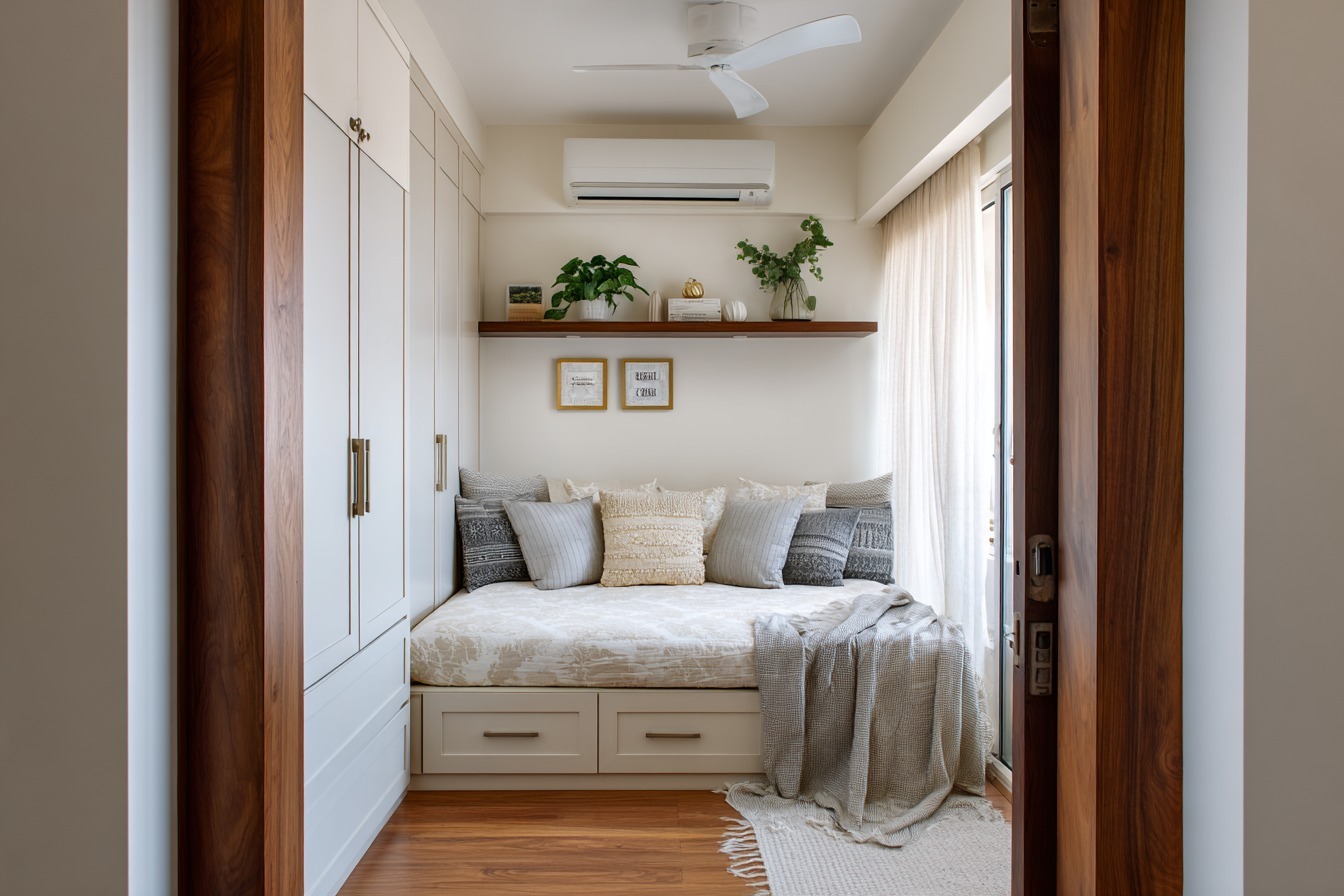
A bedroom in a house should feel like a place to breathe. So, to make it comfortable and keep that warmth in it, bedroom design ideas can help you a lot. Built-in wardrobes that go to the ceiling work better than short units. They take the same floor space but give you far more storage. Sliding doors are very helpful where there is not much room to move around the bed.
Choose a bed with drawers or a lift top. This is a valuable and simple bedroom decor idea for bedding, seasonal clothes and extra items. Keep the side tables narrow, or use floating shelves on either side instead. Soft neutral colours on the walls make the room restful and help the space feel comfortable.
Kitchen and Dining That Fits Neatly into a Small Home
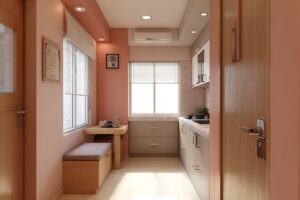
Kitchens in compact homes need to be efficient, easy to clean, and well-ventilated. An L-shaped or parallel layout is best for most small houses. These formats give you a clear work triangle and good storage on both sides.
Use base cabinets with deep drawers so you can reach pots and pans without bending too much. Overhead cabinets can go up to the ceiling for extra storage. Open shelves should be kept for daily-use items, as too many open surfaces make a small kitchen look crowded.
If the dining area is close by, consider a small table with a bench on one side. The bench has storage below and slides under the table when not needed. This is a simple yet effective kitchen design idea within a small house for families that eat together but do not have a formal dining room.
Maximise Small Kitchen Space
A small bathroom can still feel fresh. Use a wall-hung sink and water closet to show more of the floor. This visual trick helps the room feel bigger. A clear glass partition for the shower keeps light moving across the room. Built-in wall niches provide space for soaps and bottles without bulky shelves.
If you have a utility corner, try stacking the washing machine with a small storage unit above, or place it under a counter that also serves as a folding area. In many Indian homes, the utility space may open off the kitchen or balcony, so plan for good drainage and airflow.
Balcony and Entrance That Sets the Mood
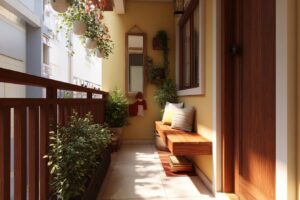
A balcony is a place where everyone wants to sit and have a cup of tea with a fresh breeze. Even a narrow balcony can become a pleasant spot. A slim bench with storage under the seat makes it useful and tidy. Planters can be placed along the railing, using vertical stands to save floor space. Avoid too many chairs and tables here.
The entrance can be made clutter-free. You just have to place a compact shoe cabinet and a set of hooks for keys and bags near the entrance. Installing a small mirror near the door can reflect sunlight into the house and brighten the walls. These touches make the front design of the small house bright and clutter-free.
Choose Multi-Functional Furniture That Actually Helps
If you live in a small home, you know you cannot get furniture that doesn’t go with your living room or house. Every piece has to earn its spot. So think of a sofa that opens into a bed when friends or family stay over. Pick a coffee table that hides remotes, books and chargers inside instead of letting them lie around. Even a slim console against the wall can double up as your work desk in the day. When you start choosing pieces like this, the room works with you instead of fighting you.
I also like furniture that has visible legs because you can see more of the floor, and the room feels lighter. You can tuck in built-in seats under windows or turn an odd corner into a small cupboard or bench with storage. Bit by bit, these choices shape your small house interior design and your home starts to feel calmer and easier to live in.
Smart storage
Storage is often the biggest test of a small house design. The goal is to free the floor and still keep things handy. Tall wardrobes, ceiling height cabinets, units above doors and drawers inside the bed help you use the full height of the room. Then there are corners that we often ignore. The space below the stairs can take closed cupboards or a small work nook. Lofts are useful for suitcases and things you reach for once in a while. Along with this, keep a few open shelves for books, plants and pieces you enjoy seeing every day. That mix of closed and open storage keeps the home organised without making it feel shut in.
Front Elevation Ideas For Small Houses
The way your home looks from the road or gate matters. It shapes the first impression for visitors and even for you when you come back at the end of the day. Strong front elevation designs for small houses can lift a simple building without a large budget.
What makes a good elevation
A good elevation has clear lines, balanced openings and a simple colour scheme. Windows are placed to match the rooms inside, not just for show. Railings, ledges and sunshades are kept neat so that shadows fall nicely on the walls. Light exterior colours help the building stand out without feeling heavy.
Simple front elevation designs for small houses
When you think of simple front elevation designs for small houses, think of clean surfaces and a few strong details. A plain wall in a soft shade, a single strip of textured paint or stone near the entrance, and a neat balcony with simple railing are often enough.
Modern front elevation designs for small houses
If you like a clean, modern look, keep the front of the house simple and sharp. Think straight lines, plain walls and nothing too heavy on the eye. Slightly larger front windows or one slim vertical window band can make the house feel taller. For the balcony, clear glass or a thin metal railing keeps it light. This is the feel people mean when they talk about modern front elevation designs for small houses. A soft wall colour with a warm wooden main door is often enough.
Front design of a small house
The front of a small home does a lot of talking before anyone even steps inside. It is the first thing people notice, and it quietly sets the mood for everything that follows. With front elevation designs for small houses, it is less about size and more about how neat and clear the front looks.
You can start with the entrance. A fresh coat of paint on the main door in a deep navy or charcoal shade gives the house instant character. Good handles and a solid lock make the door feel reliable. A pair of simple wall lights on either side and a few easy to care for potted plants will soften the look. If you keep the lines clean, use sturdy materials like brick or plain render and make sure the path to the door stays tidy, the home will feel warm, cared for and ready to welcome people in.
Colours, Lighting and Materials For Small Houses
Colour, light and material choice can quietly change how big or small your home feels. In a good small house design, they work together rather than fighting each other.
Wall colours that open up space
Lighter wall colours usually make rooms feel more open. Shades like off-white, cream, light beige or soft grey reflect daylight better. They also give a calm background for furniture and art.
You can still enjoy colour. Use one accent wall in a mild pastel or earthy tone. Keep ceilings lighter than the walls so they seem higher. Very dark colours are better used in small amounts.
Layered lighting in compact rooms
If you rely on a single tube light or ceiling light, the room will often feel flat. Layered lighting gives more depth. You can use a main ceiling light for general use, then add wall lights or a floor lamp in the corners, and table lamps where you read or work.
This approach suits small house interior design because you can change the mood without changing the space. Warm white lights create a relaxed feel in living rooms and bedrooms. Brighter neutral light works in kitchens and study corners.
Materials, textures and finishes
Smooth, easy-to-clean materials keep the house neat. Gloss or semi-gloss finishes on some surfaces, like kitchen cabinets, help reflect light. Light-toned wood or laminate looks warm without feeling heavy.
Try to limit the number of different finishes. Too many patterns and textures can make a small room look busy. Simple floors, simple walls and one or two accent materials often work better.
Budget-Friendly Small House Ideas
Money is always a big part of planning a home. A low-cost small house design does not mean cutting quality at every step. It simply means knowing where money makes a real difference and where a simpler choice will still work well.
Where to spend and where to save
More budget is better kept for things that are hard to change later. The basic layout, electrical wiring, plumbing lines, kitchen structure, main wardrobes and built in storage all sit in this group. These decisions shape daily comfort and safety, so strong work here pays off for many years.
On the other hand, items like rugs, cushions, wall art, lamps and small accessories can grow slowly over time. These pieces are easy to swap, update or remove. The same thinking applies to finishes. Mid-range tiles, laminates and paint from reliable brands usually look neat and last well, without pushing the spend to a level that feels stressful.
Phased planning for small homes
If the full cost feels heavy in one go, the house can be planned in stages. The first focus can be on structure, walls, basic flooring, kitchen counter and key storage so that the home is comfortable to live in. Once this base is ready, other layers can follow at a slower pace.
False ceilings, accent wall finishes, extra furniture, balcony seating or a small study corner can come in later when there is more room in the budget. Living in the space for a while helps show which corners matter most and which ideas actually support daily life. This way, every new addition to the small house design has a clear reason to be there, instead of feeling like one more random extra.
Conclusion
Small house design is really about using what you already have in a smarter way. When the layout works, light moves well, and storage is planned, even a compact flat starts to feel open. The living room, bedroom, kitchen, balcony and entrance all respond to small, clear decisions. Sofa size, bed height, where you keep shoes, how many colours you put on the walls, all of these shape how your home feels every single day.
Spending on structure, core storage and basic finishes keeps the house solid. Then you can slowly add furniture, lights and decor without pressure. Multi-functional pieces, taller cupboards, simple front elevation ideas and calm wall colours do most of the heavy lifting. If you look at your home room by room and corner by corner, you will notice many small chances to improve things. One careful change at a time is usually enough.
Frequently Asked Questions:
How do I make my small house look bigger?
Use light wall colours, keep the floor as clear as possible and pick furniture that is not too bulky. Place mirrors in spots where they reflect light and views. Remove doors that are not needed and avoid dividing screens that block sight lines.
Which colours are best for small homes?
Soft neutrals such as off-white, very light beige, pale grey and gentle pastels work well. They reflect more light and make walls seem further away. You can bring stronger colour in through cushions, art and linen rather than covering every wall.
What is the best way to add storage in a very small house?
Full height cupboards, lofts above doors, under-bed drawers and storage benches all help. Try to keep some storage in every room so items do not pile up in one place. Closed cabinets keep clutter out of sight.
What is the 70/30 rule?
The 70/30 rule suggests using about 70 per cent of a room for essential, functional elements and the remaining 30 per cent for decor and personal touches. This balance keeps a space practical while still allowing it to feel warm and expressive
Can I customise a small house design according to my needs?
Yes, in fact, a good small house design should reflect how you live. Share details about family members, work-from-home needs, storage habits and future plans with your designer or contractor. This helps them suggest layouts and furniture that fit your routine rather than forcing you to adjust later.