
_________________________________________________________________________
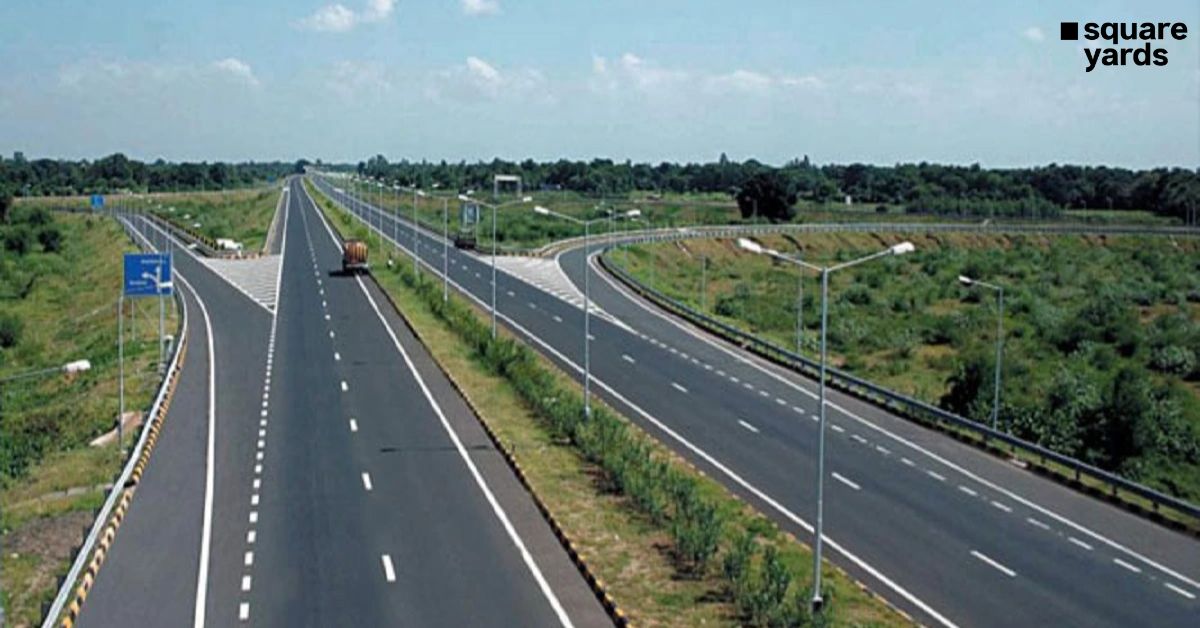
A highway connecting Delhi to Katra is inching toward completion. Along its 670-kilometre route, something else is quietly happening: land values are beginning to move.
_________________________________________________________________________
India builds a lot of roads. But every so often, a project comes along that is less about asphalt and more about transformation. The Delhi-Amritsar-Katra Expressway is that kind of project, and after several delays, cost overruns, and revised deadlines, it is finally taking visible shape.
The National Highways Authority of India confirmed this month that the expressway is now ready from Balsua in Punjab to the Ring Road at Raya. Authorities plan to open this stretch to Amarnath pilgrims in June. For the millions who travel this corridor each year for faith, family, or work, it is welcome news.
But is there a parallel story unfolding here, one that property buyers and investors along the corridor would be unwise to ignore?
What Has Actually Been Built
The full ambition of this project is worth stating clearly. When complete, the 670-kilometre corridor will link Bahadurgarh near Delhi to Katra in Jammu and Kashmir, passing through Amritsar. The journey from Delhi to Amritsar, currently taking around 8 hours, will be reduced to 4. The journey from Delhi to Katra will fall from 14 hours to 6. The expressway will have six lanes, with the capacity to expand to eight.
The Balsua-to-Raya section, which has just been declared ready, covers over 100 kilometres across three construction packages in Punjab and Jammu and Kashmir. Physical progress on these packages currently stands between 85% and 95%. Major river bridges over the Ravi, Ujh, Tarnah, and Basantar rivers are nearly finished. The Devak bridge near AIIMS Vijaypur is already carrying traffic.
The project has not been without difficulty. NHAI officials acknowledge that the December 2026 completion deadline will not be met. March 2027 is now the working target for most of the project. Union Minister Nitin Gadkari has indicated that full phased completion could extend to March 2028. The project’s cost has also climbed steeply, from 250 billion rupees to approximately 389 billion rupees, an increase of more than 55 per cent. Delays have been attributed to late clearances for railway bridges, disruption from Operation Sindhoor, heavy rains and flooding on a 147-kilometre stretch in Jammu and Kashmir, and persistent land acquisition difficulties in Punjab.
Already in Use, Before It Is Even Finished
Perhaps the most telling sign of this expressway’s potential is that people are already using it, even in its incomplete state.
Residents of Ludhiana, Malerkotla, Barnala, and Sangrur have begun incorporating the accessible stretches into their regular routes. Travel operators report that users are saving close to 25% in both time and fuel costs on interrupted journeys between Patran and Khanauri. Those heading to Agra, Jaipur, or other parts of northern and central India are also finding that the expressway connects usefully to the Kundli-Manesar-Palwal Expressway, allowing them to bypass Delhi’s traffic altogether.
Commuters say they are willing to do without fuel stations, rest areas, and shops for now, simply because the time savings are worth it. These facilities are planned and will come, but they are not yet operational.
That level of organic adoption, before the road is even finished, matters. It is historically one of the clearest early signals of what an expressway corridor will eventually do to the surrounding real estate.
The Property Question: Who Stands to Gain
The relationship between road infrastructure and land values is not complicated. Shorten the time between two places, and you increase the number of people for whom living in the smaller place becomes practical. Do that consistently and property prices follow.
The DAK Expressway is likely to play out this logic across several distinct pockets of North India.
Amritsar is the most obvious case. The city already draws visitors year-round because of the Golden Temple, and it has its own functioning economy. A four-hour, high-speed drive from Delhi puts it within a realistic weekend distance for a large slice of the capital’s population. Peripheral areas around Amritsar, particularly those sitting near expressway interchanges, are likely to attract the first serious wave of developer and investor interest. Currently, the average property price in Amritsar is ₹ 7,126/sq. ft. The sale price ranges from ₹24 lakhs to ₹4 crore.
The Ludhiana-Malerkotla-Sangrur industrial belt is a different kind of opportunity. This corridor already has manufacturing and logistics activities embedded in it. Better connectivity to Delhi strengthens the commercial case for warehousing and logistics parks along the route, and India’s industrial real estate has a reliable habit of drawing residential development in its wake. The current average price in Ludhiana is ₹7,296/sq. ft. Similarly, the current average price in Malerkotla-Sangrur is ₹8,148/sq. ft.
Katra and the broader Jammu region represent a longer-horizon opportunity but a genuine one. Vaishno Devi draws millions of pilgrims every year, yet the real estate market around Katra has remained limited because the road journey has historically been punishing. A six-hour expressway run from Delhi would change the calculus for hospitality investors and second-home buyers in ways that better roads have already demonstrated elsewhere in hill India.
Towns along the expressway’s southern stretch in Haryana are also seeing preliminary interest. Developers who tracked the Yamuna Expressway and the Delhi-Mumbai Expressway corridor in their early years know that interchange-adjacent land tends to re-price sharply once operations begin.
Four Things Homebuyers Should Consider
For people considering buying property rather than speculating on land, the expressway raises some practical questions worth thinking through now.
The first is about commuting logic. If you work in Delhi or the NCR but your family is in Amritsar or Ludhiana, a four-hour road journey changes what is possible. Weekly visits become manageable. Property in a home city starts to feel like a realistic primary or secondary residence rather than a long-distance investment. For NRI families with roots in Punjab, this connectivity adds a concrete reason to consider buying back home.
The second is about pricing windows. The corridor towns along the DAK Expressway have not yet seen the kind of developer-led price inflation that typically precedes expressway completions in the NCR. Valuations in several towns still reflect older, pre-expressway fundamentals. The period between near-completion and actual opening is historically when buyers who are paying attention tend to find the best value.
The third is about geography within the corridor. Proximity to an interchange matters enormously. A property five kilometres from an operational interchange sits in a fundamentally different market from one twenty kilometres away, even if both are described as being on the expressway corridor. Buyers should verify actual interchange locations and distances before making decisions.
The fourth is about patience. The DAK Expressway’s original target was October 2023. That slipped to 2025, then December 2026, and now most estimates point to 2027 or 2028 for full completion. The opportunity is real, but anyone making a property decision based on an assumed near-term opening should be honest with themselves about the project’s timeline.
The Larger Perspective
This expressway is not only about moving people faster. It is the physical link between the national capital and two of India’s most-visited religious destinations: the Golden Temple in Amritsar and the Vaishno Devi shrine in Katra. It runs through one of the country’s most industrially active states and will feed directly into the Ludhiana-Delhi-Kolkata Industrial Corridor.
Infrastructure projects of this scale tend to get noticed in the property market. That is, however, only after the inauguration photographs have been taken and the prices have already moved. The Balsua-to-Raya opening is not the finish line. It is, however, a clear sign that this road is becoming real.