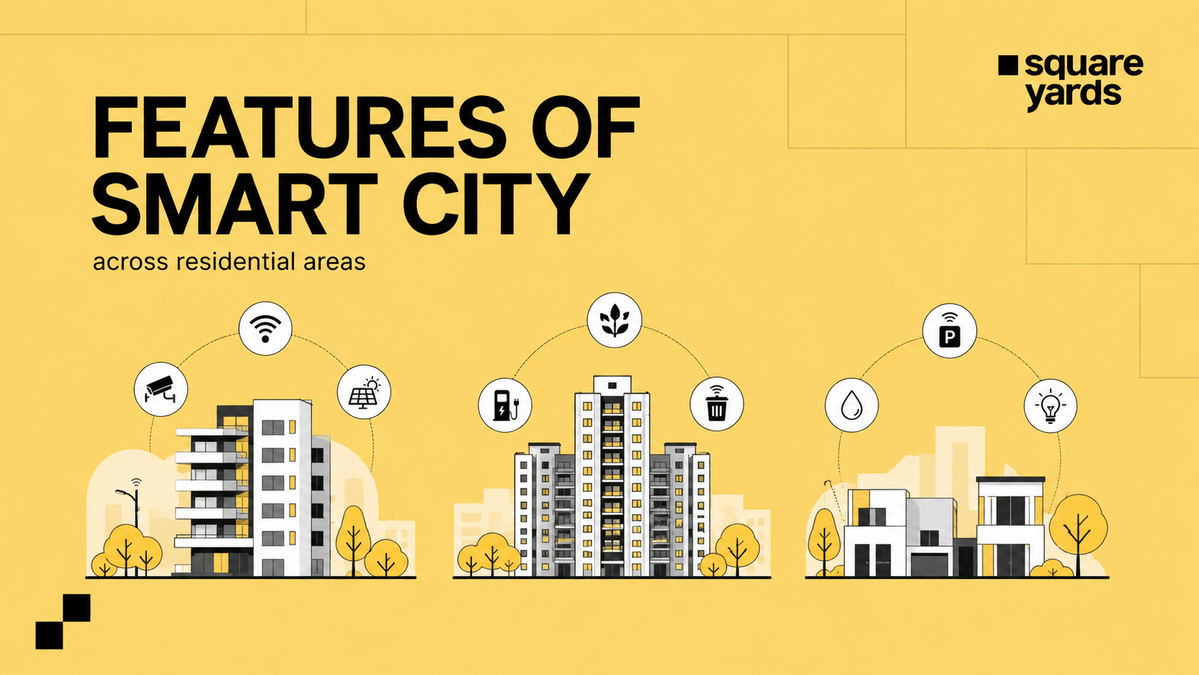
Nandini Joshi, a 42-year-old HR director from Ahmedabad, recalls the moment clearly. Before she understood how to evaluate the genuine features of smart city developments, buying her first home was supposed to be exciting. Instead, it just felt overwhelming. She was pitched “smart” homes that only had basic Wi-Fi, while missing out on actual smart grid technology and automated security protocols that truly impact daily living.
This guide covers comparing digital and civic infrastructure in practical terms: what you need to know, where most people go wrong, and how to make decisions that hold up over time.
Evaluating the Features of Smart City Developments: What You Need to Know First
When it comes to comparing smart city features across residential areas, the gap between knowing the theory and applying it correctly is where most people lose ground. The fundamentals matter, but so does the order in which you apply them.
The Core Principle Behind Smart Infrastructure
The single most important shift is moving from reactive to proactive. Most people engage with evaluating tech-enabled civic amenities only when forced to, usually by a developer’s sales pitch or a lifestyle problem. The investors and buyers who consistently get better outcomes are those who build their understanding of what constitutes true smart infrastructure before the decision window opens.
Why Smart Integration Matters More Than You Think
Every property decision carries compounding effects. A misjudgement on the quality of a digital ecosystem at the point of purchase can take years to correct and leave your home feeling outdated quickly. Conversely, getting it right early creates a foundation that makes daily living easier, lowers utility costs through efficiency, and ensures higher resale liquidity.
For a clearer picture of how market values are moving in your target location, reviewing a current online property valuation can help you benchmark your decisions against real data.
Key Factors to Evaluate
Breaking this down into steps removes the overwhelm. The key is not to analyse everything at once, but to work through each dimension in sequence, allowing each answer to inform the next question.
Step 1: Establish Your Baseline
Before comparing options, establish what you are comparing against. This means defining your constraints clearly: budget ceiling, timeline, non-negotiables (like integrated security or smart grids), and acceptable risk range. Without a baseline, every option looks relative and no decision feels final.
Step 2: Map the Market Context
Local market conditions matter more than national trends for most individual decisions. What is happening at the micro-market level in your target area determines whether the timing is right, what leverage you have in negotiation, and what the realistic hold period looks like.
Step 3: Validate Before Committing
The most reliable form of validation is triangulating your own research against independent data sources. This is not about eliminating uncertainty, it is about reducing avoidable error. A 48-hour research gap before a decision point often produces clarity that weeks of passive reading does not.
Common Pitfalls and How to Avoid Them
The mistakes in this space are well-documented. They repeat across different markets, different property types, and different buyer profiles because they stem from the same underlying error: prioritising the familiar over the accurate.
- Over-relying on a developer’s “smart” marketing label as a proxy for actual infrastructure
- Ignoring the recurring maintenance costs of highly automated building systems
- Anchoring on a single tech feature (like smart lighting) rather than systemic neighborhood integration
- Treating digital connectivity as an afterthought rather than a structural constraint
- Delaying documentation decisions regarding data privacy and system ownership until they become urgent
Each of these is correctable, but the correction is much cheaper when applied before a transaction than after.
A Practical Framework for Decision-Making
A practical framework for comparing smart city features across residential areas does not have to be complex. The goal is consistency, not sophistication. A repeatable process that you apply to every decision produces better aggregate outcomes than a brilliant approach that you apply inconsistently.
Applying the Framework to Your Situation
The framework works best when customised to your specific profile. An investor with a three-year horizon needs to weight different variables than a tech-focused buyer planning to hold for ten years. An NRI managing property remotely has different risk priorities than a resident buyer in the same city.
Identify which variables apply to your situation, weight them according to your timeline and risk tolerance, and then apply them consistently. The output should be a ranked list of options and a clear decision trigger, not an open-ended comparison.
What the Data Actually Shows
The data on tech-enabled developments across Indian real estate markets in 2025-26 points to several consistent patterns. Cities with active, government-backed digital infrastructure investments are showing appreciation that outpaces the national average. Micro-markets fully integrated into municipal smart grids are repricing faster than isolated, developer-only smart projects.
Rental yield data shows a divergence between premium and mid-segment properties, with mid-segment demonstrating more stable occupancy despite lower headline yields. For investors with a long hold period and a preference for predictable income, finding neighborhoods with functional, scalable smart amenities is more important than the yield differential suggests.
How Square Yards Supports You
Priya Thakkar, a 45-year-old investment advisor from Gurgaon, worked with a Square Yards advisor when navigating amenities and connectivity. Having access to verified market data, structured timelines, and transaction support meant Priya could make decisions with confidence rather than guesswork.
Square Yards’ expansive network and local expertise help buyers navigate the market with confidence.
Take the Next Step
The difference between a good property decision and a costly one often comes down to the quality of information available at the time. Visit Square Yards to access market data, verified listings, and advisory support that puts you in control of your next move.