For decades, Mumbai remained the undisputed centre of the Mumbai Metropolitan Region (MMR), while Thane emerged as its preferred residential extension. Today, however, a new hierarchy is taking shape. Backed by large-scale infrastructure investments, improving connectivity and sustained housing demand, Navi Mumbai is steadily evolving into one of MMR’s most influential residential markets.
According to Square Yards Research, Navi Mumbai’s importance within MMR has grown significantly over the past decade. The market accounted for nearly 21% of the region’s residential launches in H1 2026, up from 18% in 2014, while its share in total housing sales increased from 16% to 22% during the same period. The numbers indicate that Navi Mumbai is no longer merely absorbing spillover demand from Mumbai but generating demand on its own.
The shift suggests that MMR’s residential hierarchy is changing, with Navi Mumbai emerging as the region’s most dynamic growth corridor.
Infrastructure has become the biggest demand driver
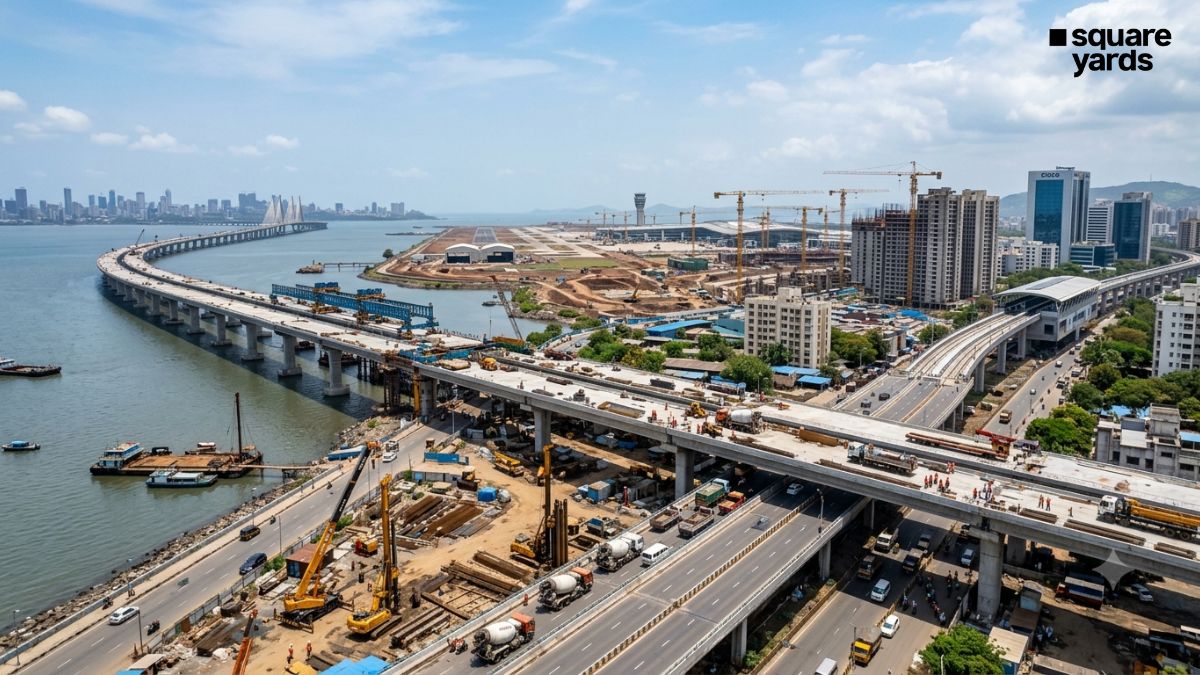
Transformational infrastructure projects including the Navi Mumbai International Airport (NMIA), Mumbai Trans Harbour Link (Atal Setu), Navi Mumbai Metro, Panvel-Karjat suburban rail corridor and upcoming multimodal transport networks have significantly reduced travel time between Navi Mumbai and the rest of MMR. The opening of Atal Setu has brought South Mumbai within a 30-minute drive from several Navi Mumbai micro-markets, while the operational airport has further strengthened the city’s position as a commercial and logistics destination.
Localities positioned around these infrastructure corridors have consistently witnessed stronger buyer enquiries and residential activity compared to established markets. Airport-influenced locations such as Ulwe, Panvel and Pushpak Nagar have particularly benefited from improved accessibility and future employment prospects.
Navi Mumbai is narrowing the gap with Thane
For years, Thane dominated MMR’s affordable and mid-segment housing market owing to its established social infrastructure and connectivity. However, Navi Mumbai is increasingly matching and in several parameters outperforming its neighbour. While Thane continues to command healthy demand, Navi Mumbai offers a combination of planned urban development, lower congestion, better land availability and large-scale infrastructure projects that few markets in MMR can currently replicate.
Square Yards Research highlights that the city’s residential market has maintained strong launch momentum alongside healthy absorption levels. Developers launched nearly 49,000 housing units across MMR during H1 2026, with Navi Mumbai accounting for a substantial share of new supply. Simultaneously, robust sales indicate that demand continues to absorb fresh inventory, reflecting buyer confidence in the region’s long-term growth potential.
This balanced relationship between supply and demand differentiates Navi Mumbai from speculative markets where launches often outpace actual homebuyer interest.
Affordability continues to attract end-users
Square Yards Data Intelligence shows that localities such as Panvel, Kharghar, Ulwe and Taloja continue to attract first-time homebuyers and upgraders owing to relatively lower entry prices and larger apartment configurations.
The affordability advantage becomes even more compelling when viewed alongside improving infrastructure. Buyers are increasingly willing to move further from South Mumbai if commute times continue to shrink while offering substantially larger homes within similar budgets.
According to Square Yards Research, the average asking price in Navi Mumbai stood at Rs 19,300 per square foot (psf) as of June 2026, substantially lower than premium markets in Mumbai despite comparable infrastructure upgrades. Within Navi Mumbai itself, buyers continue to find relatively affordable entry points across emerging micro-markets. Panvel commands an average asking price of Rs 15,050 psf, while Ulwe stands at Rs 15,600 psf. Even established nodes such as CBD Belapur average Rs 19,950 psf, considerably below premium locations like Vashi at Rs 33,350 psf, reflecting the city’s diverse housing options across price segments.
The city also continues to witness strong demand in the mid-income housing segment, particularly among professionals employed in IT, logistics, manufacturing and financial services.
Employment hubs are strengthening market fundamentals
One of the biggest differences between Navi Mumbai today and a decade ago is the evolution of its employment ecosystem. The operational airport, expanding logistics infrastructure, IT parks, commercial developments and industrial corridors are gradually transforming the city into an employment destination rather than simply a residential suburb.
This structural shift is creating self-sustaining housing demand. Instead of relying exclusively on Mumbai-based commuters, Navi Mumbai is increasingly attracting professionals seeking homes close to emerging workplaces. This transition improves long-term market stability by supporting both end-user purchases and rental demand.
The next phase of MMR’s growth
For homebuyers, Navi Mumbai presents an opportunity to enter a market that still offers relative affordability while benefiting from long-term infrastructure upgrades. For developers, it represents one of the few large urban markets where land availability, demand and connectivity continue to align. The changing residential hierarchy of MMR suggests that the region’s next chapter may not be written in Mumbai alone. Increasingly, it is Navi Mumbai that is emerging as the metropolitan area’s most compelling real estate growth story.