
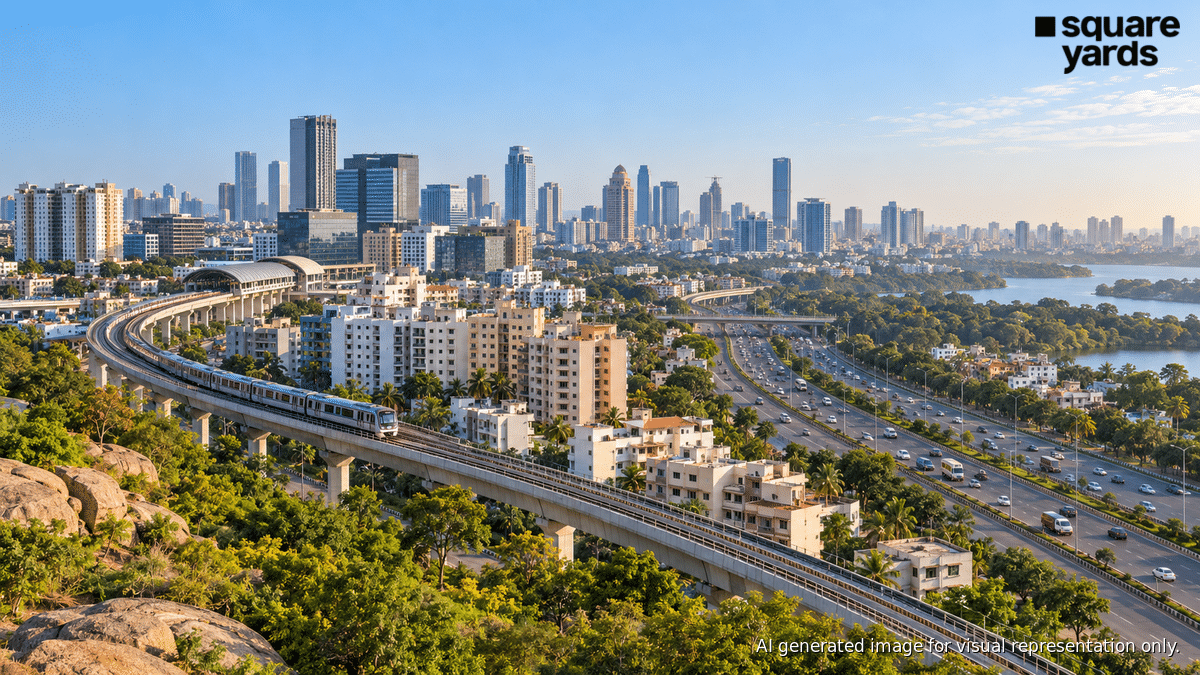
Karnataka is preparing a 10–year development plan for the Bengaluru Metropolitan Region (BMR) that could influence where housing demand grows. The proposals combine nine integrated industrial townships with a plan for 6–6.5 lakh homes, including housing for 40,000–50,000 industrial workers.
The blueprint also proposes a 312-km Metro expansion, a 210-km Ring Road and a 270-km Regional Rapid Transit System (RRTS). If implemented, these projects could improve access to new employment and residential hubs beyond Bengaluru’s core. Their effect on property demand will depend on the final locations, routes and delivery timelines.
Housing supply and industrial jobs are central to the plan
Chief Minister D.K. Shivakumar outlined the proposals at a meeting of the BMR economic development advisory committee on October 5. The state has acquired 7,900 acres for the proposed industrial townships, with another 5,600 acres under acquisition.
The planned housing program could add to supply across the region, while the proposed worker housing links residential demand to the development of industrial employment. The announcement does not yet specify where the homes will be built or how the program will be phased.
Proposed transport links could widen the housing catchment
The proposed Metro expansion is set to add 312 km of connectivity by 2037. The plan also includes 72 km of suburban rail connectivity and a 210-km ring road intended to connect 10 additional hubs and link Phase II of the Peripheral Ring Road with NICE Road.
The proposed 270-km RRTS would connect Bengaluru with Tumakuru, Mysuru and Kolar Gold Fields (KGF). Better connections to these regional centers could make housing in and around them more accessible to people working across the wider region. This is a potential effect of the proposals, not evidence of current price growth.
Township sites and project alignments are not finalized
The October announcement did not identify all nine proposed township locations. Earlier township and satellite-town plans have included places such as Bidadi, Devanahalli, Nelamangala, Hoskote, Doddaballapur and Magadi. Still, these should not be treated as confirmed sites for the newly proposed townships.
The RRTS corridors and ring road were discussed as proposals. Exact routes, station locations, and the 10 hubs remain unspecified. Until these are confirmed, it is not possible to assess which neighborhoods would receive direct access or see the earliest impact on housing demand.
Real estate growth will depend on execution
The proposals could support residential demand where transport access develops alongside jobs, housing and local services. Industrial townships may create demand for worker accommodation and rental homes, while new rail and road links could improve access to regional employment centers.
Water supply, sewage, roads and other civic services will also affect whether new housing areas can support sustained growth. The BMR is expected to need about 3,600 million liters of water a day by 2037, and the plan includes wider water and sewage infrastructure.
For now, the Bengaluru infrastructure plan sets a direction for regional growth rather than a confirmed project schedule. Its effect on property demand will depend on which proposals receive approvals, where they are built, and whether employment and essential services grow alongside them.