
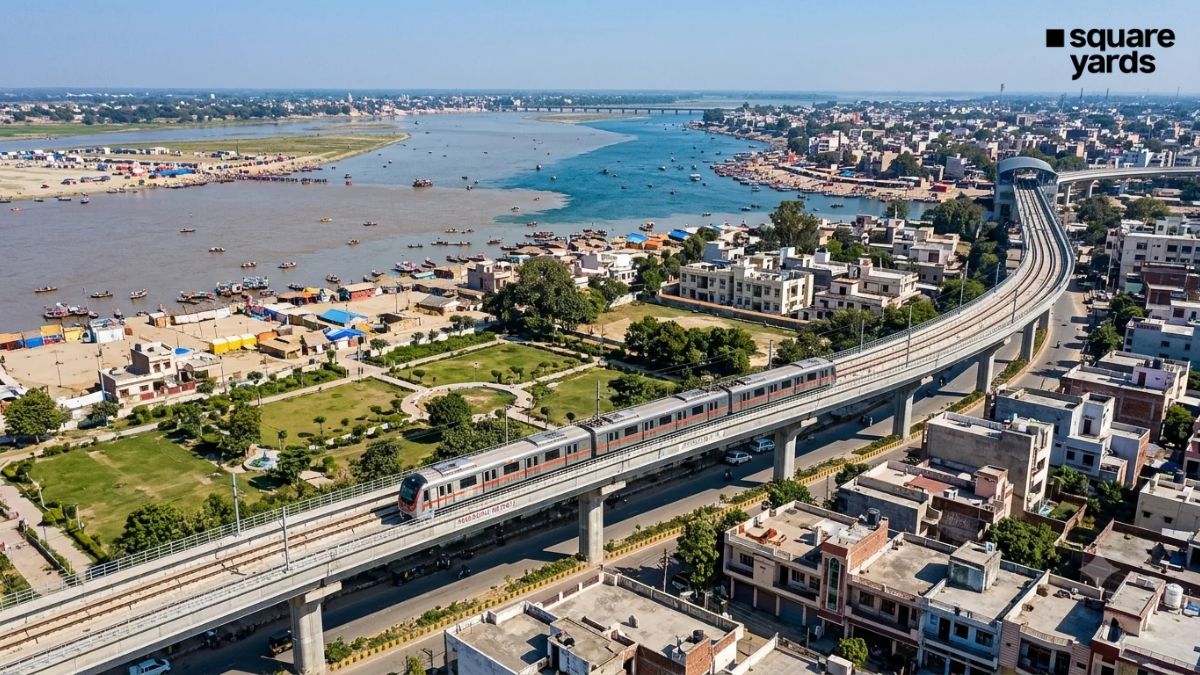
The detailed project report (DPR) for the proposed Rs 12,000-crore Prayagraj Metro has been submitted by Rail India Technical and Economic Service (RITES) to the Uttar Pradesh Metro Rail Corporation (UPMRC) for state approval on 21st October 2026. The revised proposal retains two corridors: Shantipuram to Chheoki in Naini, and Jhunsi to Prayagraj Airport via the proposed Aerocity. The project will require state and central government approvals before implementation, with funding arrangements yet to be finalized.
Two proposed corridors
The proposed network aims to improve connectivity between residential areas, transport centers and other parts of Prayagraj. The reported plan includes a corridor between Jhunsi and the airport via the proposed Aerocity, and another connecting Shantipuram with Chheoki in Naini.
The revised DPR has also been reported to include an interchange near Parade in the Civil Lines area, with a potential connection to the proposed ropeway to the Sangam. These details remain subject to the approval process, and official project documents should confirm the final alignment, station locations, funding,, and construction timeline.
For the city, the proposal raises a broader urban-planning question: how effectively would the network connect established neighborhoods with developing areas and major transport points? The answer will depend on the final route, station access, and integration with existing transport services.
What localities to look out for
Key areas to watch include Shantipuram, Civil Lines, Naini, Jhunsi, and Bamrauli, given their relevance to the proposed corridors and the city’s wider transport network.
Shantipuram is important to the proposed connection with Chheoki in Naini. As the project moves through the approval process, changes in housing supply and property prices across these areas could help establish whether market activity is evolving alongside infrastructure planning.
Civil Lines and Parade offer a different point of comparison. Their central location makes them relevant to the proposed interchange and the wider connection between metro services, the city center and the planned ropeway to the Sangam.
Naini, Jhunsi and Bamrauli
Naini and Chheoki are significant to the southern part of the proposed network, while Jhunsi forms part of the planned corridor towards the airport and proposed Aerocity. These areas merit close monitoring as the project’s alignment and implementation plans become clearer. Bamrauli and the proposed Aerocity area are also relevant because of their proximity to the airport and the proposed transport connection.
Proposed metro could help Prayagraj manage visitor flows
The proposed Prayagraj Metro could serve a broader purpose than improving everyday commuting. The city’s transport requirements expand considerably during major gatherings, making connectivity between residential neighborhoods, railway stations, the airport and key destinations an important part of long-term urban planning.
According to the Press Information Bureau, more than 45 crore devotees had participated by February 11, 2025. Railway services operated at high capacity, while authorities restricted vehicle movement in the Mela area to help manage crowds. The PIB’s account of Maha Kumbh 2025 provides context for understanding the demands that large gatherings can place on the city’s transport infrastructure.
The proposed metro could add another mode of public transport if it receives the necessary approvals and is built as planned. Its proposed Shantipuram-Chheoki corridor could improve access across parts of the city, while the Jhunsi-airport corridor could strengthen connections between the eastern areas, Bamrauli and air travel. A proposed interchange at Parade, with a potential connection to the planned ropeway to the Sangam, could also support transfers between different transport modes.
Approval is the key milestone
The immediate milestone for the Prayagraj Metro is the Uttar Pradesh government’s approval of the DPR, followed by central approval and finalization of funding. Until these steps are completed, the proposed corridors, station locations and delivery schedule remain subject to change.
The locality-level data offers a useful baseline for tracking prices and supply as the proposal progresses. Future comparisons should examine whether the same neighborhoods record changes in prices, rents, and new supply after formal approvals, tendering, and construction milestones. That would help distinguish established historical trends from changes that occur alongside the project’s actual implementation.