
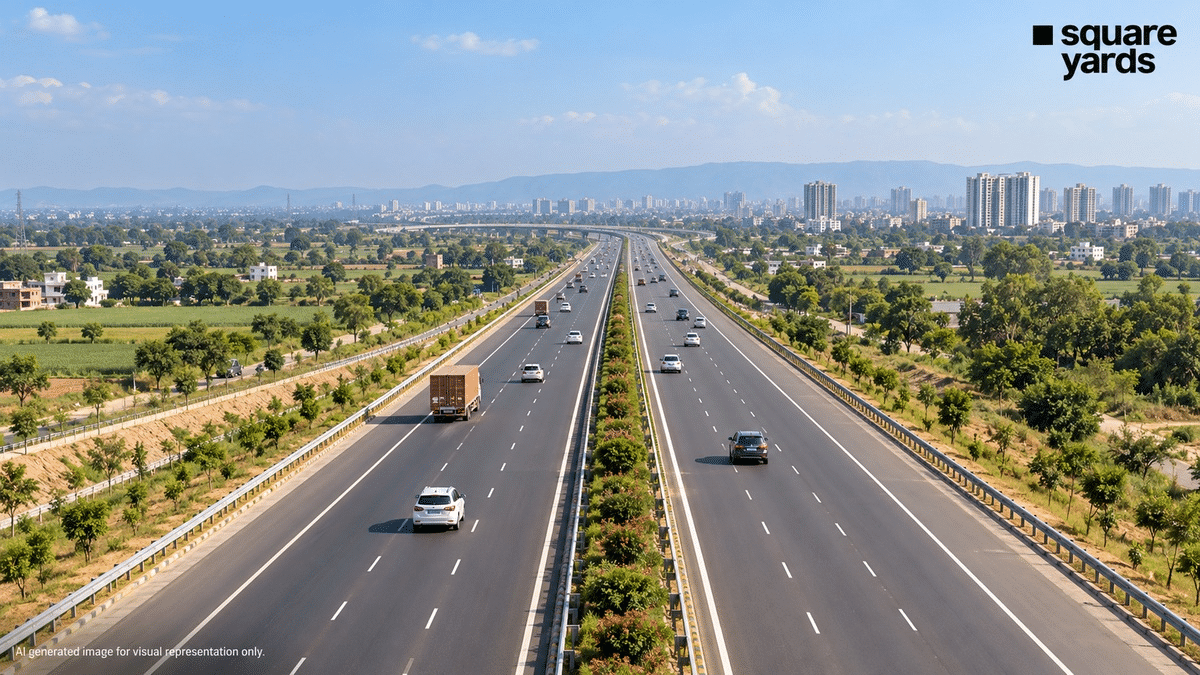
The 30-km Ambala–Mohali stretch of the Ambala–Chandigarh Greenfield Expressway is expected to reduce the Delhi–Chandigarh drive by 40–50 minutes, according to estimates cited in the report. The six-lane section will run from the Ambala side to IT City Chowk in Mohali, bypassing congested stretches around Zirakpur and Dera Bassi. Improved access could support housing demand in parts of Mohali, Zirakpur, and Dera Bassi, but any impact will depend on interchange access, local road links, job growth, and civic infrastructure. The travel-time estimate alone does not indicate that property prices will rise.
Ambala- Mohali Expressway: key project details
|
Project detail |
Information |
|
Project |
Ambala–Mohali section of the Ambala–Chandigarh Expressway |
|
Length |
Approximately 30 km |
|
Road design |
Six lanes |
|
Route |
Ambala side to IT City Chowk in Mohali |
|
Key function |
Bypass congested sections around Zirakpur and Dera Bassi |
|
Connected corridor |
Links with the operational, approximately 31-km Mohali IT City–Kurali Expressway |
|
Estimated travel-time saving |
40–50 minutes, according to the report |
|
Official opening date |
No date announced by NHAI in the sources reviewed |
Mohali and the airport belt could benefit from better access
IT City Chowk is the Mohali endpoint of the new stretch. The link could improve road access to Mohali IT City and the wider Tricity area. GMADA has also issued land acquisition notifications for the Aerocity expansion and Aerotropolis pockets near the airport.
Improved regional access may support housing interest in the Mohali airport and IT City belt, particularly if employment and commercial activity grow alongside residential development. These are potential demand drivers, not evidence of an expressway-led market trend. Project timelines, local services, and expressway links to individual sectors will also matter.
Zirakpur, Dera Bassi and Kurali may see different effects
Zirakpur and Dera Bassi are expected to see some through-traffic diverted to the bypass. Improved regional movement may enhance access to existing residential markets, though the impact could vary by neighborhood. Areas with convenient links to the expressway may benefit more directly, while locations bypassed by the route could see less passing traffic, affecting local businesses.
Kurali and other peripheral markets may appeal to buyers seeking alternatives to higher-priced parts of the Tricity. Recent market reporting has identified Kurali, Lalru and Dera Bassi as areas drawing interest as buyers look beyond Chandigarh, Mohali and Zirakpur. That interest has not been shown to result from the new expressway.
Property growth will depend on more than travel time
The Ambala–Mohali Expressway could support housing demand where improved access coincides with jobs, commercial activity, and reliable services. The Mohali IT City and airport belt has the clearest link to planned development. Peripheral locations such as Kurali and Dera Bassi may also benefit if local road links and employment expand.
For now, the clearest expected benefit is faster travel and reduced through-traffic on busy urban roads. The longer-term effect on real estate will depend on access points, local infrastructure, and the delivery of planned development. There is not yet evidence that the expressway has caused residential price growth along the route.