
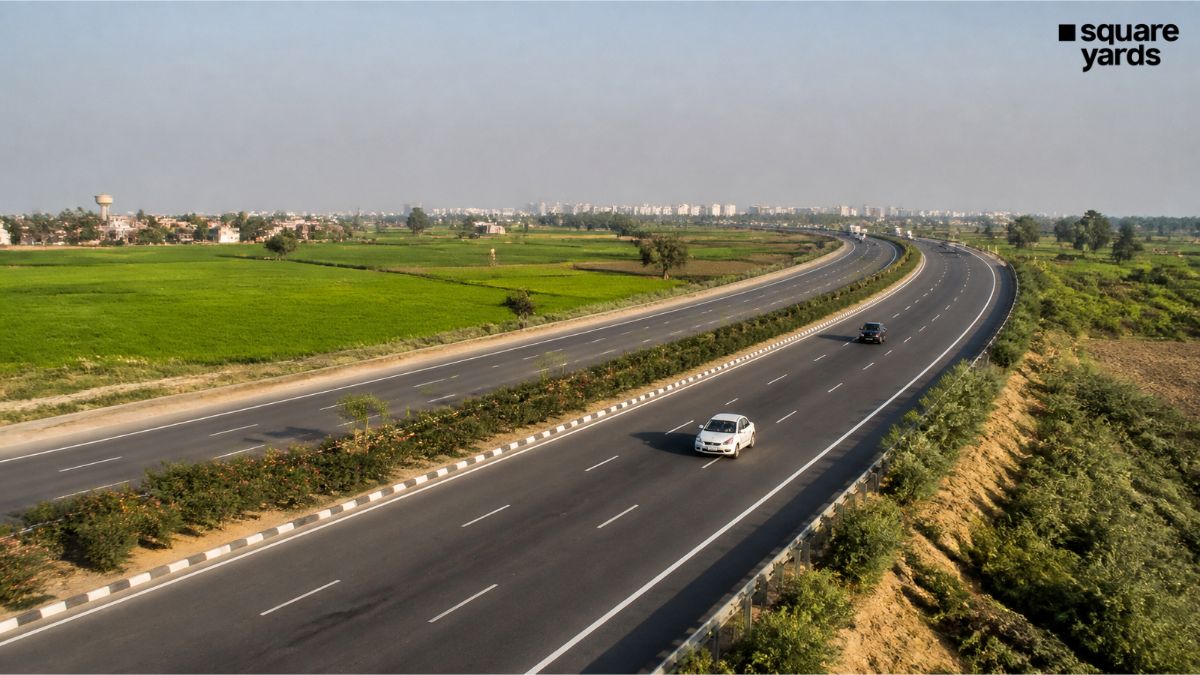
The upcoming Mohali-Sirhind greenfield expressway, being developed by the National Highways Authority of India (NHAI) under the Bharatmala Pariyojana, is expected to reduce travel time between Chandigarh-Mohali and Bathinda by around two hours. The proposed 135-km corridor aims to cut the road distance from approximately 231 km to 135 km, improving connectivity across parts of Punjab and potentially influencing residential and commercial property demand along the route.
The project, reportedly costing around Rs 5,200 crore, is planned to connect Mohali with Sirhind before extending towards Malerkotla and Sehna near Barnala and onward to Bathinda. The first phase covers a 27.37-km stretch between Mohali and Sirhind. For the real estate market, improved road access could make locations along the corridor more convenient for commuters and businesses.
Mohali-Sirhind Expressway route and project details
The first phase of the Mohali-Sirhind expressway is nearly 80% complete, with an opening targeted by the end of 2026. The corridor is planned to begin near Sectors 109 and 110 in Mohali and connect with Sirhind before extending towards Malerkotla and Sehna in Barnala district. It is intended to provide an alternative to the congested Chandigarh-Zirakpur-Patiala highway, which carries traffic towards Patiala, Sangrur, Barnala and Bathinda.
The total project’s cost is around Rs 5,200 crore. It also cites traffic of more than 40,000 passenger car units (PCUs) a day on the existing route, against an estimated capacity of around 25,000 PCUs. Urbanization, commercial and educational establishments along the existing highway have made further widening increasingly difficult.
Property rates across Mohali and connected markets
Square Yards’ September 2026 data puts average apartment prices in Mohali at Rs 7,700 per square foot (psf), up from Rs 7,100 psf in March 2026. At the locality level, Sector 109 has an average property price of Rs 7,650 psf, while Sector 110 records Rs 5,050 psf. These sectors are particularly relevant to the proposed expressway, which is expected to originate near them.
Square Yards’ data also compares these markets with other established residential markets in the region. Zirakpur recorded an average apartment price of Rs 6,300 psf, up from Rs 5,950 psf in March 2026, while Ludhiana recorded Rs 7,850 psf, compared with Rs 7,150 psf in March 2026.
|
City or locality |
Average property price |
Price trend |
|
Rs 7,700 psf |
Up from Rs 7,100 psf in March 2026 |
|
|
Rs 6,300 psf |
Up from Rs 5,950 psf in March 2026 |
|
|
Rs 7,850 psf |
Up from Rs 7,150 psf in March 2026 |
|
|
Rs 7,650 psf |
— |
|
|
Rs 5,050 psf |
— |
Source: Square Yards, September 2026, for city-level comparisons. Prices are indicative asking rates and may vary by locality, property type, and project.
Greater Mohali rental market may benefit from improved connectivity
The proposed Mohali-Sirhind expressway could improve accessibility for students and working professionals traveling between Mohali and towns along the route. This may support rental demand in residential pockets around the expressway’s starting point and educational institutions, including Amity University Punjab in Sector 82A.
The proposed greenfield expressway could make travel between Mohali and towns such as Sirhind more convenient, potentially broadening the areas from which students and working professionals can commute. Residential neighborhoods near the university may also attract tenants who prefer to live close to educational institutions and employment centers. However, any increase in rental demand will depend on actual travel-time savings, access to the corridor, and the availability of suitable housing.
Expressway links could improve regional connectivity
The Mohali-Sirhind expressway is expected to connect with major road networks, including the Delhi-Amritsar national highway, the Delhi-Jammu-Khanna expressway corridor, the Ludhiana-Malerkotla highway, the Ludhiana-Bathinda expressway, and the proposed Ambala-Kurali greenfield corridor.
These connections could improve travel between the Chandigarh-Mohali region and towns across central and southern Punjab. Better access may support business movement and make some locations more practical for commuters. The scale of any benefit will depend on the final alignment, interchange locations and the quality of connecting roads.
For residential real estate, shorter journey times can make a location more accessible to buyers who regularly travel between cities. Commercial and industrial property demand, meanwhile, will depend on business activity, freight movement, land-use permissions and supporting infrastructure.
Mohali-Bathinda expressway and the real estate outlook
The next milestones to watch are the confirmed opening status of the Mohali-Sirhind expressway stretch and progress on the wider corridor. Interchange locations and last-mile access will be important in determining which areas gain the most direct connectivity benefits.
For homebuyers and property investors, current Square Yards asking-price data offers a useful starting point for comparing established markets in Mohali, Zirakpur and Ludhiana. Future assessments should track locality-level rates alongside construction progress and actual improvements in travel time before attributing any market movement to the expressway.