

If you are buying a flat in Pune, stamp duty and registration are the two charges you cannot skip. Together they add roughly 7 to 8 percent on top of your property price, so on a 1 crore flat that is somewhere between 7 and 8 lakh rupees to keep aside before you even think about interiors or a home loan down payment.
Most buyers ask the same handful of questions. What is the current stamp duty in Pune. Does it change for a resale flat? Do women really pay less? This guide answers all of that in one place, using the latest 2026 rates, so you know exactly what to budget for before you sign anything.
- What is Stamp Duty and Registration Charges in Pune?
- Stamp Duty and Registration Charges in Pune 2026: Current Rates
- How to Calculate Stamp Duty and Registration Charges in Pune
- Stamp Duty and Registration Charges in Pune for New Flat 2026
- Stamp Duty and Registration Charges for Resale Flat in Pune 2026
- Stamp Duty by Location in Pune: PMC, PCMC and Gram Panchayat
- Stamp Duty on Gift Deed in Pune
- Women Buyer Concession on Stamp Duty in Pune
- How to Pay Stamp Duty Online in Pune
- Paying stamp duty offline in Pune:
- Stamp Duty on Different Property Types in Pune
- Common Mistakes to Avoid When Paying Stamp Duty in Pune
- Penalty for Late Stamp Duty Payment in Pune
- Stamp Duty Refund in Pune: How to Apply
- Ready Reckoner Rate in Pune: What It Means for Stamp Duty
- Section 80C Tax Benefit on Stamp Duty
- Checklist Before Paying Stamp Duty on Flat in Pune
- Documents Required for Property Registration in Pune
- Conclusion
What is Stamp Duty and Registration Charges in Pune?
When you purchase a property in any part of Maharashtra, you have to pay stamp duty. This is a tax you pay to the Maharashtra government. It is charged under the Maharashtra stamp act. Without stamp duty, your agreement has no value in court if there is ever a dispute.
Registration charges are a separate fee. This is what you pay to get your sale deed recorded at the Sub Registrar Office. Registration is what actually places your name in the government’s property records.
Pune’s stamp duty is a little higher than Mumbai’s because of an extra charge called Local Body Tax, which only applies inside Pune Municipal Corporation and Pimpri Chinchwad Municipal Corporation limits. We will get into the exact numbers next.
Stamp Duty and Registration Charges in Pune 2026: Current Rates
The current stamp duty in Pune for a male buyer in PMC or PCMC areas is 7 percent of the property value. For a female buyer, it is 6 percent. Registration charges are 1 percent of the property value, capped at Rs 30,000.
Here is the full breakup of pune stamp duty charges for 2026:
|
Buyer Type |
Stamp Duty |
Metro Cess |
Local Body Tax |
Total Stamp Duty |
Registration Charge |
|
Male buyer (PMC/PCMC) |
5% |
1% |
1% |
7% |
1%, max Rs 30,000 |
|
Female buyer (PMC/PCMC) |
4% |
1% |
1% |
6% |
1%, max Rs 30,000 |
|
Joint (male + female) |
4.5% |
1% |
1% |
6.5% |
1%, max Rs 30,000 |
|
Joint (both female) |
4% |
1% |
1% |
6% |
1%, max Rs 30,000 |
|
Joint (both male) |
5% |
1% |
1% |
7% |
1%, max Rs 30,000 |
|
Male buyer (Gram Panchayat) |
4% |
0% |
0% |
4% |
1%, max Rs 30,000 |
|
Female buyer (Gram Panchayat) |
3% |
0% |
0% |
3% |
1%, max Rs 30,000 |
A quick note on why Pune costs more than Mumbai. Both cities charge 5 percent base stamp duty plus 1 percent metro cess. Pune adds one more layer, the 1 percent Local Body Tax, which Mumbai does not have. That one percent is the entire reason current stamp duty rates in Pune sit higher than in the city just three hours away.
How to Calculate Stamp Duty and Registration Charges in Pune
To calculate stamp duty and registration charges in Pune, you always use the higher of two numbers: your agreement value (what you are actually paying the seller or builder) or the Ready Reckoner Rate (the government’s own valuation for that property). Whichever number is bigger, that is what stamp duty gets calculated on.
Here is the step by step method:
- Find the Ready Reckoner Rate for your building or plot on igrmaharashtra.gov.in.
- Compare it with your agreement value and pick whichever figure is higher.
- Multiply that figure by your applicable stamp duty percentage (7 percent for a male buyer in PMC/PCMC, 6 percent for a female buyer).
- Add registration charges, 1 percent of the same figure, capped at Rs 30,000.
- Add both figures together for your total cost.
Example: Male buyer, Rs 85 lakh flat in PMC area
|
Item |
Amount |
|
Agreement value |
Rs 85,00,000 |
|
Ready Reckoner Rate (say it comes to Rs 88 lakh) |
Rs 88,00,000 |
|
Value used for calculation (higher one) |
Rs 88,00,000 |
|
Stamp duty at 7% |
Rs 6,16,000 |
|
Registration charge (capped) |
Rs 30,000 |
|
Total payable |
Rs 6,46,000 |
Same property, female buyer
|
Item |
Amount |
|
Stamp duty at 6% |
Rs 5,28,000 |
|
Registration charge (capped) |
Rs 30,000 |
|
Total payable |
Rs 5,58,000 |
|
Saving compared to male buyer |
Rs 88,000 |
Stamp Duty and Registration Charges in Pune for New Flat 2026
A new flat means one bought straight from a builder, not from a previous owner. The good news is that stamp duty and registration charges in Pune for new flat purchases follow the exact same rate structure as any other property.
- Male buyers in PMC or PCMC pay 7 percent total stamp duty
- Female buyers in PMC or PCMC pay 6 percent total stamp duty
- Registration is 1 percent, capped at Rs 30,000, same as always
- Stamp duty is paid at the time you sign the agreement with the builder, not when you get possession
- If the flat is under construction, GST applies on top of stamp duty
That last point is where most first time buyers get confused. GST and stamp duty are two completely separate charges. Stamp duty goes to the Maharashtra state government. GST goes to the central government. For an under construction flat priced above Rs 45 lakh, GST is charged at 5 percent. For affordable housing under Rs 45 lakh, GST drops to 1 percent. Both charges apply regardless of each other, so budget for both if you are buying an under construction new flat.
Stamp Duty and Registration Charges for Resale Flat in Pune 2026
Resale flat stamp duty and registration charges in Pune are identical to those for a new flat. There is no separate resale flat stamp duty pune rate. A male buyer still pays 7 percent in PMC or PCMC areas, and a female buyer pays 6 percent. Registration charges for resale flat in Pune are still 1 percent, capped at Rs 30,000. So if you are searching stamp duty in pune for resale flat or stamp duty for resale flat in pune, the number you land on is the same table used for any other property purchase.
Example: Rs 75 lakh resale flat, male buyer
|
Item |
Amount |
|
Sale value or Ready Reckoner Rate, whichever is higher |
Rs 75,00,000 |
|
Stamp duty at 7% |
Rs 5,25,000 |
|
Registration charge (capped) |
Rs 30,000 |
|
Total registration cost of flat in Pune |
Rs 5,55,000 |
The one real difference between stamp duty on resale flat in pune and the new flat process is GST. GST does not apply to resale flats at all, since GST is only charged on the sale of new, under construction property by a builder. This is actually a meaningful saving when you compare stamp duty and registration charges in Pune for resale flat against a new under construction flat of the same value.
A common question buyers search is whether stamp duty changes depending on how long the previous owner held the flat, something like stamp duty on resale flat within 3 years. The answer is no. Maharashtra does not have a holding period rule that changes the stamp duty rate for resale flats. The rate stays the same whether the seller bought the flat 6 months ago or 16 years ago. What can change is the Ready Reckoner Rate itself, since it gets revised yearly, so a flat that was valued lower two years ago might have a higher base value today, which affects your calculation, not the percentage rate.
What to check before paying stamp duty on a resale flat:
- Confirm the previous owner actually paid full stamp duty, checkable on IGRS Maharashtra
- Get an encumbrance certificate to rule out pending loans or legal disputes on the property
- Confirm the current Ready Reckoner Rate for that exact building, not an old figure
- Society transfer charges are separate from stamp duty, usually capped around Rs 25,000 for cooperative housing societies
- Keep your agreement value at or above the Ready Reckoner Rate, since buying well below it can trigger income tax questions later
Stamp Duty by Location in Pune: PMC, PCMC and Gram Panchayat
Not every part of Pune pays the same rate. The Local Body Tax and Metro Cess only apply inside municipal corporation limits, so where your flat sits matters.
|
Location |
Male Buyer |
Female Buyer |
What’s Included |
|
PMC (Pune Municipal Corporation) |
7% |
6% |
5% base + 1% metro cess + 1% LBT |
|
PCMC (Pimpri Chinchwad) |
7% |
6% |
5% base + 1% metro cess + 1% LBT |
|
Gram Panchayat (rural Pune) |
4% |
3% |
Base rate plus Zilla Parishad cess |
|
Cantonment areas |
~7% |
~6% |
On par with PMC |
Areas like Baner, Kothrud, Kharadi, Hadapsar, Viman Nagar, Koregaon Park, Wakad and Hinjewadi all fall under PMC or PCMC, so they attract the higher rate. Some outer parts of Wagholi and Pirangut fall under Gram Panchayat with a lower rate, though it is worth double checking your exact plot’s jurisdiction since boundaries shift as the city expands.
Stamp Duty on Gift Deed in Pune
A gift deed transfers property without any money changing hands. The gift deed stamp duty pune rate depends entirely on who is gifting the property to whom.
|
Relationship |
Stamp Duty |
Registration Charge |
|
Blood relatives (spouse, parents, children, siblings) |
Flat Rs 200 |
1%, max Rs 30,000 |
|
Non relatives |
Same as a regular sale (6% or 7%) |
1%, max Rs 30,000 |
Blood relatives here include husband and wife, parents, children, brothers, sisters, and in some cases the spouse’s parents. Gift a flat to anyone outside this list, say a friend or distant cousin, and it is treated like a normal sale, so the full 6 or 7 percent applies.
A related question is about registration charges in Pune. A will is different from a gift deed. Registering a will in Maharashtra is optional, and if you do register one, there is no stamp duty on it, only a small registration fee, since a will only takes effect after the person’s death. A registered will can work out cheaper than a gift deed, though it involves its own legal process later, usually a succession certificate or probate.
Women Buyer Concession on Stamp Duty in Pune
Yes, women get a real discount. Stamp duty and registration charges in Pune for female buyers is 6 percent instead of 7 percent, a straight 1 percent saving, when the flat is registered solely in a woman’s name.
A few things to keep in mind: the concession only applies when the property is registered solely in the woman’s name, not for joint ownership with a male co-owner, and only for residential property, not commercial. The older rule that stopped women from reselling within 15 years without losing the discount has been removed as of 2026. On a Rs 1 crore flat, this saves roughly Rs 1 lakh, just from whose name is on the paperwork, so it is worth thinking through before you sign.
How to Pay Stamp Duty Online in Pune
In order to pay stamp duty registration charges in Pune, you must stick to a few steps as described below:
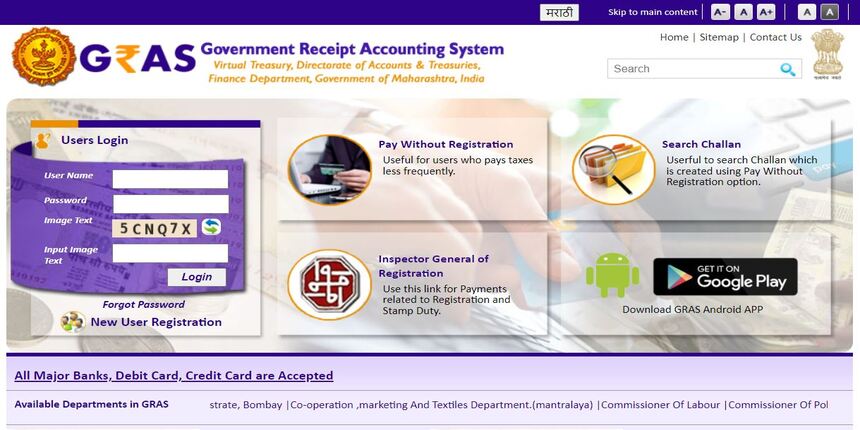
Step 1 – Firstly, navigate to the official portal of Maharashtra Stamp Duty Online Payment gras.mahakosh.gov.in/echallan/
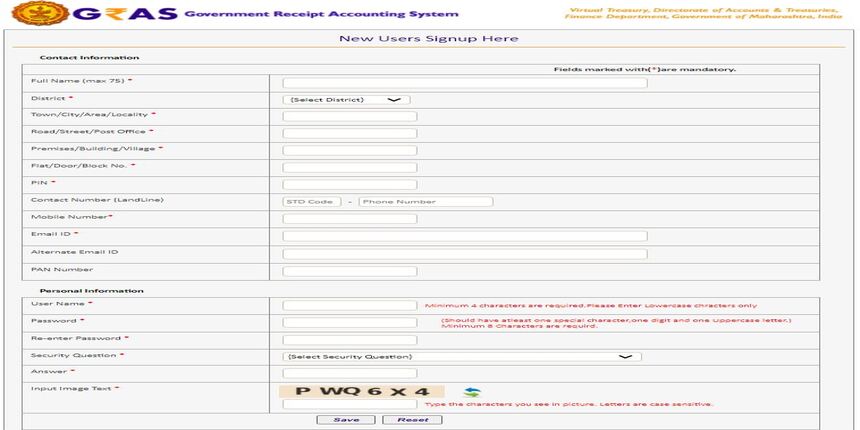
Step 2 – Secondly, register yourself on the portal.
Step 3 – If you want to pay without actually registering yourself on the website, then click on the tab “Pay without Registration,” then, tap on the option “select citizen” and the kind of registration you wish to initiate on the new page.
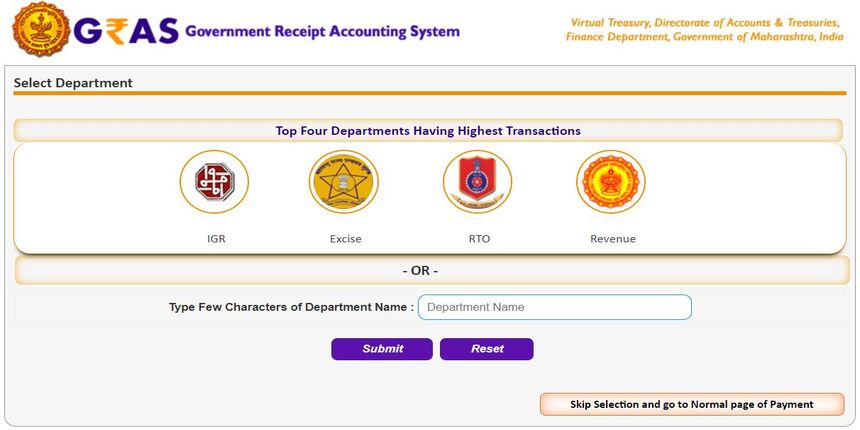
Step 4 – Next, you will find an option- “Pay to register your document.” Here, you can choose to pay solely the stamp duty charge or just the stamp duty registration charges of the property. Or you can also choose to pay both stamp duty and registration fees.
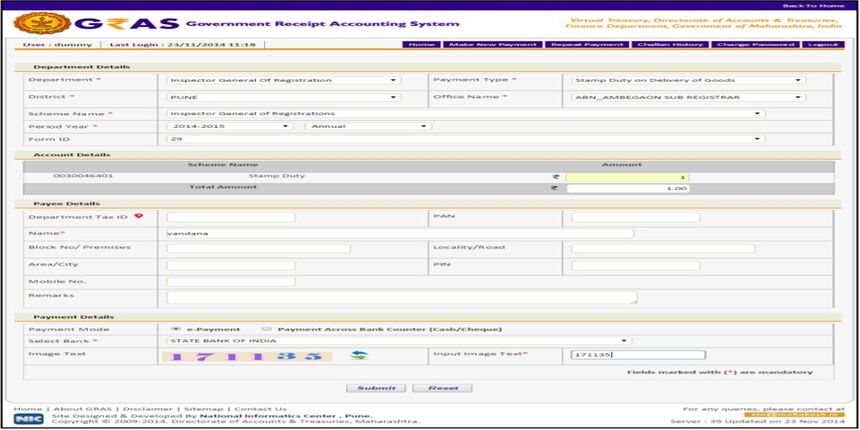
Step 5 – Now that you have chosen the type of payment, you need to enter the correct details such as property details, district, party details, sub-registrar office, and property value details.
Step 6 – In the final step, you need to choose the desired payment method and generate the challan.
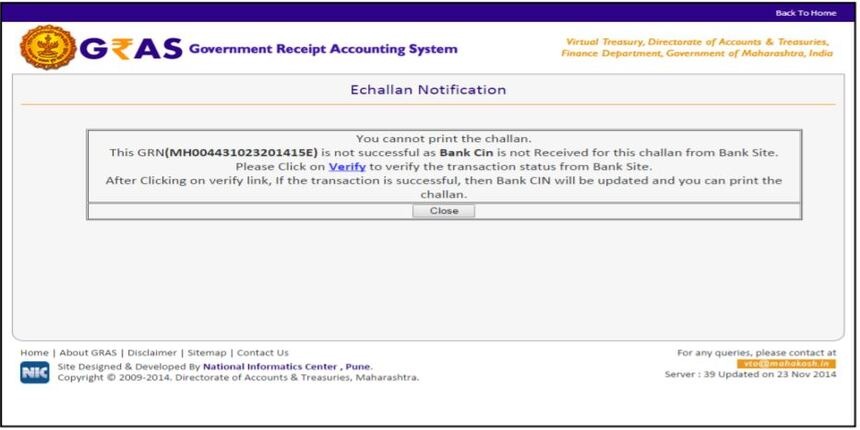
Paying stamp duty offline in Pune:
If you would rather not pay online, visit an authorised bank branch or licensed stamp vendor and buy a physical stamp paper of the required value, or pay through a Franking machine at select branches, where the bank stamps your document to confirm duty has been paid. Offline payment takes longer and some banks will not process very high value transactions over the counter, so for a larger flat purchase, online payment through GRAS is usually smoother.
Keep your payment receipt safe either way. You will need it at the Sub Registrar Office on registration day.
Stamp Duty Charges in Other States
| State | Stamp Duty Charges |
|---|---|
| Maharashtra | Stamp Duty in Maharashtra |
| Gujarat | Stamp Duty in Gujarat |
| Uttar Pradesh | Stamp Duty in Uttar Pradesh |
| West Bengal | Stamp Duty in West Bengal |
| Delhi | Stamp Duty in Delhi |
| Madhya Pradesh | Stamp Duty in Madhya Pradesh |
| Rajasthan | Stamp Duty in Rajasthan |
| Karnataka | Stamp Duty in Karnataka |
| Telangana | Stamp Duty in Telangana |
| Goa | Stamp Duty in Goa |
| Andhra Pradesh | Stamp Duty in Andhra Pradesh |
| Kerala | Stamp Duty in Kerala |
| Haryana | Stamp Duty in Haryana |
| Uttarakhand | Stamp Duty in Uttarakhand |
| Jharkhand | Stamp Duty in Jharkhand |
| Assam | Stamp Duty in Assam |
| Punjab | Stamp Duty in Punjab |
| Odisha | Stamp Duty in Odisha |
| Himachal Pradesh | Stamp Duty in Himachal Pradesh |
| Chhattisgarh | Stamp Duty in Chhattisgarh |
| Tamil Nadu | Stamp Duty in Tamil Nadu |
| Jammu and Kashmir | Stamp Duty in Jammu and Kashmir |
| Bihar | Stamp Duty in Bihar |
Stamp Duty on Different Property Types in Pune
Here is how stamp duty breaks down across common property types in Pune.
|
Property Type |
Male Buyer |
Female Buyer |
Notes |
|
New flat (PMC/PCMC) |
7% |
6% |
GST also applies if under construction |
|
Resale flat (PMC/PCMC) |
7% |
6% |
No GST |
|
Independent house |
7% |
6% |
Same rate as flats |
|
Plot or land |
7% |
6% |
No GST on land purchases |
|
Gift deed (blood relatives) |
Rs 200 flat |
Rs 200 flat |
Registration charges still apply |
|
Gift deed (others) |
7% |
6% |
Treated as a regular sale |
|
Commercial property |
7% |
7% |
No gender based concession here |
|
Rural/Gram Panchayat |
4% |
3% |
Lower cess structure |
So whether you are searching for house registration charges in Pune, home registration charges in Pune, property registration charges in Pune, property registration charges pune, or flat registration charges in Pune specifically, the registration fee itself stays the same 1 percent, capped at Rs 30,000, across almost every residential property type. What changes between property types is mainly the stamp duty percentage for commercial property, and whether GST applies.
Common Mistakes to Avoid When Paying Stamp Duty in Pune
A lot of buyers pay more than they should, or run into delays, because of a few repeated mistakes.
- Calculating stamp duty only on the agreement value, If the Ready Reckoner Rate is higher, that figure is used instead.
- Assuming resale flats get a discount, Resale and new flats are taxed identically, aside from GST not applying to resale.
- Budgeting around the old 15 year resale rule, This restriction on women reselling has already been removed.
- Assuming registration is always a flat Rs 30,000. It is 1 percent capped at that number, so anything below Rs 30 lakh has a lower actual fee.
- Using an old Ready Reckoner Rate. Rates are revised every April, so an outdated figure can throw off your budget.
- Skipping the encumbrance certificate on a resale purchase. This is what tells you if the flat has any pending loan or legal issue.
- Forgetting mutation after registration. Registering the sale deed is not the final step, and skipping mutation means tax bills may still show the old owner’s name.
Penalty for Late Stamp Duty Payment in Pune
If stamp duty is paid late or is insufficient Maharashtra will charge a penalty in addition to the shortfall. Under the 2026 structure penalties for insufficient stamp duty may reach up to one lakh rupees. Older underpaid cases from before this revision may still be governed by the structure, which charged two percent per month on the deficient amount.
A document with unpaid stamp duty carries real risk because it cannot be used as valid evidence, in court in the event of an ownership dispute. I have seen cases where an unsealed document caused a dispute to drag on for months. Always pay the stamp duty at the time you sign the document, not later.
Stamp Duty Refund in Pune: How to Apply
If a property deal does not go through after you have already bought the stamp paper or made an e- payment you might be able to get a refund. This can happen in cases like when the sale agreement is cancelled when you paid too much stamp duty or when the stamp paper gets spoiled and was never used.
To apply for a refund you need to send a refund application to the Collector of Stamps in the district where the duty was paid. Along with the form attach the stamp paper or the e-challan receipt. Also include proof that you made the payment and a written explanation—such as a copy of the cancelled transaction. The application must be submitted within the time allowed under the Maharashtra Stamp Act. Usually this window is six months from the date you bought the stamp paper. Its best to double-check the exact deadline, with your Sub Registrar Office.
The department will take out a processing fee before returning the money. So you won’t get back the amount you originally paid. It’s also good to follow up and then because processing times can differ. Keep track of your application. Make sure to check on its status regularly.
Ready Reckoner Rate in Pune: What It Means for Stamp Duty
The Ready Reckoner Rate, sometimes called the circle rate in other states, is the Maharashtra government’s own minimum valuation for every property in every locality. It gets updated every April. If your actual purchase price is below this rate, stamp duty is still calculated on the Ready Reckoner Rate, not your lower price.
Pune PMC areas saw a 6.8 percent Ready Reckoner Rate increase in April 2025, and PCMC saw 6.69 percent, with another 5 to 7 percent increase expected around April 2026. Check the current rate for your exact building at igrmaharashtra.gov.in before finalising your agreement value. On the income tax side, buying more than 10 percent below the Ready Reckoner Rate can make the difference taxable as income for the buyer, so it is worth staying close to this rate rather than negotiating far below it.
Section 80C Tax Benefit on Stamp Duty
Stamp duty and registration charges you pay on a residential property purchase can be claimed as a deduction under Section 80C of the Income Tax Act.
- Maximum deduction available is Rs 1,50,000 in the financial year the payment is made
- Applies only to residential property, not commercial property or a bare plot
- Available only under the old tax regime, not the new one
- Joint owners can each claim their own proportionate share, within the Rs 1,50,000 individual cap
- This shares the same overall Section 80C limit as your home loan principal repayment, so plan your total claims accordingly
Checklist Before Paying Stamp Duty on Flat in Pune
|
Step |
What to Do |
|
1. Check Ready Reckoner Rate |
Confirm the current rate at igrmaharashtra.gov.in |
|
2. Confirm your jurisdiction |
PMC, PCMC or Gram Panchayat decides your rate |
|
3. Decide whose name goes on the deed |
A woman’s sole name saves 1 percent |
|
4. Calculate the full cost |
Higher of agreement value or Ready Reckoner Rate, times your rate |
|
5. Verify the encumbrance certificate |
Essential for resale flats |
|
6. Make the payment |
GRAS portal, or offline via stamp paper or franking |
|
7. Book your Sub Registrar slot |
In advance at igrmaharashtra.gov.in |
|
8. Carry every required document |
Agreement, receipt, ID proofs and photographs |
Documents Required for Property Registration in Pune
Every document below is needed in original plus one self attested photocopy. Both buyer and seller need to be physically present at the Sub Registrar Office on registration day, along with two witnesses.
Documents required from both buyer and seller:
- Aadhaar card (original, for biometric verification)
- PAN card (mandatory above Rs 5 lakh)
- Two recent passport size photographs each
- Address proof such as voter ID, driving licence or a recent electricity bill
Core property documents:
- Sale deed or agreement drafted on the correct stamp paper value
- Stamp duty payment receipt or e-challan
- Encumbrance certificate confirming no pending loans or disputes
- Index II of the previous registration showing how the seller acquired the property
- Property card or 7/12 extract confirming current ownership
- Latest property tax receipts
- Society No Objection Certificate, where applicable
- RERA registration number, for a new flat
- Occupancy certificate, for completed buildings
- Approved building plan
Additional documents depending on the situation:
- For resale flats: chain of previous title deeds and society share certificate
- For under construction flats: builder-buyer agreement, allotment letter and GST payment receipts
- For NRI buyers or sellers: passport, visa or OCI card and NRE or NRO account statements
- For inherited property: death certificate and succession certificate or probate
- For a Power of Attorney purchase: the registered POA document
One small but important detail: your name spelling on the Aadhaar card must match exactly with the sale deed. Even a small mismatch can cause errors in the registration system and force you to rebook your appointment.
Conclusion
Stamp duty and registration charges in Pune add roughly 7 to 8 percent to your total property cost, whether you are buying a new flat or a resale flat, since both are taxed at the exact same rate. The only real ways to reduce this cost legally are registering the property in a woman’s name, which saves 1 percent, or making sure you are not accidentally paying GST on a resale flat where it does not apply.
Before you sign anything, check the current Ready Reckoner Rate for your building, confirm your jurisdiction (PMC, PCMC or Gram Panchayat), and keep every document ready before your Sub Registrar appointment. Pay online through GRAS where possible, and remember TDS is a separate requirement above Rs 50 lakh, not something stamp duty already covers. Getting these basics right before you negotiate a price means no surprises at registration.
Frequently Asked Questions:
1. How do I calculate stamp duty and registration charges in Pune?
Take the higher of your agreement value or the Ready Reckoner Rate for the property, then multiply by 7 percent for a male buyer or 6 percent for a female buyer in PMC or PCMC areas. Add 1 percent registration charge, capped at Rs 30,000, to get your total.
2. What is the formula for calculating stamp duty?
Stamp duty = (Higher of agreement value or Ready Reckoner Rate) x applicable stamp duty rate. Registration charge is calculated the same way, at 1 percent, capped at Rs 30,000.
3. What are the stamp duty and registration charges in Pune for 2026?
For 2026, male buyers pay 7 percent stamp duty in PMC and PCMC areas, female buyers pay 6 percent, and registration charges are 1 percent capped at Rs 30,000, for both new flats and resale flats.
4. Who pays stamp duty, buyer or seller in Pune?
The buyer pays stamp duty and registration charges in Pune. This is standard practice across Maharashtra and most other Indian states, since stamp duty is charged on the transfer of ownership to the new owner.
5. What are the latest updates on stamp duty in Maharashtra?
Maharashtra revised its penalty structure for insufficient stamp duty, now going up to Rs 1 lakh in addition to the shortfall. Ready Reckoner Rates were increased in April 2025, with another revision expected in April 2026.
6. . What are Document Handling Charges in Maharashtra?
A small additional fee, separate from stamp duty and registration, charged for scanning and digitally storing your registered documents at the Sub Registrar Office. It is a modest fixed amount, not a percentage of property value.
7. Is a Leave and License Agreement compulsorily registrable in Pune?
Yes. Under Maharashtra law, all leave and license or rent agreements must be registered, regardless of the tenure, though stamp duty on these is calculated differently, based on rent value rather than property value.
8. How are flat registration charges in Pune calculated for properties above Rs 30 lakh?
Once the property value crosses Rs 30 lakh, 1 percent would exceed Rs 30,000, so the charge is simply capped at that flat figure regardless of how much higher the value goes.
9. Do stamp duty charges vary between PMC limits and rural areas?
Yes. PMC or PCMC properties pay 7 percent (male) or 6 percent (female), while Gram Panchayat or rural areas pay a lower 4 percent or 3 percent, since Local Body Tax and Metro Cess only apply within municipal limits.
10. What is the stamp duty in Pune for a gift deed?
For gift deeds between blood relatives, stamp duty is a flat Rs 200. For gift deeds to non relatives, the full regular rate of 6 or 7 percent applies, same as a standard sale.