
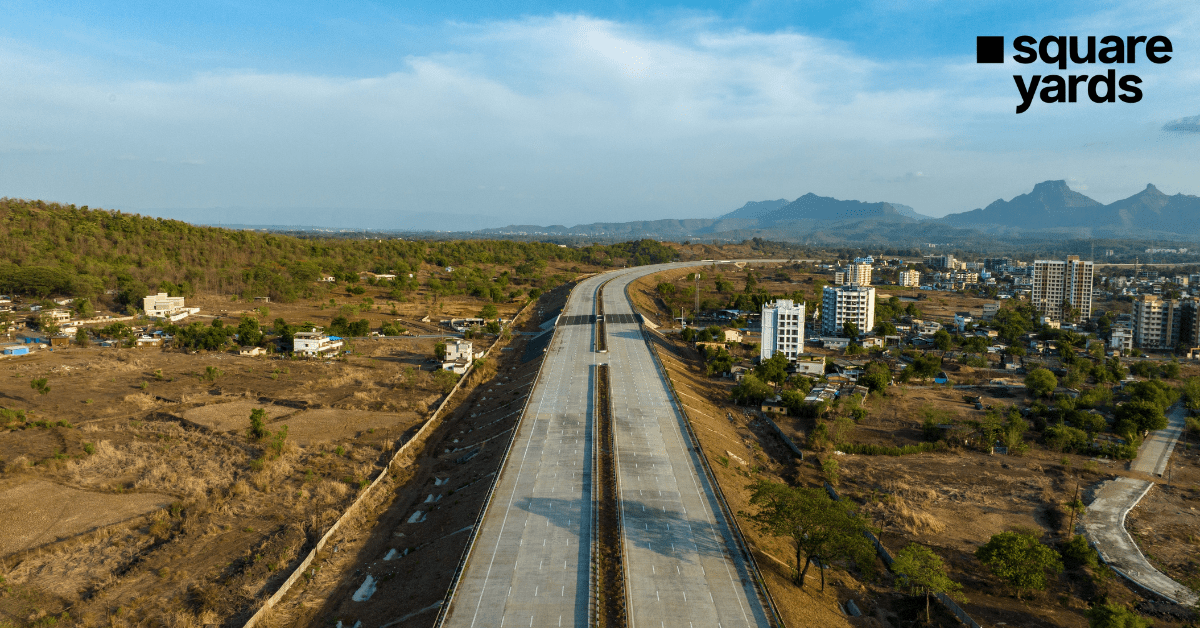
After expanding its network of ports, industrial parks and economic corridors over the past decade, Gujarat is preparing for another large-scale infrastructure upgrade through two proposed greenfield expressways: the Namo Shakti Expressway and the Dwarka-Somnath Expressway. Together, the projects represent an investment exceeding Rs 95,000 crore and are expected to redefine connectivity across North Gujarat, Saurashtra and the state’s western coastline.
Unlike conventional highway upgrades, these access-controlled corridors are being planned as long-term economic infrastructure. They aim to reduce travel time, improve freight movement to ports, boost religious tourism and bring better connectivity to districts that have remained outside Gujarat’s main industrial network.
Namo Shakti Expressway: Connecting North Gujarat with the coast
The proposed Namo Shakti Expressway will be a nearly 430-km greenfield access-controlled expressway linking Deesa in Banaskantha with Pipavav Port in Amreli. The corridor is designed to pass through 13 districts, including Banaskantha, Patan, Ahmedabad, Surendranagar, Morbi, Rajkot, Jamnagar, Devbhoomi Dwarka, Porbandar, Junagadh, Gir Somnath, Botad and Amreli.
The expressway’s strategic importance lies in the geography it connects. North Gujarat has a strong agricultural economy and growing manufacturing activity, while the Saurashtra coastline hosts major ports, petrochemical facilities, engineering industries and export-oriented businesses. Currently, freight movement between these regions relies mainly on national and state highways that pass through several towns and cities, resulting in traffic congestion and slower travel.
The new expressway is expected to provide a faster north-south transport route, enabling seamless travel between inland production hubs and coastal ports. This can be beneficial for industries dependent on timely cargo movement, such as those in the Saurashtra region.
By passing through several industrial clusters, religious destinations and urban centers, the expressway is expected to reduce travel time across large parts of western Gujarat while improving access to Pipavav Port and other coastal economic zones. The corridor will complement Gujarat’s broader road infrastructure program by integrating with existing highways and future economic corridors, including key national highways serving Ahmedabad, Rajkot, and the Saurashtra region, as well as the Delhi-Mumbai Industrial Corridor (DMIC).
Dwarka-Somnath Expressway: Building a dedicated tourism and coastal growth corridor
Officially known as the Ahmedabad-Somnath-Dwarka Expressway, the Dwarka-Somnath Expressway is planned as a 680-km greenfield expressway connecting Ahmedabad to Gujarat’s two most important pilgrimage destinations, Dwarka and Somnath. This corridor is being positioned as a tourism and regional development project.
The proposed alignment is expected to pass through Ahmedabad, Rajkot, Porbandar, Jetpur, Somnath and Dwarka while linking more than a dozen districts across the state. Once operational, the expressway is expected to reduce travel time between Ahmedabad and Somnath from roughly seven to eight hours to nearly four hours.
The project also strengthens Gujarat’s coastal connectivity. Dwarka, Somnath, Porbandar, and nearby coastal towns attract millions of pilgrims and tourists annually, but road connectivity among these destinations often relies on existing highways that pass through multiple settlements. A high-speed expressway could make travel faster and more reliable while making it easier for tourists to visit religious, heritage and coastal destinations in a single trip.
The expressway is also expected to enhance mobility for coastal districts by improving access to regional urban centers such as Rajkot and Ahmedabad. Better connectivity can lower transportation costs for local businesses while encouraging investment in hotels, tourism services and other supporting infrastructure along Gujarat’s western coast.
Impact on Gujarat’s real estate
The Namo Shakti Expressway is likely to create the strongest impact on industrial and logistics real estate. Since it connects North Gujarat with Pipavav Port and intersects several manufacturing and agricultural districts, land near future interchanges could see rising demand for warehousing, freight terminals, logistics parks, and industrial support facilities. Developers often prefer locations near access-controlled expressways because they lower transportation costs, improve supply chains and make nearby land more suitable for industrial development.
Districts such as Rajkot, Morbi, Ahmedabad, Surendranagar and Amreli could benefit in particular, as they already possess manufacturing ecosystems that could expand with improved freight connectivity. Rather than triggering an immediate rise in residential demand, the corridor is more likely to support the gradual growth of industrial townships, commercial spaces, and housing for workers near logistics hubs. Land prices usually rise first near the confirmed expressway route, interchanges, and industrial hubs. Broader residential growth generally comes later, as construction progresses and supporting infrastructure such as utilities, commercial spaces and public transport is developed.
Namo Shakti Expressway: Price insights
|
District |
Average price (per sq ft) |
|
Rajkot |
Rs 4,300 – 5,500 |
|
Morbi |
Rs 2,800 – 4000 |
|
Ahmedabad |
Rs 4,250 – 7,750 |
|
Surendranagar |
Rs 2,500 – 5000 |
|
Amreli |
Rs 2,500 – 4000 |
Source: Square Yards Research
The Dwarka-Somnath Expressway is expected to have a greater impact on tourism and hospitality-related real estate. Faster access between Ahmedabad and Gujarat’s western coastline can expand the market for hotels, resorts, pilgrimage accommodation, holiday homes and mixed-use commercial projects serving tourists. Better connectivity could increase property demand in places such as Dwarka, Somnath, Porbandar and parts of Rajkot district, attracting buyers and investors from outside these local markets.
Dwarka-Somnath Expressway: Price insights
|
District |
Average price (per sq ft) |
|
Dwarka |
Rs 3,000 – 6,500 |
|
Somnath |
Rs 3,500 – 6,200 |
|
Porbandar |
Rs 4,000 – 8,000 |
Source: Square Yards Research
Another important implication is the widening of Gujarat’s development geography. Historically, much of the state’s organized real estate activity has remained concentrated around Ahmedabad, Gandhinagar, Surat, Vadodara and parts of Rajkot. The proposed expressways will improve high-speed connectivity across North Gujarat and the Saurashtra region, making smaller cities more attractive for long-term investment.