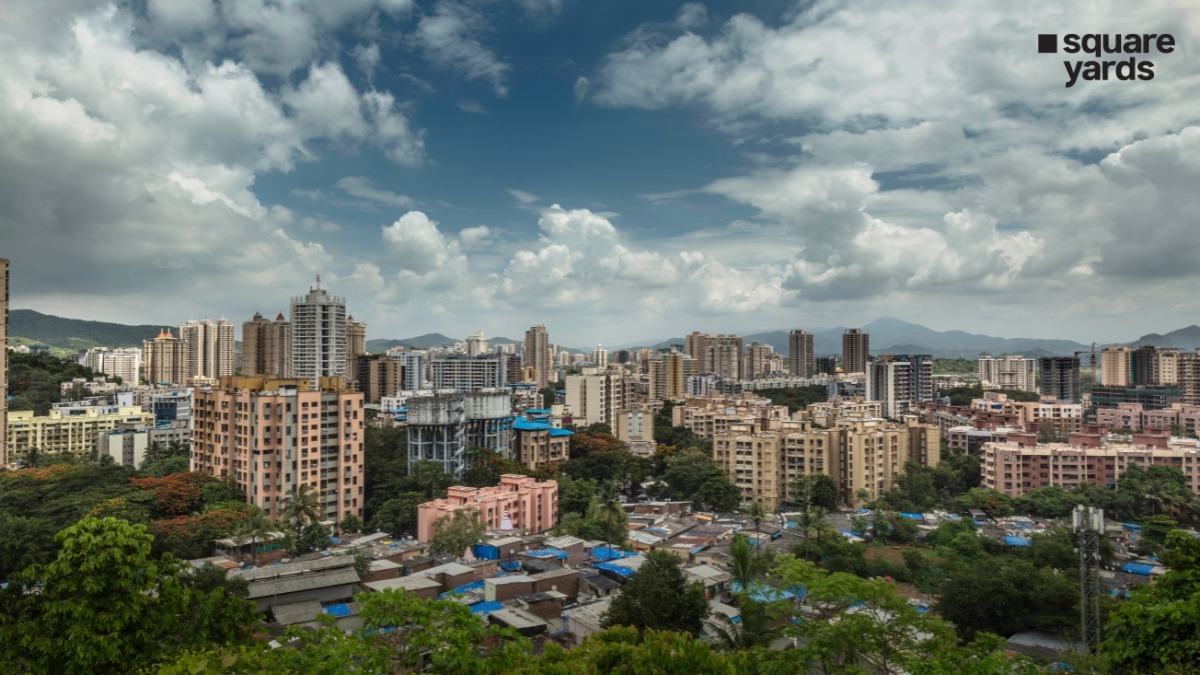
Thane is steadily strengthening its position as one of the leading residential markets in the Mumbai Metropolitan Region, drawing interest from homebuyers, investors, and working professionals who are looking beyond Mumbai. The shift has gathered pace over the past few years as infrastructure projects, commercial expansion, and a broader mix of housing developments have changed the city’s real estate landscape.
Unlike in earlier years, when many buyers viewed Thane mainly as an alternative to Mumbai, the city is now attracting demand in its own right. Residential activity is spreading across established and emerging micro markets, supported by improved road and metro connectivity, growing employment hubs, and expanding social infrastructure. These changes are influencing where people choose to live and where investors see long-term potential.
What is driving this transition, and how has Thane evolved into a market that appeals to different buyer segments? The answer lies in a combination of infrastructure upgrades, diverse residential supply, local job creation, and changing homebuyer preferences.
Thane’s residential market has expanded beyond its Mumbai suburb identity
For a long time, Thane’s housing market grew alongside Mumbai, with many homebuyers choosing the city for relatively lower property prices while continuing to work in the financial capital. That perception has gradually changed. Today, Thane is emerging as an independent residential destination, supported by its own commercial districts, social infrastructure, and a steady pipeline of housing projects.
Residential development has also spread across micro markets such as Ghodbunder Road, Kolshet Road, Majiwada, Balkum, and Pokhran Road. These areas offer a mix of affordable, mid-segment, and premium housing, giving buyers more options than in the past.
This broader transformation has reshaped the city’s housing market. Rather than being viewed simply as an extension of Mumbai, Thane is increasingly recognized as a residential hub with its own demand drivers, supported by employment opportunities, everyday conveniences, and ongoing urban development.
Infrastructure upgrades continue to influence housing activity across Thane
Several large infrastructure projects are changing how people travel to and from Thane and influencing residential activity across the city. Improved connectivity has expanded access to Mumbai, Navi Mumbai, and other parts of the Mumbai Metropolitan Region, making more neighborhoods attractive to homebuyers and developers alike.
The Mumbai Metro network is expanding its reach across Thane through multiple planned and under-construction corridors. Projects such as the Thane Borivali Tunnel and the Mumbai Trans Harbor Link are expected to improve regional connectivity by reducing travel time to key business districts and transport hubs. Road improvements along Ghodbunder Road and wider highway upgrades are also easing movement between residential and commercial areas.
Improved connectivity allows working professionals to consider locations that were once seen as less convenient, while developers continue to launch projects in areas where transport infrastructure is expected to improve further.
Homebuyer and investor interest continues to shift toward Thane
Thane’s residential market is attracting a broader mix of buyers than it did a decade ago. First-time homebuyers remain an important part of the market. Demand is also coming from families looking for larger homes, professionals seeking shorter commutes, and investors exploring opportunities outside Mumbai. This shift reflects changing housing priorities rather than a single market trend.
Property prices in many parts of Mumbai have encouraged buyers to expand their search across the Mumbai Metropolitan Region. In Thane, they can often find a wider range of configurations, newer residential communities, and integrated developments. Investor interest has also remained steady, supported by ongoing infrastructure projects, active residential launches, and rental demand from the local workforce. Markets with diverse housing supply and improving connectivity often attract long-term investment, and Thane has continued to add new projects across multiple micro markets.
Thane’s residential market enters its next phase of growth
Several established real estate companies are expanding their presence across micro-markets such as Kolshet Road, Balkum, Ghodbunder Road, Pokhran Road, and Thane West, where infrastructure upgrades and improved connectivity are expected to support future housing demand.
Recent and upcoming projects by developers including Kalpataru, Raymond Realty, Godrej Properties, Runwal Group, Dosti Realty, and Oberoi Realty indicate that the market is attracting investment across multiple housing segments. Integrated townships, mixed-use developments, and premium residential communities are becoming more common, reflecting a shift toward larger, master-planned projects rather than standalone residential towers.
Many of these developments are being planned around key infrastructure corridors, including Metro Line 4, Ghodbunder Road, and the Eastern Express Highway.
Rental demand continues to strengthen across Thane’s key residential hubs
Thane’s rental market continues to benefit from the city’s expanding employment base and improving connectivity. Demand comes from professionals working in Thane as well as those commuting to Mumbai, Navi Mumbai, and other business districts, creating steady rental activity across several residential neighborhoods.
Areas such as Majiwada, Ghodbunder Road, Kolshet Road, Pokhran Road, and Thane West remain popular among tenants due to their transport links, social infrastructure, and availability of modern housing developments.
According to Square Yards’ Property Rates in Thane (July 2026), average monthly rents range from Rs 16,850 for studio apartments to Rs 1.59 lakh for 5 BHK homes, while the city offers an average rental yield of 3.52%. The report also notes that 1 BHK apartments average Rs 21,150 per month, 2 BHK units Rs 36,050, and 3 BHK homes Rs 56,450, reflecting demand across multiple budget segments.
For investors, these trends complement the city’s ongoing infrastructure development. A combination of consistent rental demand, diverse housing options, and improving urban connectivity continues to reinforce this.
Thane’s housing market continues to evolve
Thane’s housing market has evolved well beyond its role as a residential alternative to Mumbai. Infrastructure upgrades, commercial expansion, a diverse housing pipeline, and growing rental demand have together shaped a market that attracts a wide range of homebuyers and investors. These developments have also strengthened the city’s position within the Mumbai Metropolitan Region, making it an increasingly important residential destination.
Looking ahead, the pace of infrastructure delivery and new residential launches will remain key factors influencing the market’s next phase. As metro corridors become operational, road networks improve, and more mixed-use developments take shape, buyer preferences are likely to continue shifting toward locations that offer both convenience and long-term value. While every real estate market moves through its own cycles, the current trends indicate that Thane is steadily building on its existing strengths rather than relying solely on its proximity to Mumbai.