Lucknow
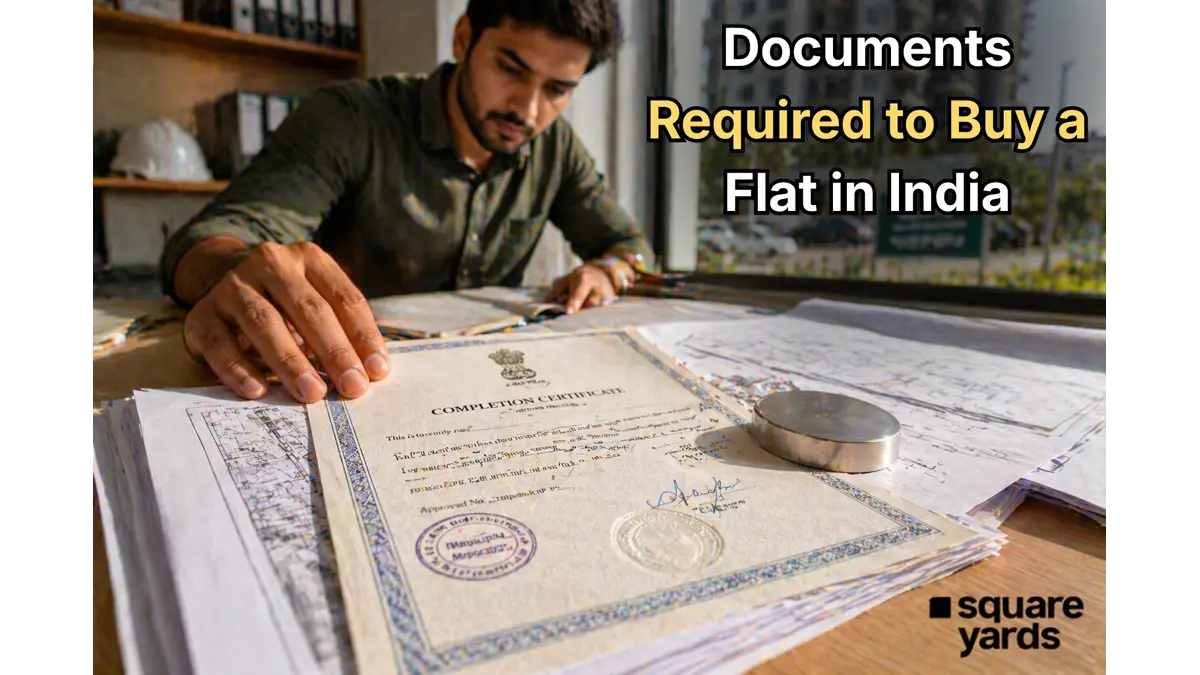
Buying a flat is one of the most significant financial decisions you will ever make. Whether you are purchasing a new apartment or a resale property, having the right documents required to buy a flat is the foundation of a safe and legally compliant transaction. Missing even one critical document can delay your registration, jeopardise your home loan, or expose you to legal disputes years later.
In India, property disputes are alarmingly common, and most arise from incomplete or fraudulent documentation. The right paperwork not only secures your ownership but also:
|
Document |
Purpose |
Accepted By |
|
Aadhaar Card |
Identity & address proof |
Banks, Registrar, Builder |
|
PAN Card |
Mandatory for transactions above ₹5 lakh |
Registrar, Banks |
|
Passport |
Alternative ID proof |
Banks, Registrar |
|
Voter ID |
Address proof |
Registrar |
|
Driving Licence |
Identity + address |
Banks |
When applying for a home loan, banks and NBFCs require additional documents beyond property papers. Here is what lenders typically ask for:
|
Pro Tip: Keep both original and self-attested photocopies of all documents ready. Banks and registrars often require multiple sets. |
Purchasing a resale flat demands extra due diligence because you are dealing with a property that has prior ownership. Key additional documents include:
|
Document |
New Flat |
Resale Flat |
|
RERA Certificate |
✅ Required |
Optional (if old project) |
|
OC / CC |
✅ Required |
✅ Required |
|
Chain Title Deeds |
Not applicable |
✅ Essential |
|
Society NOC |
Not applicable |
✅ Essential |
|
Encumbrance Certificate |
✅ Required |
✅ Required (min. 15 years) |
The Sale Deed is the most critical document — it legally transfers ownership from the seller to the buyer and must be registered with the Sub-Registrar’s office.
PAN is mandatory for any property transaction above ₹5 lakh as per Section 139A of the Income Tax Act. Without PAN, the registration cannot proceed.
While Aadhaar is not legally mandatory, most registrars and banks require it for identity verification. It is practically essential.
You need a foreclosure letter from the bank, original property documents, and a No Dues Certificate (NDC) confirming the loan is fully cleared.
For resale properties, request an EC for at least 13–15 years. For new properties, the builder should provide an EC from the date of their purchase.
A tripartite agreement is a three-party legal contract between the buyer, builder, and bank, establishing the terms under which the bank disburses funds directly to the builder.
The society NOC confirms the seller has paid all dues, and the society agrees to transfer membership to the buyer. Without it, you may face issues with property access and services.