
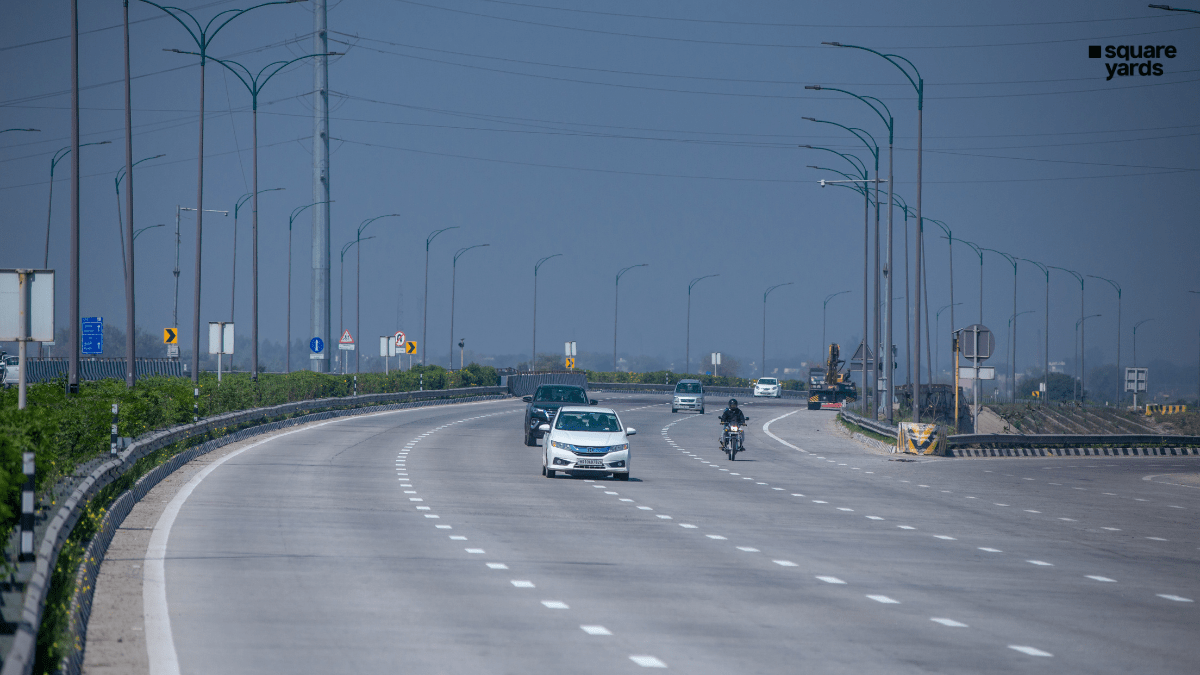
Pune’s next real estate cycle will not be built in Koregaon Park or Shivajinagar. It will be built along the corridors of a road that is still under construction and, in many places, still under land acquisition. That road is the Pune Ring Road, and its progress from planning to execution is beginning to move the market in ways that matter more than any announcement.
The Pune Metropolitan Region Development Authority (PMRDA) is advancing an 83-kilometre, 65-metre-wide internal ring road designed to relieve congestion across the city and its growth corridors. The project will require between 700 and 750 acres of land, with acquisition already underway across villages, including Solu, Wadgaon Shinde, and Nirgude. Compensation benchmarks have been fixed. The Maharashtra State Road Development Corporation’s (MSRDC) outer ring road, which will connect with this internal alignment, has already crossed 30 per cent completion.
In real estate, the shift from announcement to acquisition is the signal that matters. Once compensation is fixed and land is acquired, the market stops treating future infrastructure as a distant possibility and starts pricing it as an immediate reality.
Ring roads don’t just move traffic. They move the boundary of where a city ends and where its next growth cycle begins.
Why ring roads reshape real estate differently
Metro corridors increase density within existing city zones. Ring roads do something different: they create horizontal growth in cities. By improving access to peripheral land and reducing the pressure on city-centre routes, they make large-format township development financially viable in locations that were previously too disconnected to attract serious developer interest. For developers, this opens access to larger land parcels at lower acquisition costs. For buyers, it creates an entry point into residential markets with stronger long-term appreciation potential. For investors, it opens early positions in growth corridors before full urbanisation arrives, when land is still repricing, not yet priced.
The Pune Ring Road will also catalyse warehousing demand near major junction corridors. Improved freight movement reduces heavy commercial traffic inside the city and strengthens industrial logistics belts along the alignment. The sequence matters: commercial activity follows infrastructure, and residential demand follows commercial activity. Infrastructure is the biggest long-term value driver, with the proposed Pune Ring Road, metro expansion, road widening in Hinjewadi and Phase 4–5 IT Park development expected to significantly improve connectivity and future capital appreciation.
West Pune: the clear beneficiary
Among all of Pune’s growth corridors, West Pune stands to gain most immediately from the ring road. Micro-markets including Hinjawadi, Mahalunge, Baner, Wakad, and Bavdhan are already established demand centres, driven by IT parks, employment hubs and strong social infrastructure. But they have also hit limits, such as pricing saturation, traffic bottlenecks and dwindling land availability for fresh supply.
Improved peripheral connectivity changes that equation. It reduces dependence on central Pune routes, allowing residential demand to move outward without compromising access to employment hubs. This makes the adjoining growth pockets more viable, where land remains relatively affordable, and infrastructure upside is real.
Hinjawadi: Pune’s largest IT employment hub. Ring Road integration extends its influence deeper into western corridors.
Mahalunge: Growing appeal among premium mid-income buyers as improved connectivity reduces perceived distance.
Wakad & Baner: Benefit from stronger spillover demand as Hinjawadi’s influence radius expands westward.
Bavdhan: Improved access to both western employment zones and central Pune makes it attractive to a wider range of buyers.
Pirangut: Early appreciation already visible along the ring road alignment. Plotted development and land aggregation are accelerating.
Land value appreciation starts early
Appreciation doesn’t wait for ribbon-cutting. It begins the moment alignment certainty improves — attracting plotted development, institutional land aggregation and warehousing-led demand ahead of visible construction.
In West Pune, this trend is already underway across Bavdhan, Hinjawadi, Pirangut and nearby corridors along the ring road alignment. Landowners have begun repricing expectations as acquisition benchmarks reset local valuations. Recent reports indicate that landowners are receiving an average compensation of approximately ₹3.7 crore per hectare, a figure now serving as a new floor for pricing surrounding land.
Pune’s 2025 ready reckoner revision registered 5–10 per cent increases in several residential and commercial pockets along these corridors above the city average, reflecting how infrastructure expectations get formalised into official valuations before the road is even built.
Pricing reflects the shift
Demand is already shifting away from Pune’s traditional city core, and the numbers make that visible. Central Pune still commands the highest average asking price, but it is the only major zone recording a price decline, which is a sign of affordability pressure and saturation rather than strength. The growth is happening at the edges. From Jun 2025 to May 2026, Pune West recorded 8,503 registered sales transactions, with a gross sales value of ₹8,872 crore, at an average registered rate of ₹9,750 per sq. ft, according to Square Yards data.
Pune residential market -Avg. asking price & Quarterly appreciation based on Square Yards data
|
Zone |
Avg. price (₹/sq ft) |
Quarterly change |
|
Pune Central |
₹16,140 |
−12% |
|
Pune West |
₹13,100 |
+5.4% |
|
Pune East |
₹13,400 |
+17.4% |
|
Pune South |
₹11,900 |
+22.3% |
|
PCMC |
₹12,200 |
+31.7% |
-
New launch projects averaging ₹10,300/sq ft
-
Under-construction ₹10,000/sq ft
-
Ready-to-move ₹9,500/sq ft
Pune West’s 5.4 per cent quarterly appreciation, supported by consistent demand across Baner, Wakad, Hinjawadi, Mahalunge and Bavdhan, reflects a market with both accessibility and pricing headroom, which is a combination that infrastructure-led demand seeks. Buyers priced out of Central Pune are increasingly looking west, where township inventories, larger formats and future infrastructure upside create better value. Pune West operates across a wide pricing spectrum, from affordability-led micro-markets like Marunji at around ₹7,450 per sq. ft. to premium established markets like Kothrud at ₹17,750 per sq. ft., allowing both mid-income and luxury demand to coexist.
The readiness to enter the development cycle earlier, at launch pricing rather than at ready-to-move-in, also signals greater confidence in the infrastructure. When buyers trust that a road will be built, they buy before it is.
Developer Concentration
Developer concentration is exceptionally strong, with major brands such as Kolte-Patil Developers, Kumar Properties, Vilas Javdekar and Rohan Builders having large project footprints, reinforcing institutional confidence and organised residential supply in the region.
What Investors Should Watch
The opportunity lies in identifying execution-backed micro-markets, not in chasing a broad ring-road narrative. Land acquisition, developer purchases and project tenders are investment signals. The strongest indicators to track:
- Land acquisition progress and compensation settlements in specific villages
- Developer land banking and parcel aggregation near junction corridors
- Township or integrated community project announcements from branded developers
- Road package tenders and construction contract awards
- Employment hub expansion announcements in Hinjawadi and adjoining zones
- Rental demand stability: the truest signal of end-user confidence
Micro-markets with both employment anchors and infrastructure access consistently outperform locations with only one of those two factors. This is why the Hinjawadi-linked western corridors remain stronger than isolated peripheral zones that have ring-road access but no job ecosystem to sustain demand.
Sustained demand matters more than short-term hype. The signal is execution, not announcement. The edge is becoming the core
Pune’s growth story is being rewritten by infrastructure rather than by proximity to legacy city centres. Accessibility is increasingly measured not by distance from Shivajinagar, but by travel efficiency across connected growth corridors. That changes where buyers look, where developers build and where capital flows. West Pune stands at the centre of that transition. What was once the city’s edge is steadily becoming its next urban core, and the ring road is the clearest reason why.