According to TomTom’s 2025 Traffic Index, driving 10 km in India’s IT capital Bengaluru took an average of 36 minutes and 9 seconds. During rush hour, speeds dropped to only 13.9 km/h, while commuters lost nearly 168 hours a year in peak-hour traffic. In a city where time has become the most expensive urban luxury, real estate value is no longer defined only by the apartment size, builder brand or distance from an IT park. In 2026, it is mostly about the time saved on commuting.
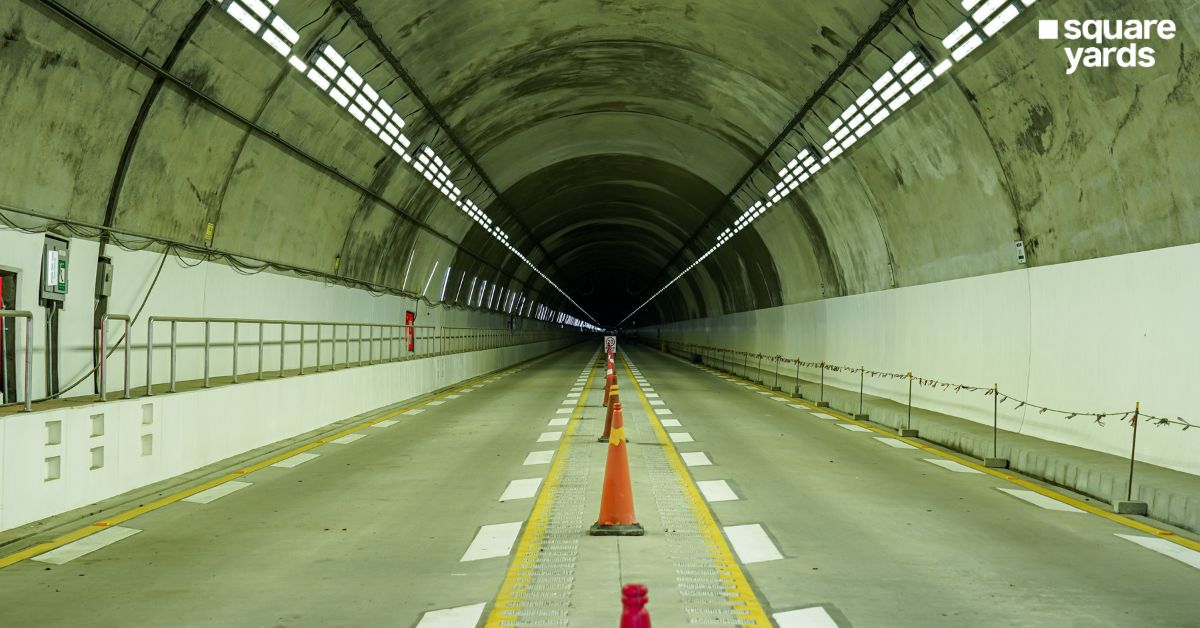
That is what makes the proposed Hebbal-Silk Board urban tunnel road such a significant project. It has the potential to reshape one of Bengaluru’s most valuable north-south corridors, connecting the airport-driven growth belt of North Bengaluru with the city’s dense South and South-East employment hubs.
Hebbal-Silk Board tunnel corridor
The Karnataka Cabinet approved a 16.7-km North-South Corridor tunnel road connecting Esteem Mall at Hebbal Junction to Central Silk Board Junction in HSR Layout. The project received initial cabinet approval in 2024. The implementation began in 2025 under the BOOT (Build-Own-Operate-Transfer) model.
To be completed in two packages, the Rs. 17,780-crore project is expected to be completed by 2030. According to media reports, the Hebbal-Silk Board tunnel is expected to include entry and exit ramps at Mehkri Circle, Race Course and Lalbagh, with an estimated full-stretch car toll of around Rs 330*.
Why the tunnel road could change Bengaluru real estate
Urban tunnels can do three things for a dense city like Bengaluru.
First, they create a premium for time-saving. A family living in Hebbal but working around HSR, Koramangala, BTM or Electronic City may suddenly evaluate North Bengaluru differently if the tunnel reduces uncertainty in their commute.
Second, they create a fresh pricing logic around junctions. Hebbal, Mehkri Circle, Lalbagh, Dairy Circle, HSR Layout and Silk Board could become sharper “mobility nodes” if the tunnel integrates well with metro, buses and surface traffic.
Third, they can change rental demand. Tenants, especially in the Rs 50,000-Rs 1 lakh monthly rent bracket, are often willing to pay more for predictability than for pure distance advantage.
But there is a catch: a tunnel road is not a magic wand. If it is expensive, tolled heavily, poorly integrated with public transport, or creates new bottlenecks at ramps, the real estate upside may be restricted or become selective rather than city-wide.
Regions where the tunnel could influence prices
Square Yards data already show that several tunnel-linked and tunnel-adjacent markets are not cheap speculative pockets. Many are mature or semi-premium markets where the tunnel may improve liquidity, rentals, and resale strength rather than create overnight appreciation.
Hebbal: Hebbal is already one of Bengaluru’s strongest infrastructure-led real estate markets. It has airport connectivity, access to Manyata Tech Park, luxury projects, large-format housing, and strong rental demand. Square Yards data shows Hebbal’s average asking price at Rs 17,153 per sq. ft., with quarterly prices moving from Rs 14,494 (psf) in June 2025 to Rs 17,153 (psf) by March 2026.
The tunnel road may not make Hebbal “affordable”. That phase is over. Instead, it may make Hebbal more defensible as a premium market. For investors, this means the opportunity is not necessarily bargain buying; it is choosing projects with strong exit liquidity, rental appeal, and proximity to actual access corridors.
HSR, BTM and Bommanahalli: HSR Layout is already expensive, with Square Yards showing an average asking price of Rs 17,638 per sq ft and apartment appreciation of 41.45%.
BTM Layout, however, offers a different story. It has an average asking price of Rs 11,517 (psf) and a rental yield of 4.69%, making it a more yield-friendly market compared with several premium pockets.
Word of caution
A government-appointed expert panel reportedly flagged several issues in the tunnel-road DPR, including limited soil-test data, lack of groundwater mapping, concerns around Lalbagh, weak stormwater calculations, inflated traffic projections and ramp-design risks near Mehkri Circle and other junctions.
These are not minor technical objections. If ramps create new bottlenecks, the very locations expected to benefit may face short-term disruption. If tolls are too high, usage may be limited to a smaller commuter class. If construction stretches for years, surface roads around key nodes could face pressure before they see relief.
That means buyers should not buy blindly on the phrase “near tunnel road”. The smarter approach is to check three things: actual ramp proximity, alternate metro or bus access, and whether the project has strong existing demand even without the tunnel.
Key takeaways
The Hebbal-Silk Board tunnel road could become one of Bengaluru’s most consequential urban infrastructure projects. But its real estate impact will be uneven.
Hebbal may gain premium stability. HSR may gain stronger rental stickiness. BTM and Bommanahalli may offer more practical upside for mid-segment buyers. Inner North pockets such as RT Nagar may benefit if the Mehkri and Hebbal access points are designed well. Central areas may see better liquidity, but mature pricing means investors must be careful about overpaying.
The most important point is this- the tunnel will not create value by existing underground. It will create value only if it saves time above ground.
For Bengaluru, the project is a test of maturity. Can the city build infrastructure that supports real mobility, not just traffic movement? Can it connect tunnels with metro, buses, walking networks, and sensible land use? Can governance keep pace with ambition?
If the answer is yes, the tunnel road could redraw Bengaluru’s real estate map.