
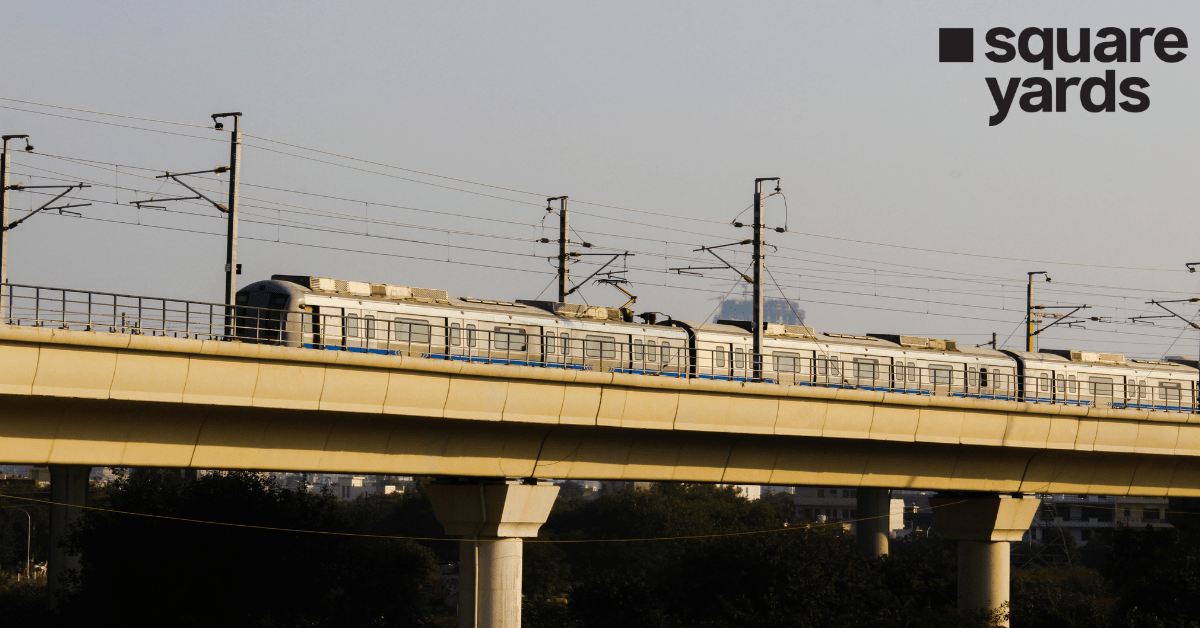
In a recent notification of the Transit Oriented Development (TOD) Policy under the Master Plan for Delhi-2021, a mixed-use development around metro corridors and major transit hubs has been announced. Among the most notable possibilities under this framework is the development of residential projects above or around metro stations. This approach seeks to maximize scarce urban land while improving connectivity.
The policy follows a planning approach already adopted by several global cities, in which transport infrastructure supports not just mobility but also housing, commercial development, and sustainable urban growth. With housing demand increasing and available land becoming scarce, integrating residential spaces with metro infrastructure could change the way Delhi plans future housing and urban development over the next decade.
Key features and execution of the project
The newly notified TOD Policy permits taller and denser construction within designated influence zones around metro stations, railway stations and major transit corridors. Instead of low-rise developments, developers will be able to build mixed-use projects that include homes, offices, commercial spaces and public facilities near metro stations.
The policy applies to notified metro, railway and RRTS stations, with each station having an 800-meter TOD Planning Area and an inner 500-meter Intense Development Area where higher-density residential and mixed-use development will be encouraged. These zones are designed to help people live closer to metro stations, making it easier to use public transport rather than private vehicles and improving access to workplaces and essential services.
Unlike many housing projects built on the city’s outskirts, these developments make better use of existing metro infrastructure. They also reduce the need for new roads and encourage compact urban growth instead of horizontal sprawl.
Execution will involve multiple agencies, including the Delhi Development Authority (DDA), the Delhi Metro Rail Corporation (DMRC), urban planning authorities and private developers. The TOD framework also incorporates urban design standards covering pedestrian movement, public spaces, green infrastructure and integrated transport planning to ensure that higher density does not compromise liveability.
Another important feature is mixed land use. Rather than creating purely residential neighborhoods, TOD promotes integrated communities where homes, offices, retail outlets, healthcare facilities and recreational spaces coexist within the same development zone. This reduces travel distances and supports round-the-clock economic activity.
The policy is aligned with Delhi’s broader sustainability objectives. By building more homes around metro stations, it aims to reduce traffic, increase the use of public transport and create a cleaner urban environment.
Similar projects in international cities
Delhi’s proposed model follows a planning strategy that has already been implemented successfully in several international cities.
Hong Kong
Hong Kong is considered the world’s most successful example of transit-oriented development, driven by the Mass Transit Railway (MTR) Corporation’s “Rail + Property” model. Projects such as LOHAS Park, built above the Tseung Kwan O Line depot, have transformed railway land into a large residential township with more than 50 residential towers, shopping facilities, schools and recreational spaces.
Tokyo
In Tokyo, railway companies have long integrated housing with transport infrastructure. Futako-Tamagawa Rise, developed around Futako-Tamagawa Station by Tokyu Corporation, combines high-rise apartments, office buildings, retail centers, hotels and public spaces around a major rail hub.
Singapore
Singapore has systematically planned housing around its MRT network. Towns such as Punggol and Jurong East were developed with residential blocks located within walking distance of MRT stations, alongside schools, healthcare facilities, shopping centers and parks.
London
London has used transport-led redevelopment to regenerate aging urban districts. The King’s Cross Central project, centered around King’s Cross and St Pancras stations, transformed former railway land into a mixed-use district featuring thousands of homes, offices, retail spaces and public squares.
China
In Shenzhen, developments around stations on the city’s expanding metro network integrate residential towers, shopping malls and office complexes within walking distance of transit. Shanghai’s Hongqiao Hub is another example, combining high-speed rail, metro lines, commercial offices, hotels and residential development into a single integrated urban district.
Benefits for residents and investors
One of the biggest advantages of transit-oriented housing is improved everyday connectivity. Living above or within walking distance of a metro station can significantly reduce commuting time and transportation costs, while making workplaces, educational institutions, healthcare facilities and commercial centers easier to access. Mixed-use developments also bring retail outlets, restaurants, public spaces and other essential services closer to residents.
The model also supports more efficient use of urban infrastructure. When more people live near metro stations, they are more likely to use public transport instead of driving. This, in turn, can help reduce traffic congestion and vehicular emissions while making better use of existing public infrastructure.
From a real estate perspective, properties near metro stations have consistently attracted strong buyer interest across many markets due to their connectivity and convenience. Properties near metro stations often have higher prices than those in less connected areas. They also see steady rental demand from working professionals, students, and families seeking shorter daily commutes.
The mixed-use nature of these projects can further support commercial activity, as shops, restaurants and other businesses benefit from both resident populations and regular footfall from metro commuters.