
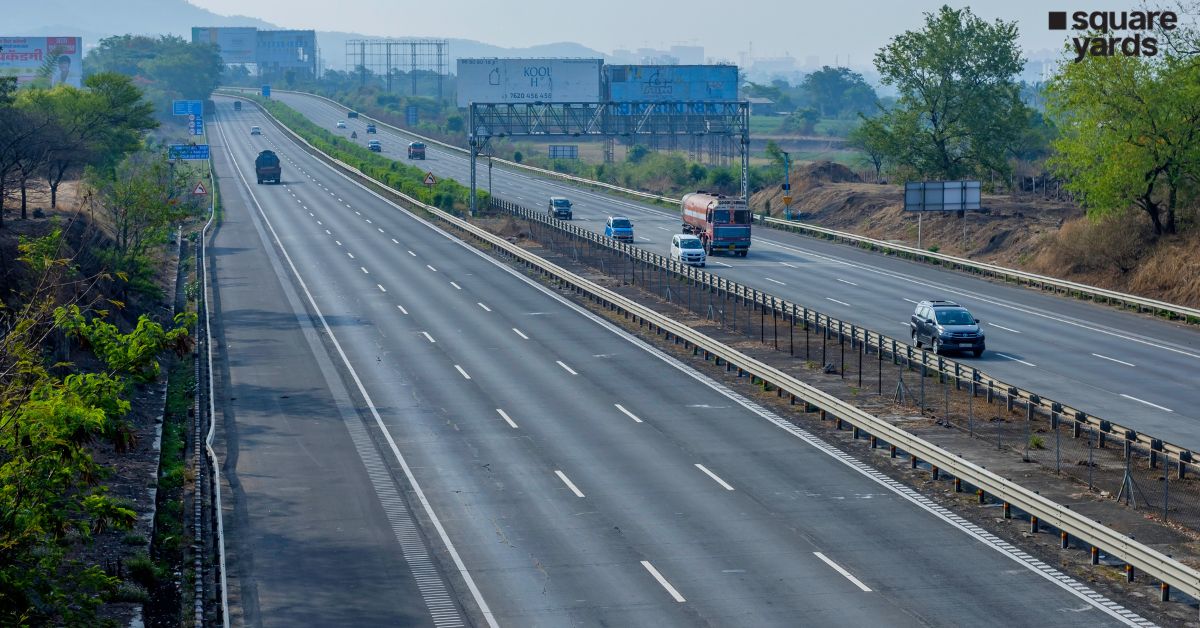
Prime Minister Narendra Modi inaugurated the Ganga Expressway on April 29, 2026, in Uttar Pradesh’s Hardoi district. The 594-km, six-lane access-controlled project will connect Meerut in western UP to Prayagraj in the east. It is expected to cut the travel time between the two cities from nearly 12 hours to about six hours.
Passing through 12 districts and covering 519 villages, the expressway is being built at an estimated cost of around Rs 36,000 crore. Part of a wider infrastructure push by the state government, the project will also support economic activity in India’s most populous state by strengthening industrial movement and opening up new development corridors along its route.
Ganga Expressway route, scale and infrastructure details
The Ganga Expressway will run across key districts, including Meerut, Bulandshahr, Hapur, Amroha, Sambhal, Badaun, Shahjahanpur, Hardoi, Unnao, Raebareli, Pratapgarh, and Prayagraj, creating a direct east-west corridor across the state. The six-lane expressway has provisions for future expansion to eight lanes.
Designed as an access-controlled corridor, it will include multiple entry and exit points, service roads, and support infrastructure to handle long-distance traffic efficiently. A 3.5-km airstrip in Shahjahanpur district has also been developed along the route to allow emergency landing of Indian Air Force aircraft, adding a strategic layer to the project.
Vehicles on the corridor are expected to operate at speeds of up to 120 km/h, with access limited to four-wheelers and larger vehicles, in line with expressway regulations. The expressway will include a tolling network with two main toll plazas at Meerut and Prayagraj, along with around 15 ramp toll plazas across the corridor. While official toll rates are yet to be notified, similar access-controlled corridors in the state currently charge around Rs 2.5-Rs 3 per km for passenger vehicles. This suggests that a full journey from Meerut to Prayagraj could cost roughly Rs 1,400-Rs 1,800, depending on the final tariff structure.
The corridor also includes a large network of supporting structures such as multiple interchanges, major and minor bridges, flyovers and hundreds of underpasses and culverts, reflecting the scale of engineering involved in developing a seamless high-speed route across the state.
Construction has largely been completed, with final work focused on finishing infrastructure, including service areas, safety installations, and public utilities. A significant portion of the project is being developed by the Adani Group, which is handling nearly 80% of the expressway stretch from Badaun to Prayagraj. The project has also been developed with planned support infrastructure, such as nine public convenience centers along the route to serve long-distance traffic.
Ganga Expressway and emerging real estate corridors
The development of the Ganga Expressway has started to influence real estate activity along its route. Areas such as Shahjahanpur, Hardoi and Badaun are seeing early interest due to their proximity to the corridor. Land parcels near interchanges and access points are expected to see higher traction, particularly for logistics parks, warehousing and industrial use.
The project is also expected to deliver wider economic benefits, with estimates indicating annual logistics savings in the range of Rs 25,000-30,000 crore and a potential contribution of up to Rs 1 lakh crore to the state’s economy over time. Alongside this, the Uttar Pradesh Expressways Industrial Development Authority (UPEIDA) has begun allotting plots along the corridor, signaling early-stage investment activity and interest from industrial and logistics players.
The state government has also been pushing for industrial development along the corridor, with plans to develop around 11 industrial corridors across the 12 districts, which could lead to the creation of new economic zones and employment hubs over time.
Ganga Expressway’s impact on property prices across key districts
Property prices across districts along the Ganga Expressway corridor range widely, but remain affordable. In Hapur, for instance, residential plot rates average around Rs 2,200-Rs 4,200 per sq ft, with listings going higher in developed pockets, while Bulandshahr continues to offer lower entry points in peripheral areas. In central districts such as Badaun, Shahjahanpur, and Hardoi, land markets remain fragmented, with prices varying sharply by road access and parcel size.
Whereas in Badaun, Shahjahanpur, and Hardoi, land markets remain fragmented, with prices varying sharply by road access and parcel size. Further east, Rae Bareli continues to see residential plots in the Rs 20-Rs 45 lakh range, depending on size and location.
With the Ganga Expressway now operational, these districts are likely to see gradual price movement, particularly around interchanges, highway-facing land parcels, and logistics-linked zones. Past trends across similar expressway corridors suggest that appreciation tends to build over time rather than spike immediately.
Ganga Expressway impact on housing and rental demand
After the inauguration of the Ganga Expressway, nearby regions are likely to see a gradual increase in residential movement. Initial demand is expected to come from the workforce and small business operators linked to industrial and logistics activity.
This typically supports rental demand in nearby towns and peri-urban areas, especially for plotted developments and low-rise housing. Over time, as economic activity stabilizes, end-user-driven residential growth may follow in select pockets.
Ganga Expressway connectivity boost and travel time impact
The Ganga Expressway is expected to reduce travel time between western and eastern Uttar Pradesh significantly. The Meerut-Prayagraj journey, currently taking 12-13 hours, is likely to be reduced to nearly six hours.
The 74-km Yamuna-Ganga Link Expressway has now moved into the construction stage, with UPEIDA issuing tenders for its first and second phases. Estimated at around Rs 8,586 crore, the six-lane controlled-access road is planned for completion in three years and can be expanded to eight lanes. It will start near the 24.8-km point of the Yamuna Expressway near the proposed Film City in Sector 21 and connect with the Ganga Expressway at its 44.3-km point near Syana in Bulandshahr. The route will pass through 56 villages, including eight in Gautam Buddha Nagar and 48 in Bulandshahr.
The link will be developed in two phases: the first will cover around 24 km from Bhaipur Brahmanan in Greater Noida to Bichaul in Bulandshahr, and the second will cover around 50 km from Bichaul to Bahanpur in the Syana area. Around 90% of land acquisition in the Yamuna Authority area is complete, while acquisition is still underway in parts of Bulandshahr. Once developed, the corridor is expected to provide direct access to Noida International Airport and improve connectivity to industrial parks and logistics clusters along both expressways.
It is also expected to integrate with a wider expressway network across the state, connecting with corridors such as the Agra-Lucknow Expressway, the Farrukhabad Link Expressway, and a proposed extension towards Haridwar. Together, these routes are gradually forming an interconnected grid that links eastern and western parts of the state while also improving north-south connectivity.
Ganga Expressway-Greater Noida link to strengthen freight connectivity
The proposed connectivity network is also expanding towards Greater Noida, with the Greater Noida Industrial Development Authority (GNIDA) planning a 105-meter-wide road linking the region with the Ganga Expressway. The proposed extension of around 15 km is expected to bring the Noida-Greater Noida region within 30-45 minutes of the Ganga Expressway and is part of the proposed amendments to the Greater Noida Master Plan 2041.
The plan also includes a six-lane elevated road connecting the Multi Modal Logistics Hub (MMLH) with Noida International Airport in Jewar. Running parallel to the Western Dedicated Freight Corridor, the road is intended to handle freight movement between the logistics hub and the airport’s air cargo terminal. The proposed network is expected to improve access to industrial parks and logistics clusters along the Yamuna and Ganga expressways, while separating freight traffic from passenger movement within Greater Noida.
Ganga Expressway and long-term market outlook
In the near term, the impact of the Ganga Expressway will remain concentrated around key nodes, including interchanges, industrial clusters, and logistics hubs. Over the longer term, the corridor could reshape how eastern and western Uttar Pradesh connect, both in mobility and economic activity.
If supported by parallel industrial and infrastructure development, the expressway may help create new growth centers beyond traditional urban zones. For now, the project marks a significant addition to Uttar Pradesh’s expanding expressway network, with its real impact likely to unfold over the next few years.
The Adani Group is developing a significant portion of the project, handling nearly 80% of the expressway stretch from Badaun to Prayagraj under the public-private partnership model. The involvement of a large private player reflects the scale of investment and execution required and also indicates growing private-sector participation in infrastructure-led development across the state.