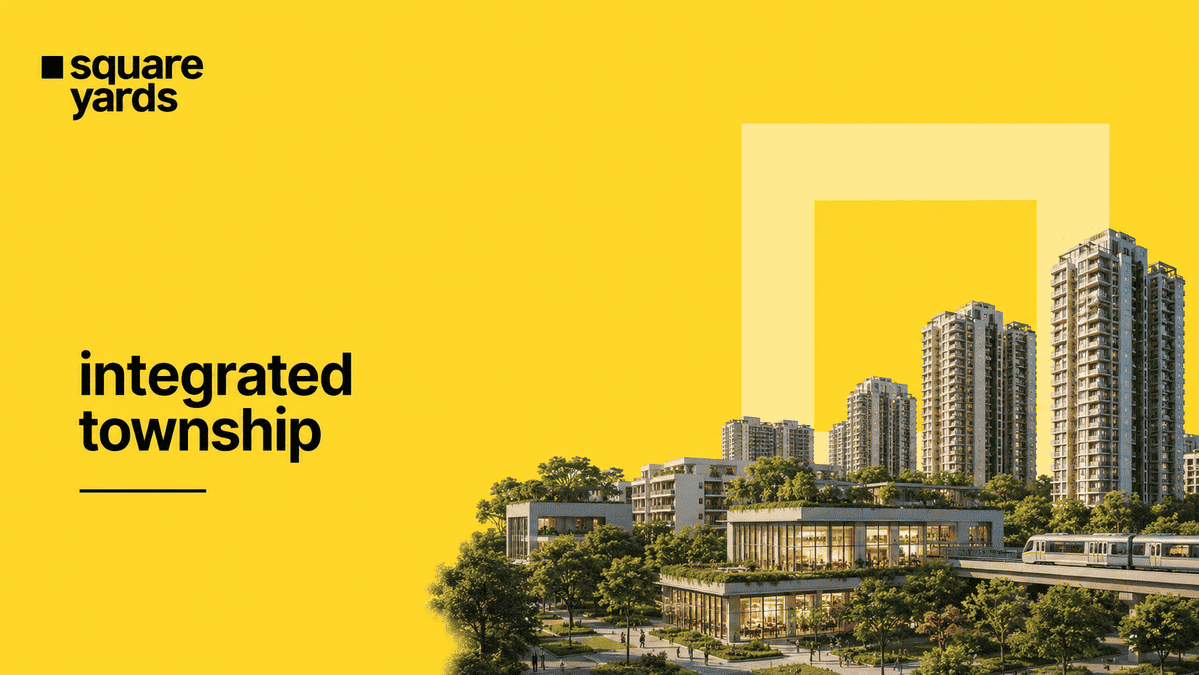
As of 2026, integrated townships have become one of the most searched real estate categories in India – and for good reason. Buyers are no longer just looking for a flat; they want a complete lifestyle, a community and a sound long-term investment, all under one master plan.
Sanjay Kulkarni, a 54-year-old company director from Mumbai, recalls the moment clearly. Buying his first home within a large-scale development was supposed to be exciting. Instead, for most of the journey, it just felt overwhelming-and nobody was giving Sanjay straight answers about how these massive projects actually affect daily lifestyle and long-term value.
This guide covers the impact of integrated townships in practical terms: what you need to know, where most people go wrong and how to make property decisions that hold up over time.
Integrated Townships: What You Need to Know First
When it comes to understanding the impact of integrated townships on modern living, the gap between knowing the theory and applying it correctly is where most people lose ground. The fundamentals matter-but so does the precise order in which you apply them.
The Core Principle Behind Township Living
The single most important shift is moving from reactive to proactive. Most people engage with evaluating integrated townships only when forced to-usually by a deadline, a transaction or a flashy marketing brochure.
The investors and buyers who consistently get better outcomes are those who build their understanding of self-sustaining communities before the decision window opens.
Why the Township Model Matters More Than You Think
Every property decision carries compounding effects. A misjudgment regarding the viability of a township’s master plan at the point of purchase can take years to correct-and limit your property’s appreciation. Conversely, getting it right early creates a foundation that makes every subsequent financial decision easier and more defensible.
For a clearer picture of how market values are moving in your target location, reviewing a current online property valuation can help you benchmark your decisions against real data.
Key Factors to Evaluate
Breaking this down into steps removes the overwhelm. The key is not to analyse everything at once, but to work through each dimension in sequence-allowing each answer to inform the next question.
Step 1: Establish Your Baseline
Before comparing options, establish what you are comparing against. Define your constraints clearly:
|
Constraint |
What to Define |
|
Budget ceiling |
Maximum spend including registration, stamp duty and interiors |
|
Timeline |
Possession date vs. your move-in or investment horizon |
|
Non-negotiables |
Connectivity, school proximity, open spaces, builder reputation |
|
Acceptable risk range |
Under-construction vs. ready-to-move; reputed vs. emerging builder |
Without a baseline, every option looks relative and no decision feels final.
Step 2: Map the Market Context
Local market conditions matter more than national trends for most individual decisions. What is happening at the micro-market level in your target area determines:
- Whether the timing is right
- What leverage you have in negotiation
- What the realistic hold period looks like
Step 3: Validate Before Committing
The most reliable form of validation is triangulating your own research against independent data sources. This is not about eliminating uncertainty-it is about reducing avoidable error. A 48-hour research gap before a decision point often produces clarity that weeks of passive reading does not.
Common Pitfalls and How to Avoid Them
The mistakes in this space are well-documented. They repeat across different markets, different property types and different buyer profiles-because they stem from the same underlying error: prioritising the familiar over the accurate.
|
Pitfall |
Why It Happens |
How to Avoid It |
|
Over-relying on asking price as market value |
Emotional anchoring |
Cross-check with independent valuations and recent transactions |
|
Ignoring carrying costs in net return calculations |
Focus on headline yield |
Factor in maintenance, property tax, loan EMI and vacancy periods |
|
Anchoring on a single data point |
Confirmation bias |
Track a trend over 6–12 months, not a snapshot |
|
Treating liquidity as an afterthought |
Optimism about exit timelines |
Model a realistic exit scenario before buying |
|
Delaying documentation decisions |
Procrastination under pressure |
Complete due diligence on RERA registration and title before negotiations |
Each of these is correctable-but the correction is much cheaper when applied before a transaction than after.
A Practical Framework for Decision-Making
A practical framework for evaluating the impact of integrated townships modern living does not have to be complex. The goal is consistency, not sophistication. A repeatable process that you apply to every decision produces better aggregate outcomes than a brilliant approach applied inconsistently.
Applying the Framework to Your Situation
The framework works best when customised to your specific profile:
|
Buyer Profile |
Key Variables to Prioritise |
|
Investor with 3-year horizon |
Capital appreciation potential, infrastructure pipeline, liquidity |
|
End-user planning 10+ years |
Lifestyle amenities, school zones, community quality, resale demand |
|
NRI managing property remotely |
Rental management support, RERA compliance, builder track record |
|
First-time homebuyer |
Affordability, possession timeline, builder credibility, loan eligibility |
Identify which variables apply to your situation, weight them according to your timeline and risk tolerance, then apply them consistently. The output should be a ranked list of options and a clear decision trigger-not an open-ended comparison.
What the Data Actually Shows
The data regarding integrated township developments across Indian real estate markets in 2025–26 points to several consistent patterns:
- Cities with active infrastructure investment are showing appreciation that outpaces the national average.
- Micro-markets adjacent to metro corridors are repricing faster than city averages suggest.
- Rental yield data shows a divergence between premium and mid-segment properties-with mid-segment demonstrating more stable occupancy despite lower headline yields.
For investors with a long hold period and a preference for predictable income, this distinction is more important than the yield differential suggests.
Market Outlook 2025–26: Key Numbers to Know
Here is a snapshot of how integrated townships modern living trends are shaping up across India’s top real estate markets this year:
|
City |
Appreciation Trend (2025–26) |
Mid-Segment Rental Yield |
RERA-Registered Township Projects |
|
Mumbai (MMR) |
Above national average |
3.0–3.8% |
High; strong regulatory compliance |
|
Pune |
Steady upward |
3.2–4.0% |
Growing, especially in Hinjewadi & Wagholi belts |
|
Gurgaon (NCR) |
Accelerating near metro corridors |
2.8–3.5% |
Active; Dwarka Expressway micro-market leading |
|
Hyderabad |
Among the fastest-repricing cities |
3.5–4.2% |
Strong pipeline in ORR corridor |
|
Bengaluru |
Consistent long-term appreciation |
3.3–4.0% |
High RERA activity in North & East Bengaluru |
Note: Yield ranges reflect mid-segment properties, which show more stable occupancy than premium segments despite lower headline numbers – a critical distinction for long-hold investors.
How Square Yards Supports You
Rohan Agarwal, a 49-year-old entrepreneur from Gurgaon, worked with a Square Yards advisor when navigating the lifestyle and infrastructure offerings of a mega-township. With access to verified market data, structured timelines and transaction support, Rohan could make decisions with confidence, not guesswork.
Square Yards provides seamless end-to-end property services including mortgage assistance, rental management and interiors.
Take the Next Step
Often the difference between a good property decision and an expensive one is the quality of information you have at hand. Market data and advisory support to help you take control of your next move. Visit Square Yards for verified listings.
Frequently Asked Questions:
1. Is 2026 a good time to buy a home in an integrated township?
For the majority of buyer profiles, yes- 2026 looks like a good window. Investment in infrastructure in larger Indian cities is gaining momentum and integrated townships near Metro corridors and ring roads are witnessing faster price appreciation than stand-alone housing projects. That said, timing alone should never be the driver of the decision. The calendar year is less important than your baseline – budget, timeline and risk tolerance.
2. What makes integrated township living different from buying in a regular society?
The difference is in self-sufficiency. Integrated townships Modern living means that you are not just buying a flat – you are buying into a planned ecosystem that usually includes schools, hospitals, retail, open spaces and sometimes even commercial zones. That means less stress on the daily commute, longer-term community building and generally better property value over time than stand-alone apartments.
3. How do I know if an integrated township is RERA-compliant in 2025-26?
RERA registration is mandatory. You can check the compliance with the name of the project or registration number on your respective state’s RERA portal. In 2025-26, RERA-registered township projects in Mumbai, Pune, Hyderabad and Bengaluru have seen a significant increase, giving buyers more verified options than ever before. Always review the possession timeline and escrow compliance before you sign anything.
4. What rental yields can I expect from a township property in 2026?
Currently, mid-segment properties in integrated townships are giving 2.8% to 4.2% yields, depending on the city, with Hyderabad and Pune at the higher end. The headline yields are higher for the properties in the premium segment, but the mid-segment properties have posted more stable occupancy – which is very important for the investors who are more concerned about consistent income than speculative returns.
5. How is modern living in an integrated township better for families?
Townships modern living is particularly appropriate for families as all that they need on a daily basis is found within the development or close by – schools, parks, clinics, grocery stores and recreational spaces. Kids have safe play areas, parents avoid long commutes and the community environment is generally more curated and secure than standalone urban apartments. Integrated townships provide lifestyle quality and long-term value to families intending to stay for over 10 years.
6. What should NRIs check before investing in an integrated township in India?
NRIs should look for three things: builder track record, RERA compliance and availability of professional rental management services. The lifestyle today in Indian townships is good and many of the projects now offer complete NRI investment support from start to finish, with FEMA compliant transaction structures, remote onboarding and managed rental schemes which allow the owner to earn rental income without being present. For example, Square Yards has all of them under one roof.