
Checking a land record in Himachal Pradesh used to mean a trip to the patwari, a request slip, and a wait that depended entirely on how busy the tehsil office was that week. Himbhoomi, the software system the Himachal Pradesh Revenue Department built with the National Informatics Centre, moved that process online, first as tehsil computer centres in the late 1990s and early 2000s, and later as a full public facing portal. Today a landowner in Kinnaur and a buyer in Shimla can pull up the same jamabandi from the same system, without either of them standing in a queue.
Most guides to Himbhoomi repeat the same handful of steps and stop there. This one goes further: it looks at what the actual e-Himbhoomi and Himbhoomi ROR portals show right now, names the specific sub-domains behind each service, and clears up why searches for ‘e himbhoomi’, ‘himbhoomi public interface’ and ‘MEGH services’ keep showing up as separate, confusing things when they are really doors into the same system.
- What Is Himbhoomi (e-Himbhoomi)?
- Himbhoomi, e-Himbhoomi and MEGH: Same System, Different Doors
- Where the Himbhoomi Ecosystem Actually Lives Online
- How to Check Himachal Pradesh Land Records (Jamabandi) Through Himbhoomi
- Jamabandi Himachal on Himbhoomi Mobile App
- Search Jamabandi Himachal by Owner Name
- Himbhoomi RoR: Jamabandi and Shajra Nasab Explained
- Bhu Naksha, Tatima and Musavi Maps on Himbhoomi
- Circle Rates in Himachal Pradesh Villages
- MEGH Citizen Services on e-Himbhoomi
- How to Request Land Demarcation
- What the Himbhoomi Mobile App (mHimBhoomi) Actually Does
- Registering a Property Deed Linked to Himbhoomi Records
- Documents Typically Needed With Your Himbhoomi Land Record
- Conclusion
What Is Himbhoomi (e-Himbhoomi)?
Himbhoomi is the name of the land records computerisation software Himachal Pradesh’s Revenue Department built with the National Informatics Centre. It started as tehsil level computer centres that digitised jamabandi and shajra nasab registers district by district, and it has since grown into a set of connected web portals that citizens can use directly, without visiting a tehsil in person. e-Himbhoomi is simply the web address version of the same system, and MEGH is the citizen services layer inside it.
Himachal Pradesh land records themselves go by two names: jamabandi, the current ownership and revenue record for a plot, and Fard, an older term for the same type of document. Both are searchable by khewat (account) number, khasra (plot) number, or khatauni (individual holding), and both ultimately come from the same Himbhoomi database regardless of which portal you search from.
|
Particulars |
Details |
|
System name |
Himbhoomi / e-Himbhoomi (Himachal Bhoomi) |
|
Managing authority |
Revenue Department, Government of Himachal Pradesh, with the National Informatics Centre (NIC) |
|
Land record names |
Jamabandi (current record), Fard (older term), Shajra Nasab (ownership succession) |
|
Citizen services hub |
MEGH, Module under E-Governance to Help, at ehimbhoomi.nic.in |
|
Jamabandi public search |
himbhoomilmk.nic.in, titled ‘Himbhoomi-ROR Distribution Through Public Interface’ |
|
Map portal |
bhunakshahp.nic.in, covering Bhunaksha, Tatima and Musavi (settlement and consolidation) maps |
|
Mobile app |
mHimBhoomi (Google Play Store) |
|
Districts covered |
All 12 districts of Himachal Pradesh; circle rates are published online for eight of them |
Explore Land Records of Other States in India
| Karnataka | Bhoomi Online RTC |
| Chhattisgarh | CG Bhuiya |
| Uttarakhand | Bhulekh UK |
| Punjab | PLRS |
| Madhya Pradesh | Bhulekh MP |
| West Bengal | Banglarbhumi |
| Odisha | Bhulekh Odisha |
| Bihar | Land Record Bihar |
| Jharkhand | Jharbhoomi |
| Tamilnadu | Patta Chitta |
| Maharashtra | Mahabhulekh |
| Telangana | Dharani |
| Andhra Pradesh | Mee Bhoomi |
| Gujarat | AnyROR |
Himbhoomi, e-Himbhoomi and MEGH: Same System, Different Doors
This is worth spelling out precisely, since it is the single most common point of confusion in search for this topic, and no competing article currently untangles it properly. e-Himbhoomi, at ehimbhoomi.nic.in, is not a separate system from MEGH. Its own homepage is literally titled ‘MEGH Services Himachal Pradesh.’ In other words, when you land on e-Himbhoomi, you are already inside MEGH; there is no second website to find.
What trips people up is that MEGH itself links out to several different sub-domains depending on the task. Jamabandi and shajra nasab copies open on himbhoomilmk.nic.in, a page titled ‘Himbhoomi-ROR Distribution Through Public Interface,’ which explains the otherwise puzzling searches for ‘himbhoomi through public’ and ‘himbhoomi public interface.’ Bhu naksha, Tatima and Musavi maps open on a separate domain, bhunakshahp.nic.in. Demarcation requests currently route to rms.hp.gov.in, the Revenue Management System. Deed registration links out to ngdrshp.gov.in, the National Generic Document Registration System for Himachal Pradesh. Every one of these sits behind the same MEGH hub on e-Himbhoomi, so whichever link you click from there, you are still inside the same connected Himbhoomi ecosystem.
Where the Himbhoomi Ecosystem Actually Lives Online
Because Himbhoomi is really a cluster of linked portals rather than one single website, it helps to know exactly which address does what:
|
Portal |
What It Is For |
Address |
|
e-Himbhoomi / MEGH hub |
Entry point for mutation, demarcation, charge status, lease register, and links to every other service |
ehimbhoomi.nic.in |
|
Himbhoomi ROR public interface |
Jamabandi and shajra nasab search by location or owner name |
himbhoomilmk.nic.in |
|
Bhunaksha HP |
Cadastral maps, Tatima maps, and Musavi settlement or consolidation maps |
bhunakshahp.nic.in |
|
Revenue Management System |
Online demarcation requests |
rms.hp.gov.in |
|
NGDRS HP |
Deed registration linked to land records |
ngdrshp.gov.in |
|
Revenue Department homepage |
General department information and circle rate access |
himachal.nic.in/revenue |
How to Check Himachal Pradesh Land Records (Jamabandi) Through Himbhoomi
Every jamabandi search on Himbhoomi starts from the same public interface at himbhoomilmk.nic.in and asks for the same core location details, whether you already know your khasra number or not.
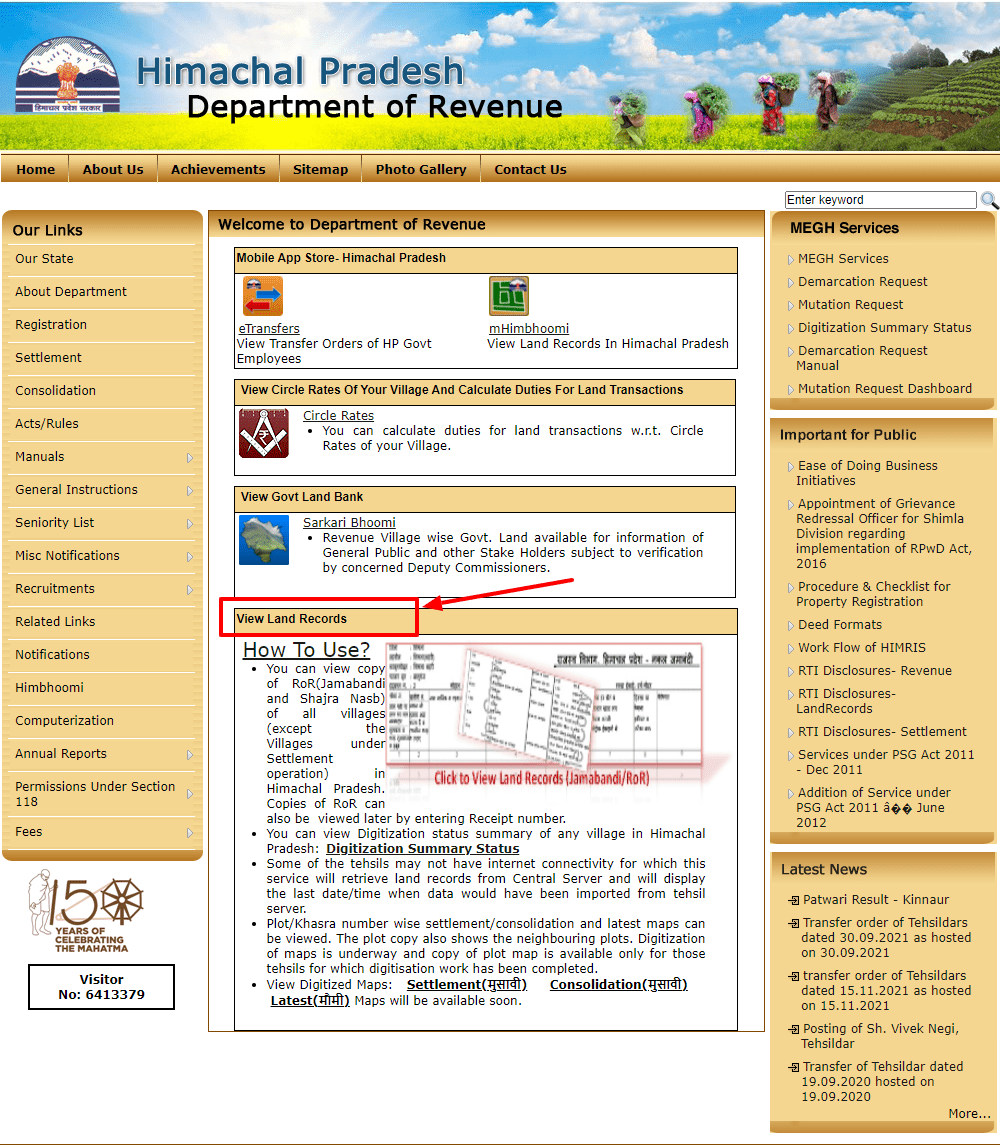
Step 1: Go to the official portal, himachal.nic.in/index.php?lang=1&dpt_id=13. At the bottom of the main page, you will find the option of ‘View Land Record’. Click on that option.
Step 2: Then, the portal will redirect you to a new page where you will be asked to enter the particulars regarding the land for which you are searching the record. The information that you need to enter includes tehsil, district, the village as well as the exact year of nakal jamabandi HP.
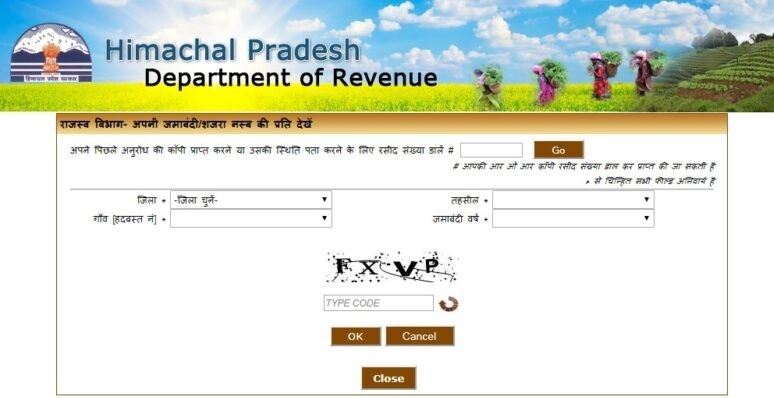
Step 3: Next, you need to enter the code of captcha on the screen and then, click on the ‘Ok’ option.
Step 4: In cases, if you have earlier applied for the Himachal Pradesh land records information on the Himbhoomi portal, simply, enter the application number to get the information about the land.
Step 5: Now, you will need to fill in the information, such as khasra, khewat, and khatauni. Then, enter your details that include email address, contact details, and type in the captcha code, and then, click on the ‘Ok’ option.
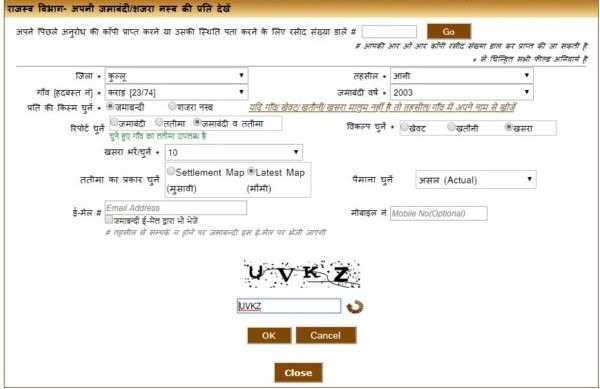
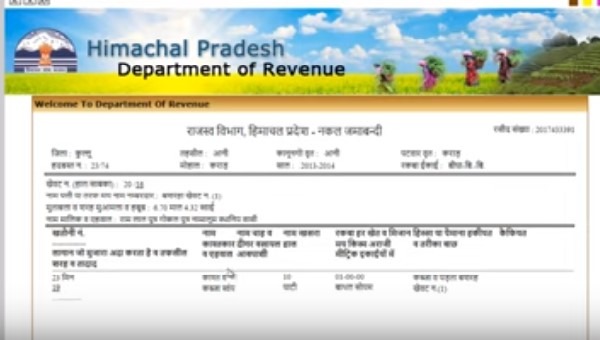
Step 6: Then, the portal will redirect you to a new page in which all the details of jamabandi Himachal will be on the screen.
Jamabandi Himachal on Himbhoomi Mobile App
By following the footsteps of other states, Himachal Pradesh has already digitized its land records data and is keeping it updated for the citizens. Not only this, but the Himachal Pradesh government has also made the availability of land records to the citizens easy through their mobile application.
To get the Himachal Pradesh land records on your phone, visit the play store and then download the Himbhoomi app named as ‘mHimBhoomi’ application and access it on your mobile phone with ease.
Search Jamabandi Himachal by Owner Name
If you do not know the khasra or khewat number, the same public interface lets you search by the landowner’s name instead. Type the name in Hindi Unicode script and choose whether it should match at the beginning, the end, or anywhere within the recorded name, which is useful when you are unsure of the exact spelling used in the register.
Below steps through which you can check the circle rates in the villages of Himachal Pradesh.
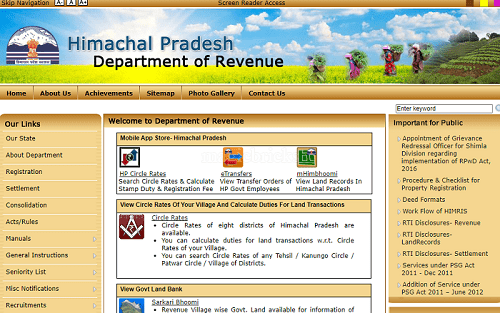
Step 1: Go to the official web portal of Himbhoomi. There you will find the options tab of ‘View Circle Rates of your Village and Calculate Duties for Land Transaction’. Click on this option tab.
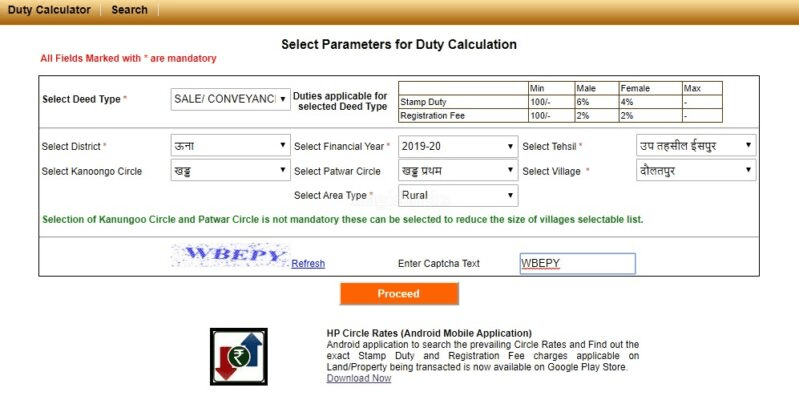
Step 2: Then, enter the details that include the tehsil, district, village, type of area, patwari circle, and the other appropriate and required details asked by the portal. Now click on the ‘Proceed’ option.
Now, the portal will redirect you to a new page where circle rates of the village in Himachal Pradesh will be on the screen.
Himbhoomi RoR: Jamabandi and Shajra Nasab Explained
The Record of Rights, or RoR, that Himbhoomi returns is really two connected documents. Jamabandi is the current ownership and revenue record for a plot, showing who holds rights over it today, what it is used for, and what revenue is due. Shajra nasab, sometimes written Shajra Nasb, is a genealogical style table showing how ownership passed from one holder to the next, which matters most in inheritance cases or when a chain of title needs to be traced further back than the current record alone shows.
Both documents are generated from the same himbhoomilmk.nic.in interface, and the mHimBhoomi app can pull up the same two records once you provide the khewat, khatauni or khasra number, or search the family or genealogy tree by name.
Bhu Naksha, Tatima and Musavi Maps on Himbhoomi
Map based records sit on a different domain from the jamabandi search, at bhunakshahp.nic.in, and cover three related but distinct products. Bhunaksha itself is the digitised cadastral map, showing plot shape, size and boundaries for villages where digitisation is complete. Tatima refers to a plot specific map extract used mainly during sale deed preparation for a Tatima registry. Musavi maps come in two stages, Settlement Musavi and Consolidation Musavi, reflecting the two different land survey and consolidation exercises the state has carried out over time.
To use it, select your district, tehsil and village on bhunakshahp.nic.in, then click a specific plot to bring up its details, including geographic boundaries and the recorded owner’s name. Coverage depends on how far digitisation has progressed in that particular village, which the Map Digitization Status service on the ROR portal can confirm before you search.
Circle Rates in Himachal Pradesh Villages
Circle rates, the government fixed minimum property value used to calculate stamp duty, are currently available online for eight of Himachal Pradesh’s 12 districts. On the Revenue Department’s site, select ‘Circle Rates’ and choose your district and the applicable Sub-Registrar Office, or in some district interfaces, the tehsil, patwari circle and area type instead. Submitting the form brings up the rate table for that area, with an option to download it as a PDF for reference during a land transaction.
MEGH Citizen Services on e-Himbhoomi
MEGH is where the transactional, request based side of Himbhoomi lives, as distinct from simple record lookups. Logging in to ehimbhoomi.nic.in currently surfaces these citizen facing services:
- Mutation, to submit an online mutation request and check its status
- Mutation Request Dashboard, showing a district wise summary of pending requests
- Scheduled Tehsildar Field Visits, showing when a tehsildar is due to visit for mutation verification
- Demarcation, which now routes to the Revenue Management System at rms.hp.gov.in
- Charge Application Status, for tracking charge creation or vacation requests
- State Lease Register, showing district wise data entry status
- Jamabandi and View Government Land, linking through to the himbhoomilmk.nic.in interface
- Bhunaksha, Settlement Musavi and Consolidation Musavi, linking through to bhunakshahp.nic.in
- Map Digitization Status, showing district, tehsil and village level progress
- Svamitva Dashboard, tracking the national SVAMITVA rural property mapping scheme in the state
- Registration of Deed, linking through to ngdrshp.gov.in
How to Submit and Track an Online Mutation Request
A mutation updates the jamabandi to reflect a change in ownership after a sale, gift, inheritance or partition. On e-Himbhoomi, open the Mutation service, then fill in the district, tehsil, village and khasra or khatauni details, along with the category the request falls under. Supporting documents differ by category: a registered sale deed for a sale, a gift deed for a gift, or a death certificate and succession details for an inheritance. Once submitted, the portal generates a reference number, which the same Mutation service, or the Mutation Request Dashboard, can be used to check later for status.
How to Request Land Demarcation
Demarcation requests, which ask revenue officials to formally re-mark a plot’s physical boundaries, are now filed through the Revenue Management System at rms.hp.gov.in rather than directly on e-Himbhoomi, though the MEGH hub still links to it under ‘Demarcation.’ The form asks for the land owner’s name, the khasra number, adjoining khasra numbers, and the reason for the request. Submitting it generates an acknowledgement number for tracking, and the concerned tehsil schedules a field visit once the application is verified.
What the Himbhoomi Mobile App (mHimBhoomi) Actually Does
mHimBhoomi, free on the Google Play Store, is built specifically to view jamabandi and shajra nasab records for any revenue estate in Himachal Pradesh, and to view plot maps for villages where map digitisation is complete. Search works by khewat, khatauni or khasra number, or by name, including a genealogy tree search for shajra nasab. Owner names are searchable in Hindi Unicode script, matching how the back end stores records in Devanagari.
A useful, less advertised feature is Aadhaar seeding: landowners can link their Aadhaar number to their land record accounts, and then search using that seeded Aadhaar number to pull up every record connected to them at once. Records viewed through the app are automatically kept in a Saved Records section for quicker access later, without needing an internet connection to reopen something you already looked up.
Registering a Property Deed Linked to Himbhoomi Records
Property registration itself does not happen on Himbhoomi or e-Himbhoomi directly. MEGH links out to NGDRS HP, the National Generic Document Registration System, at ngdrshp.gov.in, where a sale, gift or other deed is actually registered. Once a deed is registered there, the corresponding mutation request on e-Himbhoomi is what updates the jamabandi to reflect the new owner, so the two systems work as a pair rather than one replacing the other.
Documents Typically Needed With Your Himbhoomi Land Record
Whether you are completing a sale deed, applying for a loan against land, or filing a mutation, these are the documents that most commonly accompany a Himbhoomi jamabandi record in Himachal Pradesh:
| Document | Purpose / When Required |
|---|---|
| Jamabandi Nakal | Current land record extract |
| Circle Rate Certificate | Property circle rate details |
| Section 118 Permission / Agriculturist Certificate | Where applicable |
| ID Proof and PAN Card | For buyer and seller, where required |
| Valuation Certificate | For built-up structures, if applicable |
| Approved Map Copy | If the built-up area is within municipal limits |
| Tatima Copy | If the transaction involves a Tatima registry |
| Registered Sale Deed / Gift Deed / Death and Succession Certificate | Depending on the type of mutation being filed |
Conclusion
Himbhoomi is less a single website and more a connected set of portals, each handling a different piece of the same underlying land record: himbhoomilmk.nic.in for jamabandi, bhunakshahp.nic.in for maps, rms.hp.gov.in for demarcation, and ngdrshp.gov.in for deed registration, all reachable through the MEGH hub on e-Himbhoomi. Once you know which door leads to which service, checking a Himachal Pradesh land record, tracking a mutation, or confirming a circle rate takes a few minutes rather than a trip to the tehsil.
Frequently Asked Questions:
1. What is Himbhoomi?
Himbhoomi is Himachal Pradesh’s land records system, built by the Revenue Department with the National Informatics Centre. It began as tehsil level computerisation and now runs as a set of connected web portals.
2. Are Himbhoomi, e-Himbhoomi and MEGH the same thing?
Yes. e-Himbhoomi (ehimbhoomi.nic.in) is the web address, and its own homepage is titled MEGH Services Himachal Pradesh, so landing on e-Himbhoomi puts you directly inside MEGH.
3. What is Himbhoomi Through Public Interface?
It is the actual title of the jamabandi and shajra nasab search page at himbhoomilmk.nic.in, where citizens search land records by location or owner name.
4. How can I check Himachal Pradesh land records online?
Visit himbhoomilmk.nic.in, select your district, tehsil, village and jamabandi year, or search by the owner’s name instead if you do not know the khasra number.
5. How do I check jamabandi Himachal by name?
On the Himbhoomi ROR public interface, enter the owner’s name in Hindi Unicode script and choose whether it should match at the beginning, end or anywhere in the recorded name.
6. What is the Himbhoomi naksha or bhu naksha service?
It is the cadastral map service on bhunakshahp.nic.in, a separate domain from the jamabandi search, showing plot shape, size and boundaries for digitised villages.
7. What is the difference between jamabandi and shajra nasab?
Jamabandi is the current ownership and revenue record for a plot, while shajra nasab is a genealogical table showing how ownership passed between holders over time.
8. How do I submit an online mutation request on Himbhoomi?
On e-Himbhoomi, open the Mutation service under MEGH, fill in district, tehsil, village and khasra details along with the mutation category, and submit supporting documents.