
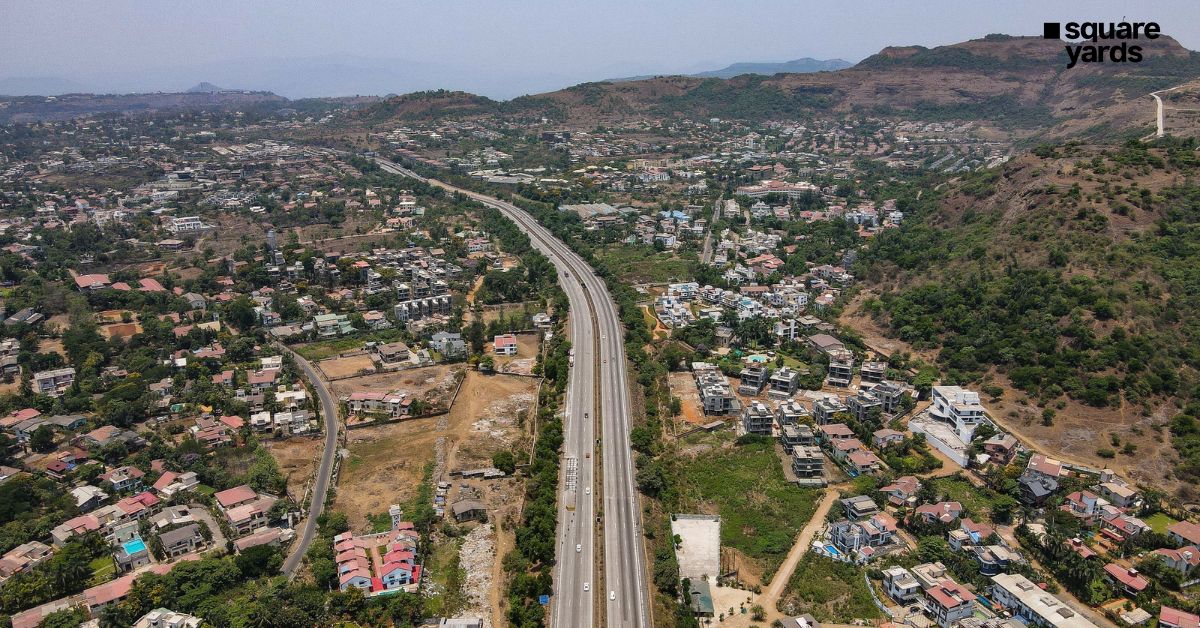
The launch of the Mumbai–Pune Expressway Missing Link marks a defining moment in the infrastructure story of western Maharashtra. While the engineering feat has drawn national attention for its ambitious tunnel and elevated bridge design, its deeper impact lies in how it is reshaping mobility and development across the Lonavala–Khopoli corridor.
For decades, this stretch remained the biggest bottleneck on the expressway, often experiencing severe congestion on weekends, during monsoons, and during peak holiday traffic. The Missing Link fundamentally alters that equation by improving speed, reliability, and overall connectivity between Mumbai and Pune.
The 13.3-km alignment reduces travel distance by nearly six kilometres and cuts commute time by approximately 20–30 minutes by bypassing the older ghat section. More importantly, it improves the reliability and predictability of movement along one of India’s busiest intercity corridors, which reportedly handles over 65,000 vehicles daily. In infrastructure economics, predictability often matters as much as speed because it directly influences freight efficiency, commuter behaviour and long-term investment confidence.
The implications, therefore, extend well beyond transportation.
Why the Lonavala–Khopoli corridor is emerging as a growth hub
Improved mobility is beginning to redefine the strategic value of the Lonavala–Khopoli belt.
The corridor occupies a rare intersection of tourism potential, residential expansion and industrial connectivity. Lonavala has long enjoyed strong brand recall as a leisure and second-home destination, while Khopoli has steadily emerged as an industrial and warehousing hub due to its proximity to Mumbai, Pune, and Navi Mumbai. The Missing Link project strengthens both identities simultaneously.
This transformation is unfolding at a time when urban India is witnessing a broader decentralisation trend.
Rising land prices, density pressures and affordability constraints across Mumbai and Pune are increasingly pushing both end-users and investors toward peripheral but well-connected markets. According to multiple industry studies, infrastructure-led peripheral corridors in major Indian cities have historically experienced 15-30% land appreciation cycles following major mobility upgrades, particularly when connectivity improvements coincide with industrial and commercial expansion.
The Lonavala–Khopoli corridor now appears to be on a similar trajectory.
For the residential market, reduced travel friction is expected to accelerate demand for second homes, plotted developments, retirement communities and low-density gated projects. The pandemic significantly altered housing preferences, increasing demand for larger homes and nature-linked destinations within driving distance of metropolitan centres. This behavioural shift has already strengthened demand across hill stations and peri-urban leisure markets surrounding major cities.
Unlike purely speculative outskirts, however, the Lonavala–Khopoli region benefits from an existing tourism economy and established intercity connectivity, giving it stronger long-term viability.
The rise of the “Mumbai 3.0” expansion belt
The corridor is increasingly being viewed as part of the broader “Mumbai 3.0” narrative, a term now frequently used to describe the next phase of expansion beyond Mumbai’s traditional urban core.
Large infrastructure projects such as the Mumbai Trans Harbour Link, Navi Mumbai International Airport, Pune Ring Road, Dedicated Freight Corridor linkages and multimodal logistics networks are collectively reshaping development patterns across western Maharashtra. As infrastructure improves, growth is gradually dispersing beyond saturated city centres into connected peripheral zones.
This wider integration is strategically significant.
Historically, Mumbai and Pune functioned as two largely independent economic ecosystems connected through transport infrastructure. However, improved expressway efficiency is steadily creating a more integrated economic corridor in which residential, logistics, tourism, and commercial ecosystems increasingly overlap. The Missing Link project strengthens this integration by removing one of the most persistent mobility bottlenecks between the two cities.
The result is not merely faster travel between Mumbai and Pune; it is the gradual emergence of a more interconnected regional economy.
Logistics and industrial demand to accelerate
The impact could be particularly substantial for Khopoli and adjoining micro-markets.
India’s logistics and warehousing sector has witnessed sustained institutional interest over the past few years, driven by manufacturing diversification, e-commerce expansion, and supply chain optimisation. Western India remains one of the country’s most active logistics markets, driven by its industrial base and port connectivity.
In this context, locations that offer strategic highway access while remaining relatively affordable are increasingly attracting attention from warehousing operators and industrial occupiers.
Khopoli’s location between Mumbai, Pune and Navi Mumbai positions it advantageously within this emerging network. Improved expressway efficiency could further strengthen the region’s attractiveness for logistics parks, warehousing clusters and transit-oriented industrial development.
Importantly, infrastructure corridors tend to create multiplier effects beyond immediate real estate appreciation. Improved freight movement often enhances industrial competitiveness, reduces operational delays, and encourages ancillary economic activity, including retail, hospitality, and workforce housing.
Tourism and second-home markets may see demand growth
Tourism-led development is also expected to gain momentum.
Lonavala already remains one of Maharashtra’s most established weekend tourism destinations, but improved accessibility could fundamentally alter visitor behaviour by increasing travel frequency rather than merely seasonal traffic volumes. This distinction matters because recurring short-stay demand typically supports more stable hospitality and retail ecosystems.
As connectivity strengthens, the corridor could see increased activity across branded villas, wellness retreats, experiential hospitality formats, and managed second-home developments.
Hybrid work models are also influencing this demand cycle. Professionals increasingly seeking flexible living arrangements are driving interest in destinations that combine accessibility with lifestyle appeal. The Lonavala–Khopoli region fits naturally within this emerging residential pattern because it offers relatively seamless access to both Mumbai and Pune while retaining its leisure-market identity.
Risk factors
Infrastructure visibility alone does not guarantee sustainable urbanisation.
Several peripheral corridors across India have experienced speculative land cycles following major infrastructure announcements without corresponding improvements in civic infrastructure or urban governance. In many cases, fragmented planning has eventually created pressure on water systems, local mobility, waste management and ecological resources.
This risk is particularly relevant to the Lonavala–Khopoli corridor, given the Western Ghats’ environmental sensitivity.
Unchecked construction activity or poorly regulated tourism expansion could place significant stress on fragile ecological systems. Long-term value creation in infrastructure corridors increasingly depends not just on connectivity but also on the quality and sustainability of the urbanisation that follows.
This makes planning discipline critical.
Authorities and developers will need to prioritise sustainable land use, environmental safeguards, drainage infrastructure and integrated mobility planning to ensure that growth remains balanced rather than speculative. The next phase of the corridor’s development cannot rely solely on infrastructure momentum; it will also require governance capacity.
A new growth axis between Mumbai and Pune
There is also a larger macroeconomic implication to consider.
The Mumbai–Pune belt remains one of India’s most economically productive corridors, contributing significantly across finance, manufacturing, technology, logistics and services. Infrastructure projects that improve intercity efficiency effectively deepen integration between these sectors by enhancing the movement of labour, goods, tourism and capital.
The Missing Link project, therefore, represents more than a transportation upgrade. It reflects a broader shift toward corridor-based urbanisation, where infrastructure networks increasingly shape patterns of economic growth and real estate expansion.
Early commuter response already indicates the scale of behavioural change this project may trigger. Faster travel times, smoother movement and reduced congestion are beginning to reshape perceptions of accessibility between Mumbai and Pune. Historically, such shifts in commuter psychology often precede larger transformations in land markets and development activity.
For the real estate sector, the pattern is familiar: infrastructure creates accessibility, accessibility attracts investment, and investment reshapes urban geography.
The Lonavala-Khopoli corridor now appears to be entering that transition phase.
Over the next decade, western Maharashtra’s growth story may no longer be defined by Mumbai and Pune as separate urban centres, but by the infrastructure ecosystem connecting them. In that evolving geography, the Lonavala–Khopoli corridor is emerging not merely as a transit route, but as a strategic growth spine shaping the next phase of regional expansion.