
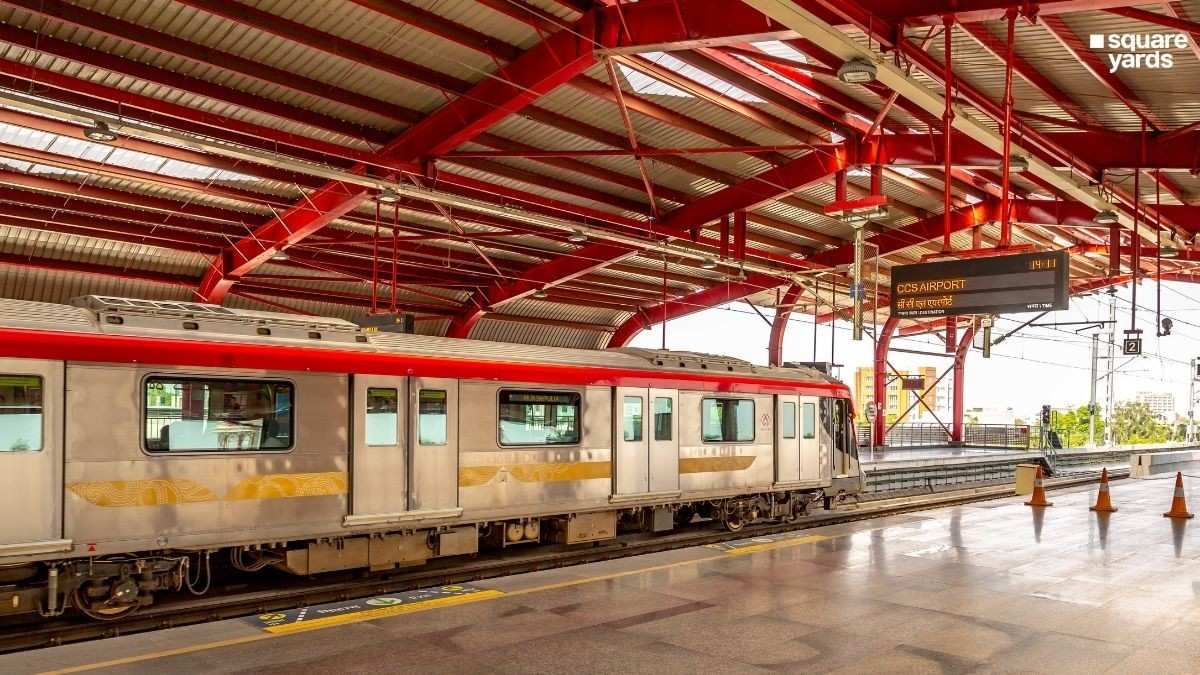
Plans are in the making to give a connectivity boost to Uttar Pradesh capital Lucknow, which may soon have a Metro connection with several neighboring cities and emerging growth corridors.
Under a proposed comprehensive mobility plan, 12 new corridors have been identified to extend Metro connectivity to neighboring areas of Barabanki, Mohanlalganj, and CG City. The corridors have been identified based on projected population growth, travel demand and future urban expansion across Lucknow.
To be developed at an estimated cost of Rs 30,000 crore, the proposed network will cover a combined length of 170.37 km. Of this, 149.87 km will be an elevated track and 20 km will run underground.
The detailed project reports for each corridor will be prepared only after approval from the state government, Uttar Pradesh Metro Rail Corporation (UPMRC) officials told the media.
The plan comes shortly after the approval of Lucknow Metro Phase-1B, a Rs 5,801-crore corridor between Charbagh and Vasant Kunj. Spanning 11.165 km, the route connecting central Lucknow with the northern locality will have 12 stations.
Together, these projects plan to improve urban mobility and connectivity across major employment, education and healthcare hubs in the city.
How the Lucknow Metro extension will give a boost to emerging corridors
The proposed Metro plan includes 12 corridors that have seen rising residential activity, new infrastructure projects and large-scale township development. This makes the project significant not only for urban mobility but also for the city’s real estate market.
1. Rajajipuram to IIM Road (18 km)
This 18-km corridor will connect Rajajipuram in western Lucknow with the IIM Road corridor in the north. The route links two large residential neighborhoods and is expected to improve connectivity to educational institutions and emerging housing clusters along IIM Road.
2. CCS Airport to Kalli Paschim (15.5 km)
The proposed route will strengthen connectivity to the airport zone and southern Lucknow. The corridor is likely to support development in areas surrounding the airport and improve access for daily commuters.
3. Vasant Kunj to Kalli Paschim (34.8 km)
At 34.8 km, this is the longest corridor proposed under the expansion plan, linking to the Outer Ring Road and Rae Bareli Road. The route is expected to connect multiple residential clusters, commercial centers and transport nodes, making it one of the backbone corridors of the proposed expansion.
4. Indira Nagar to Anora Kala (9.66 km)
Indira Nagar is among Lucknow’s most established residential markets, while Anora Kala is witnessing gradual urban expansion. The corridor is expected to improve connectivity between developed and emerging residential areas.
5. Indira Nagar to CG City (11.5 km)
This route will connect eastern Lucknow with the Sultanpur Road growth corridor. CG City has emerged as an important residential and institutional hub, making this one of the more strategically important links in the proposed network.
6. CG City to SGPGI (9.8 km)
The 9.8-km corridor will connect CG City with SGPGI, one of the city’s major healthcare institutions. The route is expected to improve accessibility for residents, healthcare workers and visitors traveling to the medical hub.
7. Rajajipuram to Musabagh (5.98 km)
This corridor is among the shortest routes proposed under the plan. It will improve local connectivity in western Lucknow and integrate local residential areas with the larger Metro network.
8. Vasant Kunj to IIM Road (12 km)
The proposed 12-km route connects Vasant Kunj with the IIM Road corridor in northern Lucknow. Both locations have witnessed increasing residential activity. Improved Metro access could strengthen housing demand and support future development along the route.
9. Munshipulia to Jankipuram (6.5 km)
Jankipuram has witnessed gradual residential growth over the years. Extending Metro connectivity beyond Munshipulia is expected to improve public transport access for residents in North Lucknow and reduce dependence on road-based travel.
10. Anora Kala to Barabanki (14.43 km)
This is one of the most significant corridors in the proposed plan. By extending Metro connectivity towards Barabanki, the project moves beyond city-level transit planning and begins to create a wider regional mobility network. The corridor could also unlock new residential and commercial opportunities along the Lucknow-Barabanki belt.
11. Kalli Paschim to Mohanlalganj (7.2 km)
Mohanlalganj has emerged as a key growth corridor due to the availability of large land parcels and planned development. Metro connectivity could further support real estate activity in the region.
12. Anora Kala to Kalli Paschim (25 km)
Stretching across the eastern and southern parts of the city, this corridor is expected to improve cross-city connectivity and integrate several emerging development zones into the larger Metro network.
Here’s a quick snapshot of the proposed corridors:
|
Proposed Corridor |
Length |
|
Rajajipuram to IIM Road |
18 km |
|
CCS Airport to Kalli Paschim |
15.5 km |
|
Indira Nagar to Anora Kala |
9.66 km |
|
Indira Nagar to CG City |
11.5 km |
|
CG City to SGPGI |
9.8 km |
|
Rajajipuram to Musabagh |
5.98 km |
|
Vasant Kunj to IIM Road |
12 km |
|
Munshipulia to Jankipuram |
6.5 km |
|
Anora Kala to Barabanki |
14.43 km |
|
Kalli Paschim to Mohanlalganj |
7.2 km |
|
Vasant Kunj to Kalli Paschim |
34.8 km |
|
Anora Kala to Kalli Paschim |
25 km |
|
Total Length |
170.37 km |
Lucknow Metro Phase-1B lays the foundation for expansion
The proposed Metro network comes alongside the recently approved Phase 1B of the Lucknow Metro.
Approved by the Union Cabinet in 2025, the Rs 5,801-crore project will add an 11.165-km corridor between Charbagh and Vasant Kunj. The route will feature 12 stations, including seven underground and five elevated stations. The corridor will improve connectivity across densely populated parts of Old Lucknow, including Aminabad, Chowk, Thakurganj and Balaganj.
Once Phase 1B becomes operational, Lucknow’s Metro network is expected to expand to nearly 34 km, laying the foundation for future phases under the Comprehensive Mobility Plan.
Metro expansion moves beyond city connectivity
The existing Lucknow Metro primarily serves the core localities in the city. The proposed network has a broader objective. Several corridors have been planned around locations that are expected to accommodate future residential and commercial growth.
Areas such as IIM Road, Jankipuram, Sultanpur Road, CG City, Mohanlalganj and the airport belt have witnessed increasing development activity over the past decade. Improved Metro connectivity will support higher population density, reduce dependence on private vehicles and improve access to employment hubs across the city.
The plan also introduces regional mobility to Lucknow’s Metro system. Corridors extending towards Barabanki and Mohanlalganj indicate a shift from a city-focused network to a broader metropolitan mobility framework.
Similar transit-led development has been observed around major metropolitan regions in India, where improved connectivity has supported residential growth and increased investor interest in peripheral markets.
What the expansion means for Lucknow’s infrastructure
The proposed Metro network is a long-term urban infrastructure plan designed to support population growth and reduce pressure on existing road networks.
Over the last decade, residential and commercial development has gradually moved towards the city’s peripheral areas. Even though these locations have attracted housing projects and commercial investments, connectivity is still one of the biggest challenges.
The planned corridors aim to bridge this gap by connecting outer growth zones with major employment centers, commercial districts and transport hubs. Such connectivity will help to reduce travel times, support workforce movement and improve access to jobs and services across a wider region.
Impact on Lucknow real estate
Infrastructure projects have played a major role in shaping real estate demand across various cities. Metro networks have emerged as key drivers of residential and commercial growth.
The proposed Lucknow Metro expansion is expected to improve accessibility across several emerging markets that currently rely heavily on road transport.
Here are the property markets along the proposed Metro corridors:
|
Locality |
Average Property Price (2026) |
|
IIM Road |
Rs 6,000/sq. ft |
|
Jankipuram |
Rs 5,200/sq. ft |
|
Rajajipuram |
Rs 4,950/sq. ft |
|
Sultanpur Road |
Rs 5,500/sq. ft |
|
Mohanlalganj |
Rs 6,450/sq. ft |
|
Indira Nagar |
Rs 4,300/sq. ft |
|
Anora Kala |
Rs 3,500/sq. ft |
|
Kalli Paschim |
Rs 4,950/sq. ft |
Source: Square Yards
As connectivity improves, these markets could see stronger end-user demand, higher occupancy and greater developer interest. Metro accessibility becomes a key factor for homebuyers, particularly in large cities where daily commute times directly influence housing decisions.
Commercial activity can also benefit. Improved public transport access can support retail growth, office demand and mixed-use developments around future Metro stations.