
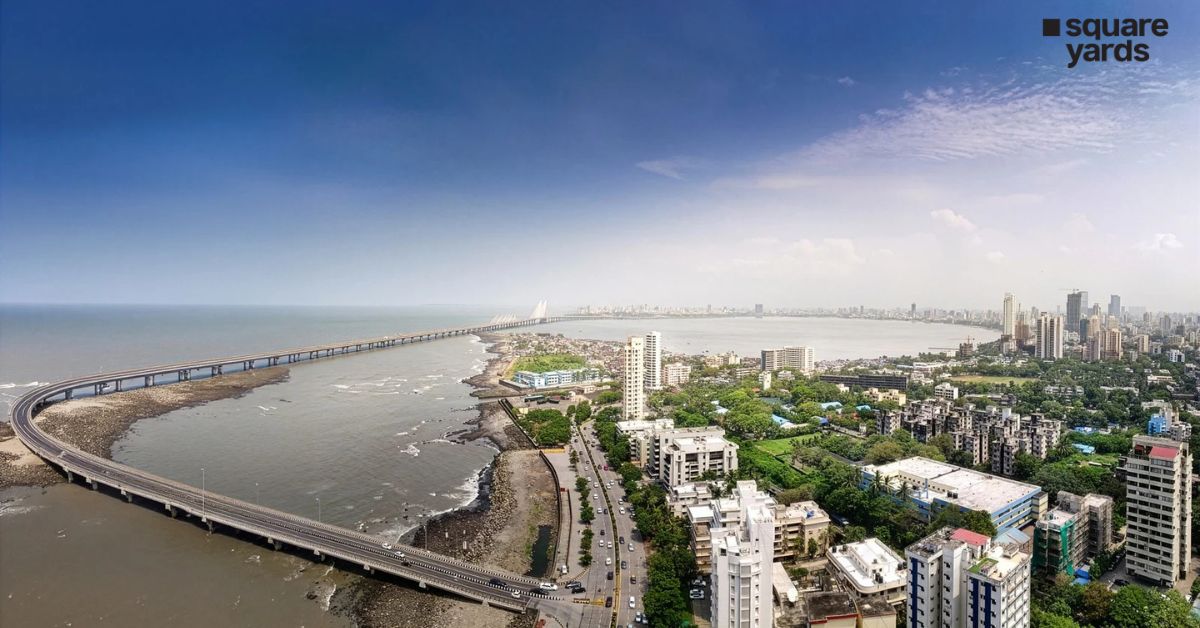
The upcoming Kharghar Coastal Road is expected to drive major transformation in Navi Mumbai’s urban landscape. This 9.68 km infrastructure corridor will be constructed across the Panvel Creek. Developed by the City and Industrial Development Corporation (CIDCO) at an estimated cost of over ₹1,000 crore, the project will connect Kharghar with the CBDs of Belapur and Nerul. With a smoother commute at its core, key arterial routes, such as the Sion-Panvel Expressway and Palm Beach Road, will also be integrated.
The road is also expected to provide direct connectivity to the upcoming Navi Mumbai International Airport, significantly reducing travel time across major nodes to nearly 15 minutes. Positioned as a crucial link in Navi Mumbai’s expanding infrastructure network, the project aims to ease congestion on existing routes and support future growth.
How is it transforming accessibility?
One of the most direct outcomes of the Kharghar Coastal Road will be the sharp improvement in accessibility across Navi Mumbai. While the travel time from Kharghar to Nerul was around 45 minutes via arterial roads, it is expected to reduce to around 15 minutes. The road will also provide seamless connectivity to the upcoming Navi Mumbai International Airport, thereby improving last-mile access for residents and businesses. The improved connectivity will relieve congestion on current roadways, provide better transportation options, and enhance overall intra-city travel efficiency.
Kharghar Coastal Road: What’s in it for real estate?
The development of the Kharghar Coastal Road is expected to have a notable impact on Navi Mumbai’s real estate landscape. Improved connectivity to business districts and the airport typically drives demand for both residential and commercial properties, and similar trends are anticipated along this corridor. Kharghar, CBD Belapur, and Nerul will witness the most direct impact. Surrounding micromarkets, such as Panvel, Ulwe, and Taloja, are also expected to see increased interest from homebuyers and investors due to enhanced accessibility and reduced travel times.
The immediate impact on Kharghar translates to better connectivity, driving higher demand from homebuyers and improved rental activity. CBD Belapur, as a key business district, could attract more office demand due to easier access without the congestion of core city areas. Nerul is already a well-developed residential hub, and shorter travel times and better connectivity may facilitate steady demand.
Among the surrounding micromarkets, Ulwe’s growth will remain closely linked to the Navi Mumbai International Airport, with the coastal road improving its access to other parts of Navi Mumbai and supporting housing demand. Panvel could benefit more gradually, as improved connectivity strengthens it as a major transit hub, making it attractive for affordable housing and long-term investment. Taloja caters to budget housing and is likely to see increased interest from buyers looking for lower prices but better access to workplaces.
These micro-markets are expected to grow at different paces, with central areas seeing faster gains and outer areas improving over time. In addition to potential price appreciation, the project is expected to improve the overall liveability of these micro-markets by offering better connectivity and convenience.