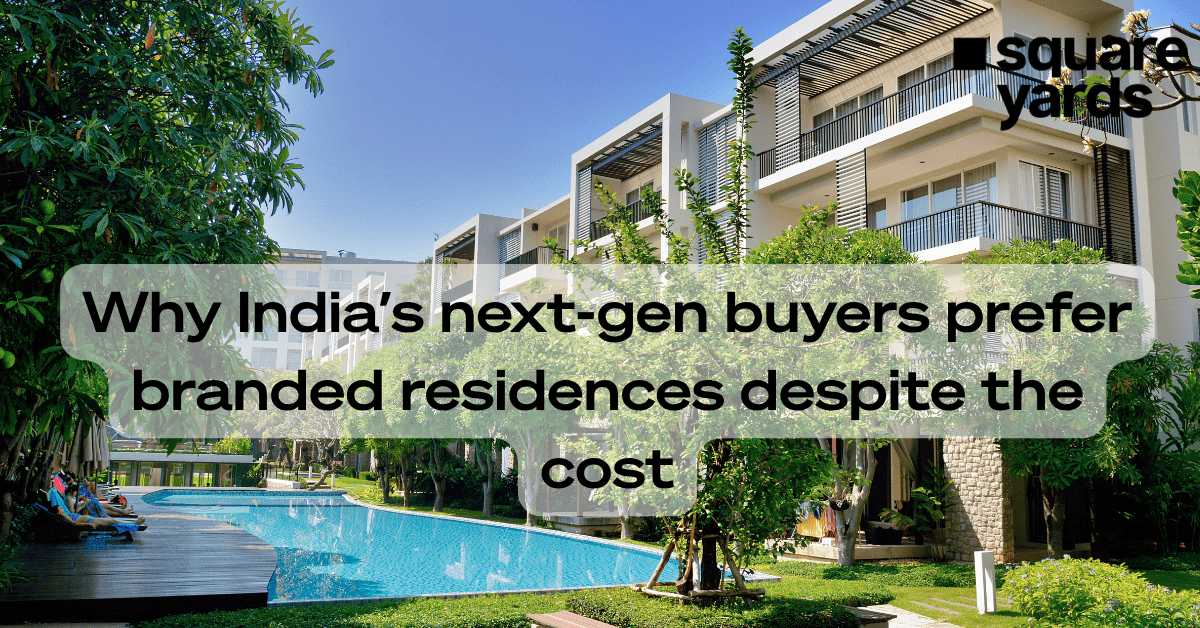
India’s real estate industry is witnessing a change in the generation cycle. With a new generation comprising young high-net-worth individuals, tech entrepreneurs, second-generation business owners, and international professionals making their presence felt in the real estate segment, their demands and aspirations differ drastically from those of the past generations. While for older generations, the concept of buying a house was mostly one of acquiring land, construction of individual homes, or choosing conventional flats mainly based on area and location, the new generation buyers have a very different perspective towards real estate, which includes aspects such as quality of life and ease of operations along with security.
1. The value of time and frictionless living
Time is the most precious commodity for professionals and entrepreneurs. Homeownership comes with several hassles like maintaining fragmented services for maintenance, security, facility management, and quality in operations. Branded homes solve all of the daily hassles of living, providing an easy-to-manage and hotel-like environment.
With features such as 24×7 concierge service, facility management, housekeeping, and security protocols, branded properties provide a seamless living experience. For the next generation of buyers who are juggling their work lives all across the globe, the comfort of knowing that their permanent residence or vacation residence is functioning smoothly regardless of their presence at the location justifies the premium over unbranded luxury homes.
2. Trust, governance and risk reduction
Traditionally, the premium residential segment in India has been beset by issues related to timelines of delivery, material specifications, and maintenance of projects in the long run. The next generation of buyers is especially wary about execution risks and governance of their projects.
Branded homes offer an extra dimension of trust and governance. Branded companies follow stringent guidelines in terms of designs, construction, safety norms, and environment-friendly practices. For a generation that has grown up with transparency, branded projects offer a solution to execution risks and ensure that they meet international standards.
3. Curated amenities vs. traditional amenitization
Whereas traditional luxury developments usually provide generic amenities like a pool or even just a simple clubhouse, branded developments emphasize curated lifestyles. Such developments usually include specific architectural themes, curated well-being centers, private dining areas, managed sports facilities, and high-end community areas meant for social interaction.
The next generation of buyers is not looking for merely space; they are looking to be surrounded by like-minded people and be in an environment that is suitable for their professional and personal goals. This is where the brand ensures the standard of the development.
4. Capital security and better resale market liquidity
As an investment option, the next generation of buyers looks at property investments from a financial perspective. It is acknowledged that although there could be depreciation in terms of the building structure in an unbranded luxury residence, a branded development is better equipped to preserve its value over time due to effective management of the asset.
Globally as well as in India, branded residences enjoy better rent yields as well as market liquidity in terms of resale when compared to an unbranded one. This ensures that the physical wear-and-tear of the asset does not happen.
A new paradigm in ownership mindset
The increasing preference towards buying branded residences represents an emerging paradigm shift in the consumer mindset where there is a move from buying simple real estate to a holistic investment in a lifestyle asset. In the case of India’s next generation of buyers, the choice of paying more money for branded residences is no longer a luxury; it is simply a smart business decision.
Disclaimer: The views expressed are personal to Mr Ashwin Kumar, Founder and Managing Director, Vibez Estates. Square Yards does not take responsibility for the opinions expressed in this article.