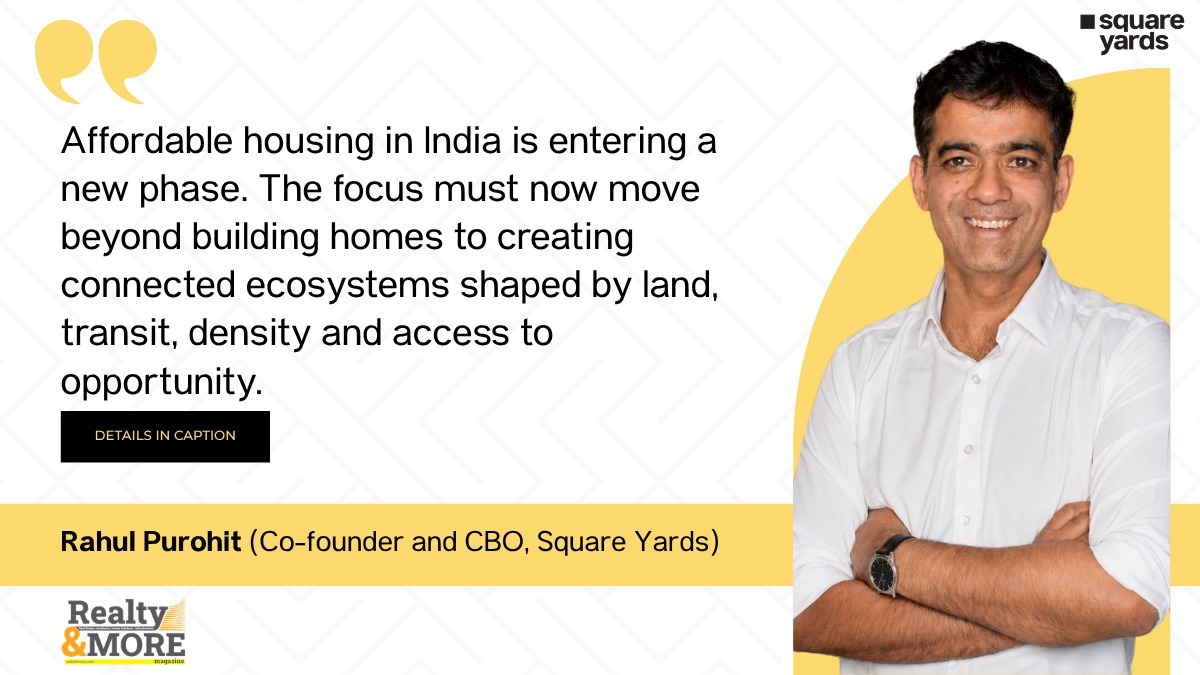
India’s affordable housing landscape is entering a new phase. For more than a decade, government-led programmes such as Pradhan Mantri Awas Yojana–Urban (PMAY-U) have focused on expanding access to housing for eligible urban households. As urbanisation accelerates, however, the challenge is shifting from simply delivering homes to creating an ecosystem where affordable housing can be built, financed and accessed sustainably.
The National Conference on Affordable Housing Reforms, held in August 2026, highlighted this broader approach. Discussions placed land, urban planning, density, mobility, finance and rental housing at the centre of affordable housing policy. The underlying concern is straightforward: when land is scarce and expensive, reducing the final price of a home alone cannot deliver meaningful affordability.
Proposed reforms include expanding planned urban areas, reserving at least 10% of residential land for affordable housing zones, increasing permissible Floor Area Ratio (FAR) for eligible projects and promoting mechanisms such as land pooling, Transferable Development Rights (TDR) and land banks. Measures to reduce development costs, including potential exemptions on certain land-use charges and stamp duty, could further improve project viability.
But affordable housing is increasingly becoming a question of location and mobility. A home with a lower purchase price may not remain affordable if residents spend significant amounts of time and money commuting to jobs, schools and essential services. This makes transit-oriented development increasingly relevant to India’s housing strategy.
Delhi’s Transit-Oriented Development Regulations 2026 provide an example of this approach. The framework opens approximately 207 sq km around metro, RRTS and railway corridors for planned, high-density and mixed-use development. On qualifying plots, FAR can reach up to 500, while 65% of permissible FAR is earmarked for residential use, including homes of up to 100 sq m built-up area intended to support affordable housing.
The next phase of PMAY-U 2.0 is expected to complement these reforms by supporting one crore additional eligible urban families through diverse housing solutions, technology-enabled implementation, financing and institutional partnerships. Rental housing, unlocking vacant housing stock and improving access to finance are also emerging as important parts of the ecosystem.
For India’s real estate sector, the message is clear: the future of affordable housing will depend on more than construction. Land availability, development density, public transport, employment opportunities and finance will need to work together. Cities that successfully align these factors could create housing that is not only affordable to purchase, but also affordable and sustainable to live in.
To read the full article, click the below links:
| # | Publication | Link |
|---|---|---|
| 1 | Realty N More | Realty N More |