
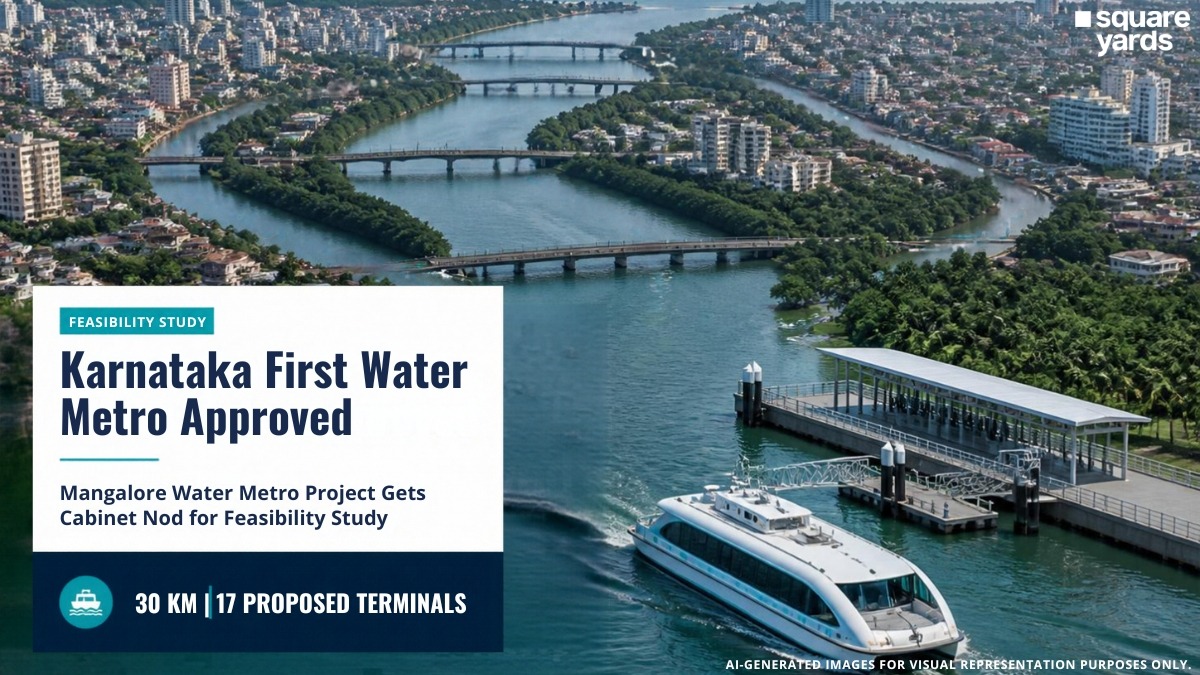
The Water Metro in Karnataka has received its first major approval after the state cabinet cleared a technical and financial feasibility study for the Mangalore Water Metro Project. The proposed project is planned as Karnataka’s first water-based urban transit system and will study how electric ferries can connect different parts of Mangaluru through the city’s river network.
The proposal focuses on the Nethravati and Gurupura rivers, which run through several residential, commercial, and waterfront areas in Mangaluru. Instead of metro trains, the project plans to use passenger ferries operating between dedicated terminals across the two rivers.
The cabinet approval does not mean construction has started. The feasibility study will examine the route, passenger demand, project cost, environmental aspects, and the implementation model before the government takes the next decision on the project.
Karnataka Cabinet Gives Green Signal to Mangalore Water Metro Feasibility Study
The Karnataka Cabinet has cleared the first official stage of the Mangalore Water Metro Project by approving a technical and financial feasibility study. The decision was taken during the cabinet meeting held in Mangaluru, where the state government announced a series of infrastructure projects for coastal Karnataka.
The feasibility study will be carried out by the Karnataka Water Transport Board. It will assess whether the proposed Karnataka Water Metro is practical from an engineering, financial, and operational point of view. The study will also examine passenger demand, route alignment, project cost, and the Public Private Partnership model proposed for the project.
Regional reports published in September and October 2026 state that 11 of the 19 proposed stations have been finalized by the Mangaluru Port and Fisheries Sub Division. The reported locations include Old Port, Sultan Battery, Tannirbhavi Church, Kasaba Bengre, Kulur Bridge and Jeppinamogaru.
The feasibility study will help determine how a water-based transit network could operate across Mangaluru’s rivers before the project moves towards a Detailed Project Report. The reported station selection provides an indication of the locations being considered, but it does not confirm final route approval or clearance for construction.
Why Mangaluru Was Chosen for Karnataka’s First Water Metro
Mangaluru’s geography is one of the biggest reasons the city was picked for the Karnataka Water Metro. The city is located between the Nethravati and Gurupura rivers, with several neighborhoods, port areas, and beaches spread across both waterways. Thousands of people still depend on bridges and local ferries to move between different parts of the city every day.
The Karnataka Maritime Board identified Mangaluru as a suitable location because its rivers are already navigable and connect residential areas with commercial hubs, the New Mangalore Port, and coastal destinations. Instead of creating a new transport corridor, the proposal plans to build on this existing water network with a modern ferry system.
The project is also part of Karnataka’s broader plan to expand inland water transport along the state’s coastline. Officials say Mangaluru offers the right mix of waterways, urban population, and port connectivity to test Karnataka’s first water based public transit system before exploring similar projects in other coastal regions.
Mangalore Water Metro Route and Map: Rivers, Proposed Terminals, and City Connectivity
The proposed Mangalore water metro route will run through Mangaluru’s two main waterways, the Nethravati River and the Gurupura River. The first phase is planned as a 30 kilometer water corridor between Bajal and Maravoor Bridge, connecting residential neighborhoods, commercial areas, port locations, and riverfront destinations across the city.
According to the Karnataka Maritime Board’s proposal, the network is expected to include 17 passenger terminals or jetties in Phase 1. These are proposed locations identified during the planning stage and will be finalized after the feasibility study and the Detailed Project Report.
Proposed Mangalore Water Metro terminals
The Mangalore water metro map has not been released by the Karnataka Government yet. Current route maps available online are based on the Karnataka Maritime Board’s planning proposal and show the corridor following the Nethravati and Gurupura backwaters. The final map will be published after the route alignment, terminal locations, and interchange points are approved in the DPR.
Electric Ferries and Smart Water Terminals Planned for Karnataka Water Metro
The Karnataka Water Metro is planned around a fleet of electric passenger ferries instead of conventional diesel boats. The proposal follows the model used in Kochi, where battery powered ferries operate between dedicated terminals across the city. Karnataka officials visited Kochi before moving ahead with the Mangaluru proposal to study its operations and infrastructure.
The project proposal includes 17 passenger jetties across the 30 km network. These terminals are expected to have boarding platforms, waiting areas, ticketing facilities, and access for passengers with disabilities. The final design of each terminal will be decided after the feasibility study and the Detailed Project Report.
The proposal also looks at integrating water terminals with Mangaluru’s existing bus network so commuters can continue their journey after reaching the shore. This approach is intended to make the Water Metro part of the city’s wider public transport system rather than a standalone ferry service.
How Karnataka Water Metro Could Change Daily Travel in Mangaluru
The Karnataka Water Metro is designed around Mangaluru’s river network, where many neighborhoods are separated by waterways instead of long stretches of road. If the project moves ahead, commuters will have another public transport option between riverfront areas without relying only on bridges and busy city roads. One of the government’s stated objectives is to ease pressure on road traffic by using the Nethravati and Gurupura rivers for daily passenger movement.
The proposed network can improve access to places that already see regular commuter and visitor movement, including waterfront neighborhoods, the New Mangalore Port area, Sultan Battery, Tannirbhavi Beach, and other coastal destinations connected by the river corridor. This could make travel between the northern and southern parts of Mangaluru more direct for people living near the waterways.
The project also fits into Karnataka’s wider plan to expand cleaner public transport along its coastline. By introducing electric ferries, the state is looking at an alternative transport system that uses existing waterways instead of building new road corridors through the city.
What’s Next for the Mangalore Water Metro Project?
The Mangalore Water Metro Project moves into its next phase with the feasibility study approved by the Karnataka Cabinet. The study will evaluate the final route alignment, passenger demand, engineering requirements, environmental impact, and the project’s financial viability before a Detailed Project Report is prepared.
Once the feasibility report is completed, the Karnataka Water Transport Board will prepare the DPR with details on terminal locations, ferry operations, project cost, and the implementation model. The government will take up funding approvals and the tender process only after these studies are completed.
The proposal is also part of Karnataka’s larger inland water transport plan for the coast. If the Mangaluru project progresses as planned, similar water based transit systems could be explored in other coastal cities across the state in the future.