
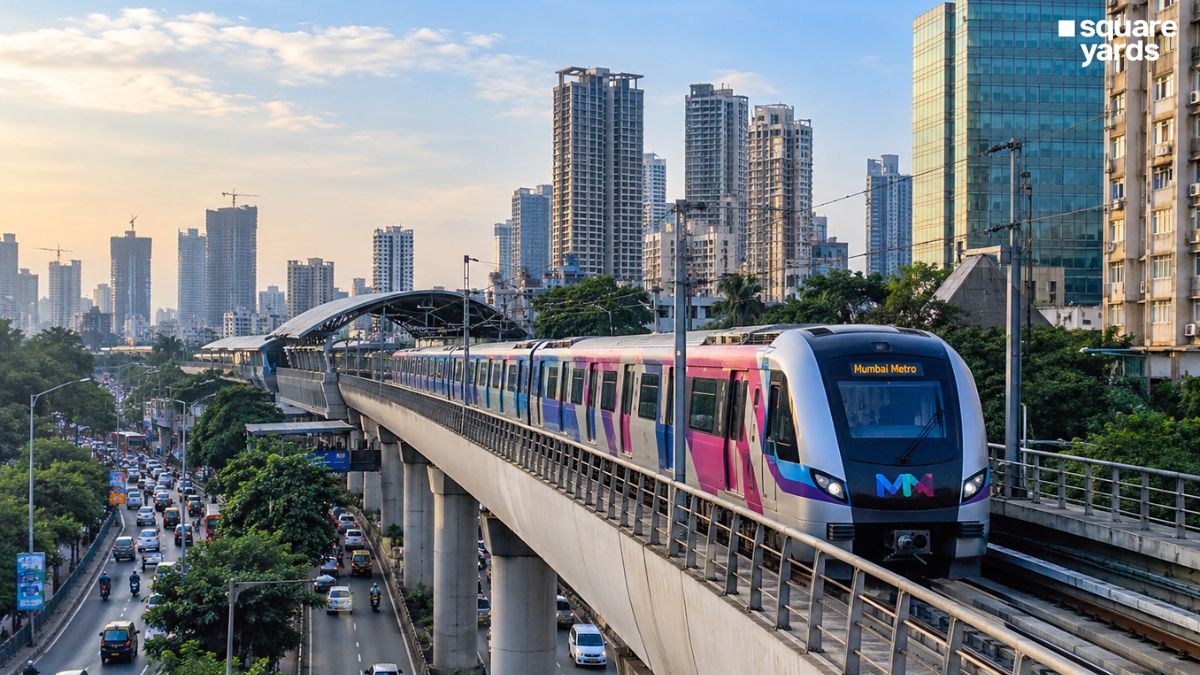
Maharashtra has cleared the Rs 17,724.99-crore Mumbai Metro Line 13 project connecting Mira-Bhayandar with Vasai-Virar, marking a major infrastructure addition to the northern part of the Mumbai Metropolitan Region (MMR). The 25.03-km corridor is expected to create a new east-west public transport link, with implications for residential markets along the route.
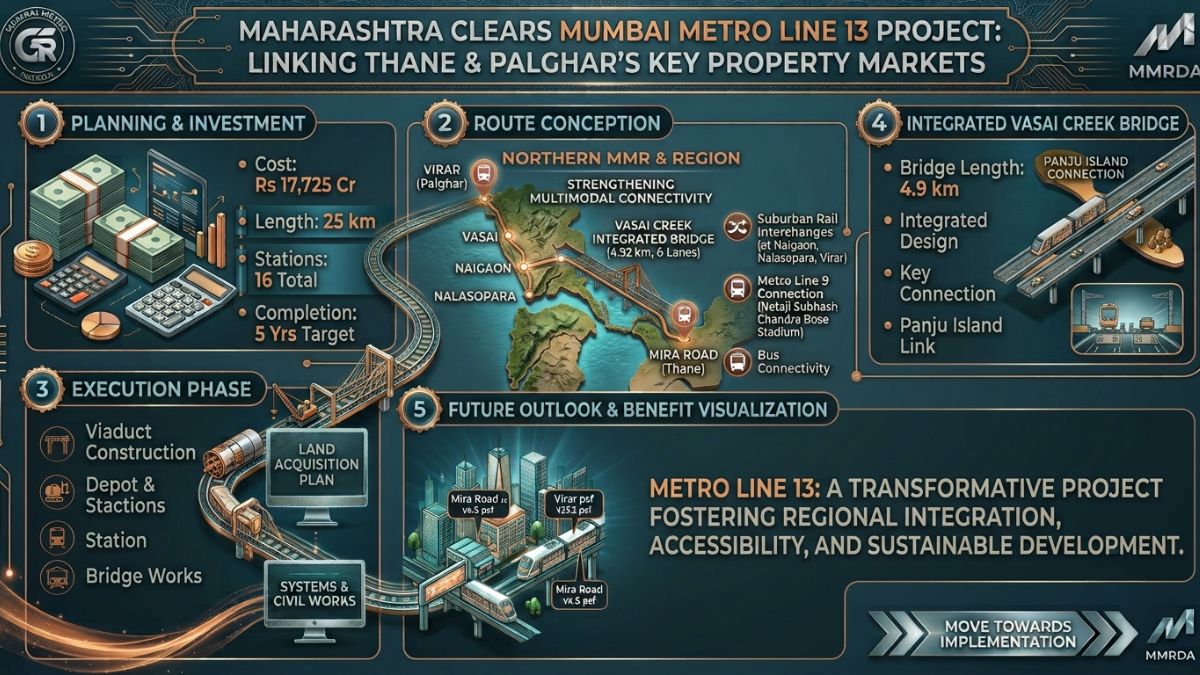
The corridor will have 16 stations, comprising 13 elevated and three underground stations. Its 4.92-km integrated road-and-metro bridge across Vasai Creek will provide a new east-west connection through Panju Island, linking two property markets that currently differ significantly.
Metro Line 13 to connect Mira Road, Vasai, Naigaon, Nalasopara and Virar
Of the total 25.03-km Metro 13 corridor, 21.78 km will be elevated and 3.25 km underground. The line will connect residential areas across Mira Road, Vasai, Naigaon, Nalasopara and Virar.
The corridor will also provide interchange facilities with suburban railway stations at Naigaon, Nalasopara and Virar. A connection with Metro Line 9 is proposed at Netaji Subhash Chandra Bose Stadium. Bus connectivity is also planned at all stations, which could help improve last-mile access around the corridor.
A metro depot has been proposed at Chikhal Dongari, while the project will require around 24.84 hectares of land. The project is targeted for completion within five years after approval. Authorities have also been directed to complete land acquisition and access-road works within the next six months.
Rs 17,725 crore project includes a 4.92-km Vasai Creek bridge
One of the most significant components of Mumbai Metro Line 13 is the 4.92-km integrated six-lane road-and-metro bridge across Vasai Creek. The bridge will connect Panju Island and provide a new road and public transport link between the Mira-Bhayandar and Vasai-Virar sides. The road component will have three lanes on each side.
The bridge is particularly important because the project is designed to address an existing east-west connectivity gap. The government expects the project to reduce road travel time by nearly half.
For the real estate market, this connectivity improvement is relevant because it brings residential locations in Thane and Palghar closer from a daily-commute perspective.
Property at a glance: Key markets along Metro Line 13
The proposed corridor passes through several residential markets with different price levels. Square Yards data for June 2026 shows a considerable difference between average asking prices in Mira Road and locations across the Vasai-Virar belt.
|
Key area |
District |
Avg. asking price |
QoQ change |
|
Thane |
Rs 16,450/sq ft |
-2.72% |
|
|
Palghar |
Rs 9,200/sq ft |
0.0728 |
|
|
Palghar |
Rs 8,800/sq ft |
0.0139 |
|
|
Palghar |
Rs 8,750/sq ft |
0.0219 |
|
|
Palghar |
Rs 8,300/sq ft |
0.0098 |
|
|
Palghar |
Rs 8,650/sq ft |
0.0017 |
Source: Square Yards. Average asking prices as of June 2026.
Vasai-Virar and Mira Road property prices show a wide gap
Mira Road recorded an average asking price of Rs 16,450 per sq ft in June 2026, compared with Rs 16,900 (psf) in March 2026. Mira Road East recorded a higher average asking price of Rs 17,800 (psf).
In comparison, Vasai-Virar recorded an average asking price of Rs 8,650 (psf) in June 2026, with prices broadly stable during the quarter. Within the wider market, Vasai West stood at Rs 11,000 (psf), Vasai at Rs 9,200 (psf), Naigaon East at Rs 8,800 (psf), Nalasopara West at Rs 8,750 (psf) and Virar West at Rs 8,350 (psf).
This creates a significant price difference between the two ends of the proposed Metro 13 corridor. However, infrastructure approval alone does not mean property prices will converge or rise by a specific amount. The more immediate real estate significance lies in the potential to make employment, residential, and rental markets across the two districts more accessible to each other.
Travel time could fall as Mumbai Metro Line 13 connects Northern MMR
The Maharashtra government expects Metro 13 to reduce road travel time by around 50% compared with existing road journeys. The corridor is projected to carry around 4.49 lakh passengers per day by 2031, indicating the expected scale of demand for the new connection.
For residential markets, the significance of this change extends beyond the metro stations themselves. Better access to suburban railway interchanges at Naigaon, Nalasopara and Virar, together with the proposed Metro Line 9 interchange, could improve the overall connectivity network available to residents.
Mumbai Metro Line 13 moves northern MMR towards a more connected property market
Mumbai Metro Line 13 is expected to add a new layer to the city’s public transport network by connecting Mira Road with Vasai-Virar through a combination of metro infrastructure and a major road bridge.
For the real estate market, a key takeaway is the link between Thane’s higher-priced Mira Road market and the comparatively lower-priced Vasai-Virar market in Palghar. With a Rs 17,724.99-crore investment, 16 stations, suburban railway interchanges, a 4.92-km Vasai Creek bridge, and projected daily ridership of 4.49 lakh by 2031, the project could reshape how these northern MMR locations are accessed.
The impact on property prices will ultimately depend on the pace of construction, station-level connectivity, and the wider development of residential and commercial infrastructure around the corridor.