
Artificial intelligence is rapidly transforming the interior design industry, making visualization, space planning, and concept creation faster and more accessible than ever before. While AI has lowered the barrier to generating design ideas, industry experts believe that technology alone cannot deliver a successful home transformation. The true differentiator lies in a company’s ability to seamlessly execute projects through a robust supply chain, reliable vendor ecosystem, and efficient project management.
Today, consumers expect much more than aesthetically pleasing renders. They seek transparency, predictable timelines, quality craftsmanship, and hassle-free execution. This shift has made operational excellence, not AI, the defining factor behind customer satisfaction and business success.
While AI can significantly improve customer discovery, personalize recommendations, and accelerate design iterations, it cannot independently coordinate hundreds of vendors, manage procurement challenges, ensure material availability, or oversee flawless on-site execution. These capabilities require years of operational expertise, deep supplier relationships, and an integrated execution framework.
The interior design ecosystem has become increasingly complex, with projects involving multiple stakeholders, from designers and manufacturers to logistics partners and installation teams. Companies that have invested in building resilient supply chains and technology-enabled operations are therefore better positioned to deliver projects on time while maintaining consistent quality. Industry observers note that this execution capability creates a far stronger competitive advantage than AI alone, as it is significantly more difficult to replicate.
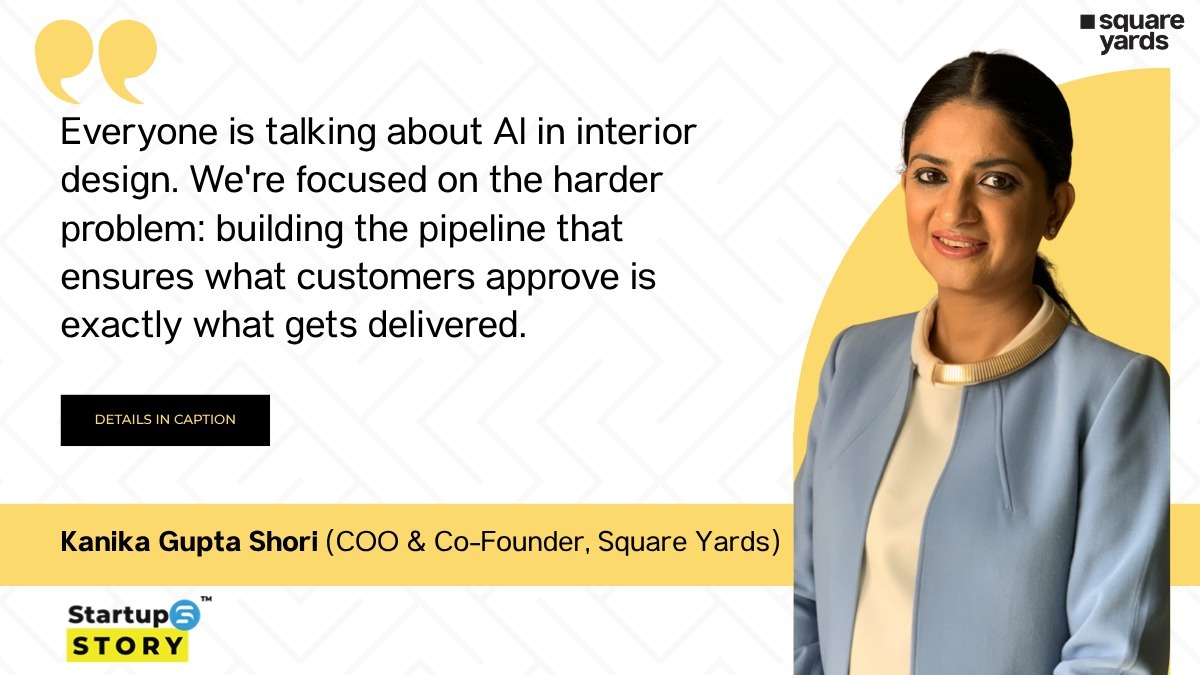
Kanika Gupta Shori, Co-Founder and COO, said, “AI is undoubtedly transforming how customers visualize and plan their dream homes, but execution remains the real differentiator. Beautiful designs alone don’t build homes—timely procurement, trusted vendor partnerships, quality assurance, and seamless project management do. The companies that will lead the next phase of growth are those that combine AI-driven customer experiences with a deeply integrated supply chain capable of delivering projects efficiently and consistently. Technology can accelerate decisions, but operational excellence is what ultimately builds customer trust.”
As the industry continues to embrace digital innovation, the role of AI will undoubtedly expand. However, rather than replacing traditional business strengths, it is expected to complement them. The future of interior design will belong to companies that successfully combine intelligent technology with dependable execution, ensuring that every design envisioned is delivered exactly as promised.
In today’s highly competitive market, the true advantage lies not in the ability to quickly produce impressive designs, but in the capacity to consistently turn those designs into completed homes. This requires strong execution, operational discipline, and a resilient supply chain—qualities that are challenging to replicate and highly valuable to customers.
To read the full article, click the below links:
| # | Publication | Link |
|---|---|---|
| 1 | StartupStory | StartupStory |
Published Date : 13 July 2026