
Delhi’s land records carry a slightly unusual mix for a capital city: large parts of the NCT are still governed by rural revenue law, meaning Khasra numbers, Khatauni registers and Jamabandi entries exist here the same way they do in a village in Uttar Pradesh or Haryana, even in areas that feel entirely urban. Bhulekh Delhi, accessed through the DLRC portal, is what brought that entire system online, replacing a process that used to mean tracking down the right Patwari or revenue office in person.
This guide covers how Bhulekh Delhi actually works: what changed when Indraprastha Bhulekh Delhi became Bhulekh Delhi, how the land record computerization process actually works behind the scenes, and how to pull up a record by Khasra number, Khata number or name. It also covers two things a lot of existing guides skip: the GIS map view built into the DLRC portal, and how mutation actually gets finalised once your Jamabandi details are updated.
- What Is Bhulekh Delhi?
- Delhi Land Record Computerization: How the System Works
- Documents and Services on the Bhulekh Delhi Portal
- How to Check Delhi Land Records Online on Bhulekh
- Delhi Jamabandi Online: Checking Details Under the PLR Act
- Delhi Land Record Map: Viewing GIS Land Maps on DLRC
- Property Mutation in Delhi: Process and Documents Required
- Bhulekh Delhi and Property Tax: How They Connect
- Key Terms: Khasra, Khatauni, Khewat and Jamabandi Explained
- Land Records in Other Indian States
- Common Issues When Checking Bhulekh Delhi Records
- Conclusion
What Is Bhulekh Delhi?
Bhulekh Delhi is the online land record system for the National Capital Territory of Delhi, run by the Revenue Department through the DLRC, or District Level Record Computerisation, portal. It digitises the Jamabandi, Khasra and Khatauni records that were historically maintained on paper by Patwaris across Delhi’s districts, letting residents, buyers and lenders check land ownership and revenue details without a physical office visit.
Delhi Bhulekh covers land that falls under the Delhi Land Reforms Act and the Punjab Land Revenue Act, both of which still apply to parts of the NCT despite Delhi’s largely urban character, a legacy of how land administration was structured before and shortly after Independence. This is also why the portal’s two main search paths, one under the DLR Act and one under the PLR Act, sometimes confuse first-time users who expect a single unified search.
|
Particulars |
Details |
|
Portal name |
Bhulekh Delhi (DLRC – District Level Record Computerisation) |
|
Previous name |
Indraprastha Bhulekh Delhi |
|
Official website |
dlrc.delhigovt.nic.in |
|
Managing authority |
Revenue Department, Government of NCT of Delhi |
|
Governing laws |
Delhi Land Reforms Act, 1954 (DLR Act) and Punjab Land Revenue Act, 1887 (PLR Act) |
|
Core documents |
Jamabandi, Khasra, Khatauni, Record of Rights (ROR) |
|
Related systems |
MCD (mutation certificates), GIS map view, DORIS (registered document search) |
Indraprastha Bhulekh Delhi: Why the Name Changed
If you’ve been searching for indraprastha bhulekh delhi, or indraprastha bhulekh online, and landed here, you’re in the right place; it’s simply an older name for the same system. The portal was originally branded Indraprastha Bhulekh Delhi when Delhi’s land record computerisation project first launched, and while the government has since moved to the shorter Bhulekh Delhi or DLRC naming, both terms are still used interchangeably in search and in older official documents. The indraprastha bhulekh delhi land record information you’re looking for, whether that’s Jamabandi, Khasra or Khatauni details, sits on the exact same dlrc.delhigovt.nic.in portal covered throughout this guide.
Delhi Land Record Computerization: How the System Works
Delhi land record computerization refers to the broader government initiative that moved the state’s paper-based revenue registers onto a searchable online database, aligned with the national Digital India Land Records Modernization Programme. Before computerisation, a Jamabandi update or a simple ownership check meant physically visiting the local Patwari, often more than once, since records were entered and revised by hand across scattered registers with no central digital copy.
The DLRC portal’s two-track structure reflects how this computerisation was actually carried out. Khasra Khatauni Delhi details, covering ownership and cultivation, were digitised under the Delhi Land Reforms Act and sit under the ‘Khasra Khatauni Details under DLR Act’ option. Jamabandi records, the fuller Record of Rights, were digitised under the Punjab Land Revenue Act and sit under a separate ‘Jamabandi Details under PLR Act’ option. Both draw from the same underlying land record delhi data, so a plot’s Khasra Khatauni entry and its Jamabandi entry should always agree with each other; a mismatch between the two is usually a sign that one register hasn’t been updated yet and is worth flagging to the local revenue office.
Documents and Services on the Bhulekh Delhi Portal
|
Khasra Khatauni details (DLR Act) |
Search ownership and cultivation records by name, Khata number or Khasra number. |
|
Jamabandi details (PLR Act) |
View the full Record of Rights for a village by Jamabandi number. |
|
GIS land map view |
See a plot’s boundaries plotted against its Khasra number using the portal’s interactive map. |
|
Mutation certificate |
Download a mutation (Dakhil Kharij) certificate once ownership has changed, via the MCD portal. |
|
District-wise browsing |
Access records for all of Delhi’s revenue districts, subdivisions and villages from the same portal. |
|
DORIS cross-reference |
Registered sale deeds and documents can be cross-checked on the related DORIS/e-Search portal. |
The record you view directly on the DLRC portal is a free reference copy, useful for confirming ownership and Khasra details quickly. For anything that needs to hold up legally, such as a loan application or a court matter, a certified extract needs to be requested through the concerned Tehsildar or SDM office covering the property, rather than relied on as a plain printout from the website.
It’s also worth knowing that registered documents themselves, such as sale deeds and gift deeds, aren’t part of the DLRC record at all. Those are held on a separate system, DORIS (Delhi Online Registration Information System), sometimes accessed through an e-Search facility, which tracks registration details rather than revenue records. A property’s DLRC entry and its DORIS registration history are related but distinct, and a thorough ownership check before a transaction generally means looking at both, not just the Bhulekh Delhi record alone.
How to Check Delhi Land Records Online on Bhulekh
Checking bhulekh delhi online, or delhi bhulekh online as it’s sometimes searched, follows a similar pattern whether you’re searching by name, Khata number or Khasra number:
- Go to the official portal: visit dlrc.delhigovt.nic.in, the DLRC website for Bhulekh Delhi.
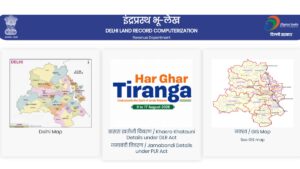
- Choose your search type: select ‘Khasra Khatauni Details under DLR Act’ for ownership and cultivation records, or ‘Jamabandi Details under PLR Act’ for the full Record of Rights.
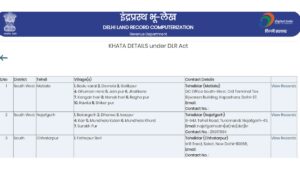
- Select your district: click ‘View Records’ next to the district where the property is located.
- Fill in the location details: enter the Subdivision, Village and Khata Type on the page that follows.
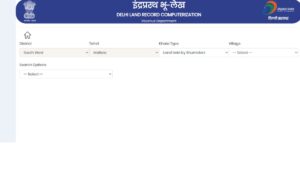
- Pick a search method: choose to search By Name, By Khata Number, or By Khasra Number, depending on what you have available.
- Click ‘View Khata Details’: the matching record opens on screen, and can generally be saved or printed from there.
Delhi Land Record by Khasra Number
A Khasra number identifies a specific land parcel, functioning the same way a survey number does in other states, and it’s the fastest route to a Delhi land record by khasra no if you already have it. On the DLRC homepage, select ‘Khasra Khatauni Details under DLR Act’, click ‘View Records’ next to your district, fill in the Village and Khata Type, choose ‘By Khasra Number’ from the search options, enter the number exactly as it appears on your papers, and click ‘View Khata Details’. Once the record loads, most browsers let you save it as a PDF directly from the page, which covers the delhi land record by khasra no pdf download searches this topic gets regularly.
Delhi Land Record by Name
If you don’t have a Khasra or Khata number handy, a delhi land record by name search works the same way: select ‘Khasra Khatauni Details under DLR Act’, pick your district and village, choose ‘By Name’ as the search method, and enter the owner’s name as recorded. This search is free to use directly on the DLRC website, so there’s no need to pay a third party for what the official portal already provides at no cost. As with any name-based land record search, minor spelling or transliteration differences can affect results, so it’s worth trying a close variation of the name if the first search comes back empty.
Delhi Land Record ROR Report by Khata Number
A Khata number groups together the plots held by a single owner or set of co-owners, and searching by it pulls up the full ror delhi land record for that holding rather than a single parcel. From the DLRC homepage, select ‘Khasra Khatauni Details under DLR Act’, click ‘View Records’ for your district, enter the Village and Khata Type, choose ‘By Khata Number’ from the dropdown, and click ‘View Khata Details’ to bring up the complete ROR entry.
Explore Land Records of Other States in India
| Karnataka | Bhoomi Online RTC |
| Chhattisgarh | CG Bhuiya |
| Uttarakhand | Bhulekh UK |
| Punjab | PLRS |
| Madhya Pradesh | Bhulekh MP |
| West Bengal | Banglarbhumi |
| Odisha | Bhulekh Odisha |
| Bihar | Land Record Bihar |
| Jharkhand | Jharbhoomi |
| Tamilnadu | Patta Chitta |
| Maharashtra | Mahabhulekh |
| Telangana | Dharani |
| Gujarat | AnyROR |
| Assam | Dharitree |
| Goa | Land Records Goa |
Delhi Jamabandi Online: Checking Details Under the PLR Act
Jamabandi delhi records sit under a separate section of the DLRC portal from the Khasra Khatauni search, since they were computerised under the Punjab Land Revenue Act rather than the DLR Act. To check delhi jamabandi online, go to the DLRC homepage, select ‘Jamabandi Details under PLR Act’, choose your district and click ‘View Records’, then select your village and enter the Jamabandi number to bring up the full record.
A Jamabandi entry is the most complete single document for a plot, tying together ownership, cultivation and revenue details in one register, which is why banks, courts and government departments in Delhi generally ask for it over a plain Khasra Khatauni printout whenever a transaction or dispute needs the fuller picture.
Delhi Land Record Map: Viewing GIS Land Maps on DLRC
A newer part of the DLRC portal lets you view a plot’s boundaries visually rather than just as text, using an integrated GIS, or Geographic Information System, map. This addresses the delhi land record map online searches that a plain Jamabandi or Khasra printout can’t, since it shows a parcel’s shape and position relative to its neighbours rather than describing it in numbers alone.
- Open the map view: on the DLRC homepage, look for the interactive map graphic and click ‘See GIS Map’.
- Zoom to your area: use the map’s zoom tools to navigate to the general location of your property.
- Select ‘Khasra Information’: this tab, at the top of the map interface, switches the map into parcel-search mode.
- Enter your location details: fill in the State, District, Division, Village and Rectangle to narrow the search to your plot.
- View the result: the map highlights the matching parcel, letting you cross-check its boundary against the written Khasra record.
Property Mutation in Delhi: Process and Documents Required
Mutation, called Dakhil Kharij in Hindi, is the process of updating ownership records after a property changes hands, whether through sale, inheritance, gift or a court order. It’s worth being clear on one point upfront: a mutation entry updates the revenue record for tax and administrative purposes, but it doesn’t by itself grant or transfer legal title, which continues to rest on the registered sale deed or other transfer document.
Both freehold and leasehold properties in Delhi can be mutated, and depending on the property’s location and category, the process runs through the Municipal Corporation of Delhi (MCD), the Delhi Development Authority (DDA), or the Land and Development Office (L&DO). For a standard sale-based mutation, the documents typically required include a copy of the registered sale deed, a duly attested indemnity bond on a ₹100 stamp paper, a no-objection certificate from the relevant housing board where applicable, a property tax clearance receipt, and an attested undertaking form from the transferee on a ₹10 stamp paper, along with an apportionment fee of ₹100 and a composition fee of ₹50.
Where the property is inherited rather than sold, a copy of the will and the owner’s death certificate take the place of the sale deed. Where a transfer happened through a power of attorney, the POA papers, a copy of the payment registered with the sub-registrar, and the will copy (where relevant) are needed instead. These documents are submitted to the sub-registrar office covering the property, where a representative verifies them before the mutation certificate is issued, a process that typically takes between 15 and 30 working days.
How to Get a Mutation Certificate Online in Delhi
Once a mutation has been processed, the certificate itself can usually be downloaded online through the MCD rather than collected in person:
- Visit the MCD website: go to the official Municipal Corporation of Delhi portal.
- Find the download option: look for ‘Download Mutation Certificate’ near the bottom of the homepage.
- Enter your details: provide the registration date, registration number and the relevant SRO (Sub-Registrar Office).
- Complete the captcha and submit: your mutation certificate downloads directly once the details match.
Bhulekh Delhi and Property Tax: How They Connect
Land records and tax for property in Delhi are handled by different authorities, DLRC and the municipal corporations respectively, but the two are closely linked in practice. Property tax is calculated using a Unique Property Identification Code (UPIC), and for land that still falls under the Delhi Land Reforms Act, the underlying Khasra and Khata details from Bhulekh Delhi often feed into how that property is classified for tax purposes. Keeping your Jamabandi and Khasra Khatauni records current, particularly after a mutation, sale or inheritance, helps avoid the kind of mismatch between revenue records and municipal tax records that becomes harder to sort out the longer it’s left unresolved.
Key Terms: Khasra, Khatauni, Khewat and Jamabandi Explained
Khasra is the individual plot number, the field-level identifier assigned to a specific parcel of land, and it’s the quickest way to search a land record delhi authorities will recognise when you already have it written down. Khatauni delhi, or delhi khatauni as it’s also searched, is the cultivation and holdings register, listing all the parcels associated with a particular person, effectively working as a ledger of that individual’s landholdings across a village.
Khewat, less commonly searched but still relevant, is the ownership share register, showing how a landholding is divided among co-owners where more than one person holds rights over the same land. Jamabandi ties all three together into a single comprehensive Record of Rights, which is why it remains the document most often requested for anything with legal or financial weight, from a bank loan to a court proceeding.
These terms carry over from a land administration system that predates Delhi’s rapid urbanisation, and they still apply even in areas that no longer look rural in any obvious sense. A plot’s Khasra number, once assigned, doesn’t change just because the surrounding area has since been built up with housing colonies or commercial development, which is part of why older Khasra numbers can still turn up on paperwork for what is now a fully urban property.
Land Records in Other Indian States
|
State |
Portal |
|
Karnataka |
Bhoomi Online RTC |
|
Chhattisgarh |
CG Bhuiya |
|
Uttarakhand |
Bhulekh UK |
|
Punjab |
PLRS |
|
Madhya Pradesh |
Bhulekh MP |
|
West Bengal |
Banglarbhumi |
|
Odisha |
Bhulekh Odisha |
|
Bihar |
Land Record Bihar |
|
Jharkhand |
Jharbhoomi |
|
Tamil Nadu |
Patta Chitta |
|
Maharashtra |
Mahabhulekh |
|
Telangana |
Dharani |
|
Gujarat |
AnyROR |
|
Assam |
Dharitree (ILRMS) |
|
Goa |
DSLR (dslr.goa.gov.in) |
|
Himachal Pradesh |
Himbhoomi |
Common Issues When Checking Bhulekh Delhi Records
A handful of recurring problems account for most of the confusion people run into on the DLRC portal, and knowing them upfront saves a fair bit of back-and-forth. A search returning no results often has nothing to do with the record itself; it’s frequently a case of searching under the wrong Act, since Khasra Khatauni and Jamabandi are separate sections drawing on separate legal frameworks, and a record that hasn’t been mirrored into both yet may only show up under one of them.
Name-based searches are also more sensitive to exact spelling and transliteration than most people expect, so a Delhi land record by name search that comes back empty is worth retrying with a close variant of the name before assuming the record doesn’t exist. And for genuinely urbanised pockets of Delhi, particularly newer colonies built on land that was reclassified relatively recently, a Bhulekh Delhi search may simply return nothing because the relevant records now sit with the municipal corporation’s property tax system instead, in which case the MCD’s own portal is the better starting point.
Conclusion
Bhulekh Delhi, still known to many as Indraprastha Bhulekh Delhi, brought Delhi’s Jamabandi, Khasra and Khatauni records online through the DLRC portal, replacing a process that used to depend on tracking down the right Patwari in person. Whether you search by Khasra number, Khata number or owner name, the underlying system stays the same, split between the DLR Act track for Khasra Khatauni details and the PLR Act track for Jamabandi, with a GIS map view now available to check a plot’s boundaries visually.
For anything the portal itself can’t finish, whether that’s a certified extract, a mutation certificate, or a registered document cross-check through DORIS, the surrounding network of Tehsildar offices, the MCD and the sub-registrar fills the gap, the same way it did before Bhulekh Delhi existed, just with far less running around required now that most of the groundwork happens online first.
Frequently Asked Questions:
1. What is Bhulekh Delhi?
Bhulekh Delhi is Delhi’s online land record system, run through the DLRC portal by the Revenue Department, providing access to Jamabandi, Khasra and Khatauni records for the NCT of Delhi.
2. What is the official website for Bhulekh Delhi?
The official portal is dlrc.delhigovt.nic.in, run by the Revenue Department, Government of NCT of Delhi.
3. How do I check Delhi land records online?
Visit dlrc.delhigovt.nic.in, choose Khasra Khatauni Details or Jamabandi Details, select your district, subdivision and village, then search by name, Khata number or Khasra number.
4. How do I check a Delhi land record by Khasra number?
On the DLRC portal, select Khasra Khatauni Details under DLR Act, choose your district and village, select ‘By Khasra Number’, enter the number, and click View Khata Details.
5. Can I check a Delhi land record by name for free?
Yes. The DLRC portal’s name-based search under Khasra Khatauni Details is free to use directly on the official website, with no charge for the basic record view.
6. What is Delhi land record computerization?
It refers to the government initiative that digitised Delhi’s paper-based Jamabandi, Khasra and Khatauni registers, split between records computerised under the Delhi Land Reforms Act and the Punjab Land Revenue Act.
7. What is ROR in Delhi land records?
ROR stands for Record of Rights, the formal term for the Jamabandi document, which lists ownership, cultivation and revenue details for a plot of land.
8. How do I download a mutation certificate online in Delhi?
Visit the MCD website, select Download Mutation Certificate, enter your registration date, registration number and SRO office, complete the captcha, and download the certificate.
9. Are Bhulekh Delhi records linked to property tax?
Not directly, but for land under the Delhi Land Reforms Act, property tax classification often draws on the same Khasra and Khata details recorded in Bhulekh Delhi, so keeping records current helps avoid tax mismatches.