
Delhi is one of the costliest property markets in the country. For a buyer who cannot stretch to a private builder flat in Dwarka or Rohini, the DDA Housing Scheme is often the most realistic route to owning a home in the city. Since 1957, the Delhi Development Authority has built and allotted over 14 lakh flats, and every fresh scheme still draws lakhs of applications for a limited number of units.
This guide walks through what the DDA Housing Scheme actually is, who can apply, the difference between EWS, LIG, MIG and HIG flats, current prices, the online application process, required documents, and what happens after you are allotted a flat. It also explains, briefly, how the DDA Housing Scheme is different from PM-UDAY and DDA’s land pooling policy, two other DDA-related terms that are often confused with it.
- What Is the DDA Housing Scheme? Delhi Development Authority
- Types of DDA Housing Schemes You Will Come Across
- How Does the DDA Housing Scheme Work?
- DDA Flat Categories: EWS, LIG, MIG and HIG Explained
- DDA Flat Price List 2026 (Indicative)
- Who Is Eligible for the DDA Housing Scheme?
- How to Apply for DDA Housing Scheme Online
- Documents Required for DDA Approval and Allotment
- DDA Flat Payment Options
- DDA Lottery Results and Allotment
- Popular DDA Flat Locations in Delhi
- DDA Flat Cancellation and Refund
- Delhi Development Authority: A Quick Overview
- DDA Online RTI: How to Get Information from DDA
- DDA Housing Scheme vs Private Builder Flats
- Is the DDA Housing Scheme Worth It?
- Conclusion
What Is the DDA Housing Scheme? Delhi Development Authority
The DDA Housing Scheme is a housing programme run by the Delhi Development Authority through which flats built by DDA in different parts of Delhi are sold to the public. Most flats are allotted through a computerised draw of lots, so the scheme is also commonly called the DDA lottery.
DDA is a statutory body set up under the Delhi Development Act, 1957, and its job is to plan, develop and manage land and housing in the National Capital Territory. Housing has always been one of its core functions, alongside roads, parks and commercial development.
A DDA flat is not the same as a private builder flat. The land and construction belong to DDA, a government body, so the title is considered clean and the ownership dispute risk is low compared with many private projects. Because of this, most nationalised and private banks are comfortable financing DDA flats with pre-approved home loan products.
For a first-time buyer in Delhi, this matters more than it might seem. Private resale flats in the city often come with layered ownership history, power-of-attorney sales, or land that was never formally converted from agricultural use. A DDA flat skips all of that, since DDA itself is both the landowner and the seller. That single fact explains why DDA schemes routinely draw far more applicants than there are flats on offer, even in far-flung locations like Narela.
|
DDA Key Facts |
Details |
|
Full Form |
Delhi Development Authority |
|
Established |
1957 under the Delhi Development Act |
|
Official Website |
|
|
Awaas Portal |
awaasp.dda.org.in |
|
Current Schemes (2026) |
Karmajeevi Awaas Yojana, Nagrik Awaas Yojana, Premium Housing Scheme |
|
Flat Categories |
EWS, LIG, MIG, HIG |
|
Allotment Methods |
First Come First Served (FCFS) and Lottery |
Types of DDA Housing Schemes You Will Come Across
DDA does not run one single, permanently-named scheme. Over the years it has used several scheme names, and you will still see all of them referenced online, sometimes for flats that are still available for booking.
|
Scheme name |
What it typically covers |
|
Griha Nirman / general Housing Scheme |
The flagship annual or biennial scheme covering EWS to HIG flats across multiple locations, allotted mainly by draw of lots |
|
Sasta Ghar Scheme |
Leftover or specially discounted flats sold on a first come first served basis, usually at a lower price than the original launch |
|
Apna Ghar Scheme |
Targeted affordable housing, generally EWS and LIG focused |
|
Shramik Awaas Yojana |
Aimed at workers and lower-income groups, with simplified eligibility |
|
Sabka Ghar Scheme |
A broader affordable housing push covering multiple income categories |
|
Nagrik Awaas Yojana |
A more recent scheme name used for flagship 2026 launches, often bundled with a discount of up to 25 percent on select inventory |
|
Special Scheme for Central Government Employees |
A reserved-quota scheme for serving or retired central government staff, run alongside the general scheme |
If you see an unfamiliar scheme name while searching, it almost always falls under one of these categories rather than being a separate authority or process. The application portal, eligibility logic and payment structure stay broadly the same across all of them; only the discount, inventory and target group change.
How Does the DDA Housing Scheme Work?
DDA sells flats through three main routes, and it helps to know which one applies to the flats you are looking at before you apply.
|
Allotment route |
How it works |
Best suited for |
|
Draw of lots (lottery) |
Applicants register and pay online during the scheme window; DDA holds a computerised draw; winners are allotted a specific flat |
New scheme launches with high demand, especially EWS/LIG |
|
First Come First Served (FCFS) |
Flats left unsold after a lottery, or flats under standalone schemes like Sasta Ghar, are sold to whoever applies and pays first |
Buyers who want a specific ready flat without waiting for a draw |
|
E-auction / e-bidding |
Select flats, mostly HIG and commercial units, are sold to the highest bidder through DDA’s e-services portal |
Buyers who want a premium flat and are comfortable bidding above the base price |
Most first-time applicants encounter the lottery route, since it covers the largest volume of EWS, LIG and MIG flats in every major scheme.
DDA Flat Categories: EWS, LIG, MIG and HIG Explained
DDA divides its flats into four broad income-linked categories. The category decides both the flat size and the income bracket you must fall in to apply.
|
Category |
Full form |
Typical size |
Indicative income band |
|
EWS |
Economically Weaker Section |
Studio to 1BHK, around 25 to 40 sq m |
Up to about ₹3 lakh a year |
|
LIG |
Lower Income Group |
1BHK, around 40 to 55 sq m |
About ₹3 lakh to ₹6 lakh a year |
|
MIG |
Middle Income Group |
2BHK, around 55 to 90 sq m |
About ₹6 lakh to ₹18 lakh a year |
|
HIG |
Higher Income Group |
3BHK and larger |
Above ₹18 lakh a year, no fixed cap |
A few points worth knowing about this table. First, income figures are indicative and DDA revises them scheme to scheme, so always check the specific brochure of the scheme you are applying to rather than relying on an old number. Second, you can apply under only one category in a given scheme, so pick the one that actually matches your household income rather than the one with the flat you like best. Third, EWS and LIG flats usually come with a construction linked or possession linked subsidy tie-in under PMAY, while MIG and HIG do not.
What does an EWS DDA flat actually look like?
EWS flats are the smallest units DDA builds, usually a single room with an attached kitchen and bathroom, designed for a small household. They are the most heavily subsidised category and see the highest number of applicants per flat in most schemes, simply because the entry price is the lowest. If you are applying for an EWS DDA flat, expect strong competition in the draw even though the eligibility income band is the narrowest.
What is the difference between MIG and HIG DDA flats?
MIG flats are typically 2BHK units aimed at salaried, middle-income households, and they sit in the middle of DDA’s price ladder. HIG flats are larger, often 3BHK or bigger, positioned in premium sectors like Vasant Kunj and Jasola, and priced closer to open-market private flats in the same micro-market, though usually still somewhat cheaper. Because there is no upper income cap for HIG, this category tends to see less lottery competition and more direct booking or e-auction activity than EWS or LIG.
DDA Flat Price List 2026 (Indicative)
DDA flat prices depend heavily on location, floor, and the specific scheme, but the ranges below give a realistic sense of what each category costs today.
|
Category |
Approx. price range |
Common locations |
|
EWS |
₹9 lakh to ₹32 lakh |
|
|
LIG |
₹14 lakh to ₹29 lakh |
Siraspur, Narela, Rohini extensions |
|
MIG |
₹50 lakh to ₹96 lakh |
|
|
HIG |
₹1.5 crore to ₹3 crore+ |
Vasant Kunj, Jasola, Dwarka premium sectors |
For comparison, a 2BHK DDA flat in Dwarka typically costs 30 to 50 percent less than an equivalent private builder flat in the same sector, mainly because there is no brokerage, no developer margin and DDA’s land cost is already absorbed. Remember that the disposal price on the brochure usually excludes GST, maintenance charges, conversion charges and water connection fees, so budget a little above the quoted figure.
Why do identical-category DDA flats have such a wide price range?
The price band within a single category, MIG at ₹50 lakh to ₹96 lakh for example, looks wide because location and floor matter as much as category. A MIG flat in an established, metro-connected sector like Dwarka or Rohini will price at the higher end, while the same category flat in a newer, still-developing pocket like Narela or Jahangirpuri will price lower. Floor also plays a role, with higher floors in buildings without a lift typically priced at a discount to ground and lower floors.
Are DDA flat prices negotiable?
No. Unlike private resale flats, DDA’s disposal price is fixed by the authority for a given scheme and is not open to negotiation. The only ways the effective price changes are through a scheme-wide discount that DDA itself announces, such as the up to 25 percent discount seen in some 2026 launches, or through the payment mode you choose, since a one-time full payment sometimes carries a small rebate compared with the instalment plan.
Who Is Eligible for the DDA Housing Scheme?
To apply for a DDA flat, you need to meet a basic set of conditions. These apply across categories, with income being the one variable that changes by category.
- You must be an Indian citizen and at least 18 years old.
- You, your spouse, or your dependent children must not already own a residential plot or flat in Delhi.
- You need valid Aadhaar and PAN details to register on the DDA portal.
- Your household income must fall within the band for the category you are applying under (EWS, LIG, MIG or HIG).
- You can hold only one DDA registration and apply under only one category per scheme.
- Certain categories, such as SC/ST, persons with disabilities, ex-servicemen, and freedom fighters, get reserved quotas and relaxed terms; you will need the relevant category certificate to claim these.
If you already own DDA property, or you are found to hold undisclosed property elsewhere in Delhi, your application can be cancelled even after allotment, so it is worth being accurate on the ownership declaration rather than risking cancellation later.
Can non-Delhi residents apply for a DDA flat?
Yes. Unlike some state housing boards that require proof of domicile in that state, DDA does not restrict applications to Delhi residents alone. Any eligible Indian citizen from anywhere in the country can apply for a DDA flat, provided they meet the income and non-ownership conditions for the category. This is one reason DDA schemes see applications from across the National Capital Region and beyond, not just from within Delhi.
What disqualifies a DDA housing scheme application?
The most common reasons applications are rejected or later cancelled are: the applicant or an immediate family member already owning residential property in Delhi; a mismatch between declared income and supporting documents; applying under more than one category or with more than one registration in the same scheme; and incomplete or unverifiable KYC details such as a name mismatch between Aadhaar and PAN. Most of these are avoidable simply by keeping your documents consistent before you start the online form.
How to Apply for DDA Housing Scheme Online
You apply for a DDA flat entirely online through DDA’s e-services portal, in four broad steps: register on the portal, fill the application and select your category, pay the registration amount, and wait for the draw or confirmation.
Here is the process in more detail.
- Check the live scheme. Visit the DDA website (dda.gov.in) or the e-services portal (eservices.dda.org.in) and look under the Housing Scheme section for the current scheme’s dates, categories and flat inventory.
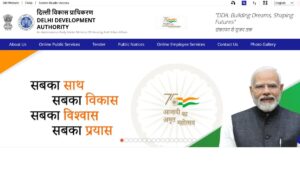
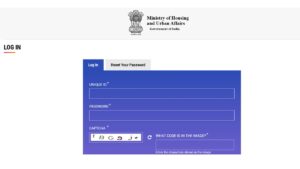
- Register on the portal. Create a login using your mobile number and email, then complete your KYC with Aadhaar and PAN.
- Fill the application form. Enter personal details, income details, and select the category (EWS, LIG, MIG or HIG) you are eligible for. In FCFS or e-auction schemes you may also select a specific flat at this stage.
- Pay the registration or booking amount. Payment can be made through net banking, RTGS or NEFT using the DDA e-challan, or through the payment gateway on the portal itself.
- Download and save the receipt. Keep the application number and payment receipt; you will need both for any status check or grievance later.
- Wait for the draw or confirmation. For lottery schemes, DDA conducts a computerised draw of lots on a notified date; results are published on the portal. For FCFS or e-auction, confirmation is typically faster since allotment is linked directly to your application or bid.
If you are applying for a new scheme, it is worth registering in the first day or two rather than waiting till the deadline. This is not because early applicants get preference in the draw, since the draw is random, but because portals see heavy traffic close to the last date and technical failures are more common then.
How is the DDA lottery draw actually conducted?
The draw of lots is a computerised, software-based random selection process, typically held on a notified date after the application window closes. DDA has moved to a fully digital draw system in recent years, meaning there is no physical ballot box; a fixed algorithm picks winning application numbers against the available flat inventory in each category and location. The process is designed to be auditable, and DDA typically makes provision for independent observers or officials to be present, though the draw itself runs on the system rather than by manual selection.
Documents Required for DDA Approval and Allotment
|
Document |
Why it is needed |
|
Aadhaar card |
Primary identity and KYC verification on the DDA portal |
|
PAN card |
Self-attested; co-applicant’s PAN too, if any, for financial and KYC verification |
|
Passport-size photographs and specimen signatures |
Required for the application form and allotment records |
|
Income proof (salary slips, Form 16, or income certificate) |
Confirms eligibility for the EWS, LIG, MIG or HIG category applied for |
|
Category certificate (SC/ST, PwD, ex-servicemen or EWS) |
Required only where applicable, to claim reserved-quota benefit |
|
Bank account details |
Used to process a refund if the draw is unsuccessful |
|
Payment proof (e-challan receipt and bank statement) |
Confirms the amount paid to DDA against the application |
|
Loan sanction letter or FDR |
Required only if part of the payment is being financed |
|
Notarised affidavits and undertakings |
As specified in the scheme brochure, to confirm eligibility declarations |
DDA Flat Payment Options
DDA generally allows three ways to pay for a flat once you are allotted one.
|
Payment mode |
How it works |
|
Full payment (one-time) |
Pay the entire disposal price in a single instalment, usually within a fixed window after allotment; some schemes offer a small rebate for this |
|
Instalment plan |
Pay in scheduled instalments over a defined period, with interest applicable on the outstanding amount |
|
Home loan financed |
Pay the booking amount yourself and fund the rest through a bank home loan; since DDA flats have a clear title, most major banks pre-approve them |
Whichever route you choose, note that the booking amount, usually a few lakh rupees depending on the category, is refundable only if DDA itself cancels your allotment for an eligibility issue, and even then processing charges may be deducted.
DDA Lottery Results and Allotment
Once the draw of lots is conducted, DDA publishes the result on the e-services portal, usually searchable by your application or registration number. If your name comes up, you get an allotment letter specifying the flat, its floor, and the payment schedule you must follow.
Successful applicants typically get a defined window, often 60 to 90 days depending on the scheme, to complete payment and documentation. Missing this window can lead to cancellation of the allotment, so it is worth diarising the deadline the moment you receive the letter.
If you are not selected in the draw, your registration or booking amount is refunded to the bank account you provided during application, generally within a few weeks of the result.
Popular DDA Flat Locations in Delhi
DDA flats are spread across several established and developing pockets of the city, and location is often the single biggest driver of price within a category.
|
Location |
Known for |
|
Dwarka (Sectors 1 to 23) |
Well-established, metro-connected, mostly MIG and HIG inventory |
|
Rohini (Sectors 28 to 34) |
Mixed EWS to HIG stock, good social infrastructure |
|
Narela |
Entry-level EWS and LIG pricing, still developing connectivity |
|
Vasant Kunj |
Premium HIG flats, among the highest-priced DDA locations |
|
Jasola |
Premium MIG and HIG stock, close to south Delhi |
|
Loknayak Puram, Siraspur, Sultanpuri, Bawana |
Affordable EWS/LIG focused pockets, generally the lowest DDA prices |
If budget is your main constraint, Narela and Siraspur consistently offer the lowest entry prices in any given scheme. If connectivity and resale value matter more, Dwarka and Rohini tend to hold their value better over time because of established metro links and social infrastructure, even though the entry price is higher.
DDA Flat Cancellation and Refund
If you want to withdraw after applying but before the draw, you can typically cancel your application from the portal and get your registration amount refunded, minus any processing fee mentioned in the scheme terms.
If you cancel after allotment, DDA usually deducts a percentage of the deposited amount as a penalty before refunding the rest; the exact percentage and timeline are specified in the allotment letter. Refunds due to DDA-side cancellation, such as an eligibility mismatch found later, are handled differently and are generally refunded in fuller amounts after deducting only processing charges.
Delhi Development Authority: A Quick Overview
DDA, or Delhi Development Authority, was formed under the Delhi Development Act, 1957, to guide the planned growth of the capital. It is responsible for preparing Delhi’s Master Plan, developing land, building and allotting housing, and managing public amenities such as parks, sports facilities and commercial spaces.
Housing is only one part of DDA’s mandate, but it is the part most residents interact with directly. Over the decades, DDA has run housing schemes under several names, including Griha Nirman, Sasta Ghar, Apna Ghar, Shramik Awaas, Sabka Ghar, and the more recent Nagrik Awaas Yojana, each with its own eligibility tweaks but the same broad lottery-based framework.
You can reach DDA through its official website, dda.gov.in, or the dedicated e-services portal for applications, payments, and status checks. For anything beyond the FAQs on the site, DDA also has a grievance and RTI mechanism, covered briefly below.
DDA Online RTI: How to Get Information from DDA
If you need specific information from DDA, such as the status of your application, a land record, or details of a scheme, you can file a request under the Right to Information Act through DDA’s online RTI portal, linked from the main DDA website. You will need to specify the exact information sought and pay the nominal RTI fee online. DDA is required to respond within the statutory timeline set under the RTI Act, typically 30 days.
DDA Housing Scheme vs Private Builder Flats
|
Factor |
DDA Flats |
Private Builder Flats |
|
Price |
Generally 30 to 50 percent lower for a comparable size and location |
Higher, includes developer margin and brokerage |
|
Title |
Government title, low ownership dispute risk |
Varies by builder; needs due diligence |
|
Brokerage |
None |
Often 1 to 2 percent of property value |
|
Allotment |
Lottery, FCFS or e-auction, based on scheme |
Direct booking, first come first served |
|
Possession timeline |
Fixed by scheme, can include under-construction wait |
Depends on builder’s construction schedule |
|
Resale flexibility |
Restricted during lock-in period |
Usually unrestricted, subject to loan clearance |
Is the DDA Housing Scheme Worth It?
For most Delhi-based buyers who qualify, yes, mainly on price and title security. You get a flat with a government title at a meaningful discount to the open market, with easy financing and no brokerage. The trade-offs are real too: you cannot choose your exact flat or floor in a lottery scheme, possession timelines can stretch for under-construction inventory, and resale is restricted during the lock-in period. If your priority is the lowest possible entry price and you are flexible on location, EWS or LIG in a developing pocket like Narela is worth considering. If you want an established, well-connected location and can stretch the budget, MIG or HIG in Dwarka or Rohini tends to hold value better over the long run.
Conclusion
The DDA Housing Scheme remains one of the few realistic ways to own a DDA in Delhi without paying private-market prices or brokerage. Whether you qualify for an EWS flat in Narela or a premium HIG unit in Vasant Kunj, the process works the same way: check the live scheme on DDA’s portal, confirm your category and eligibility, apply and pay online, and wait for the draw or confirmation. Keep your documents ready and accurate, understand the lock-in and resale rules before you accept an allotment, and treat PM-UDAY and land pooling as separate DDA processes rather than alternatives to the housing scheme. With scheme dates, prices and discounts changing from year to year, it is worth checking DDA’s official website directly before you apply, and using this guide as the framework for what to expect.
FAQs : DDA Housing Scheme 2026
1. What is the DDA housing scheme 2026?
The DDA Housing Scheme is a programme run by the Delhi Development Authority to sell flats it has built in Delhi, mainly through a lottery draw, and also through first come first served and e-auction routes for select inventory.
2. How do I apply for a DDA flat online?
Register on DDA’s e-services portal, fill in your details and select your income category, pay the registration amount through the e-challan, and wait for the scheme’s draw of lots or booking confirmation.
3. What is the DDA flat price list for 2026?
Indicative prices range from about ₹9 lakh for EWS flats to over ₹3 crore for premium HIG flats, with MIG 2BHK units typically priced between ₹50 lakh and ₹96 lakh, depending on location and floor.
4. What is the eligibility for the DDA Housing Scheme?
You must be an Indian citizen above 18 years, not own residential property in Delhi, and fall within the income band of the category (EWS, LIG, MIG or HIG) you are applying under.
5. Is the DDA lottery result the same as allotment?
Yes, if your name is drawn in the DDA lottery, you receive an allotment letter for a specific flat, after which you must complete payment and documentation within the given window to secure it.
6. What is the difference between DDA Housing Scheme and PM-UDAY?
The DDA Housing Scheme is for buying a new DDA-built flat, while PM-UDAY is for getting legal ownership rights over a property you already occupy in an unauthorised colony in Delhi.
7. Can I resell a DDA flat immediately after possession?
Usually not without restriction, since most DDA flats come with a lock-in period, commonly 5 to 10 years, during which resale is either restricted or needs DDA’s no-objection.
8. What happens if I am not selected in the DDA lottery?
Your registration or booking amount is refunded to the bank account you provided during application, generally within a few weeks of the result being declared.
9. Can I get a home loan for a DDA flat?
Yes, most major banks including SBI, HDFC and ICICI offer pre-approved home loans for DDA flats with loan-to-value ratios of about 75 to 85 percent, since DDA’s government title is considered low-risk collateral.
10. What is DDA land pooling policy in simple terms?
It is a policy where landowners or developer entities in Delhi’s urban extension zones pool their land with DDA for planned development, and receive back a share, commonly around 60 percent, of the developed land once infrastructure is complete.
11. Is DDA STF related to the housing scheme?
No, DDA STF, or Special Task Force, is DDA’s enforcement wing for unauthorised construction and encroachment, and is unrelated to buying a flat through the housing scheme or lottery.
12. When is dda launching a new housing scheme?
DDA launches housing schemes from time to time. The launch date and details vary by scheme, so applicants should check the official DDA website for the latest announcements, registration dates, eligibility criteria and application details.