
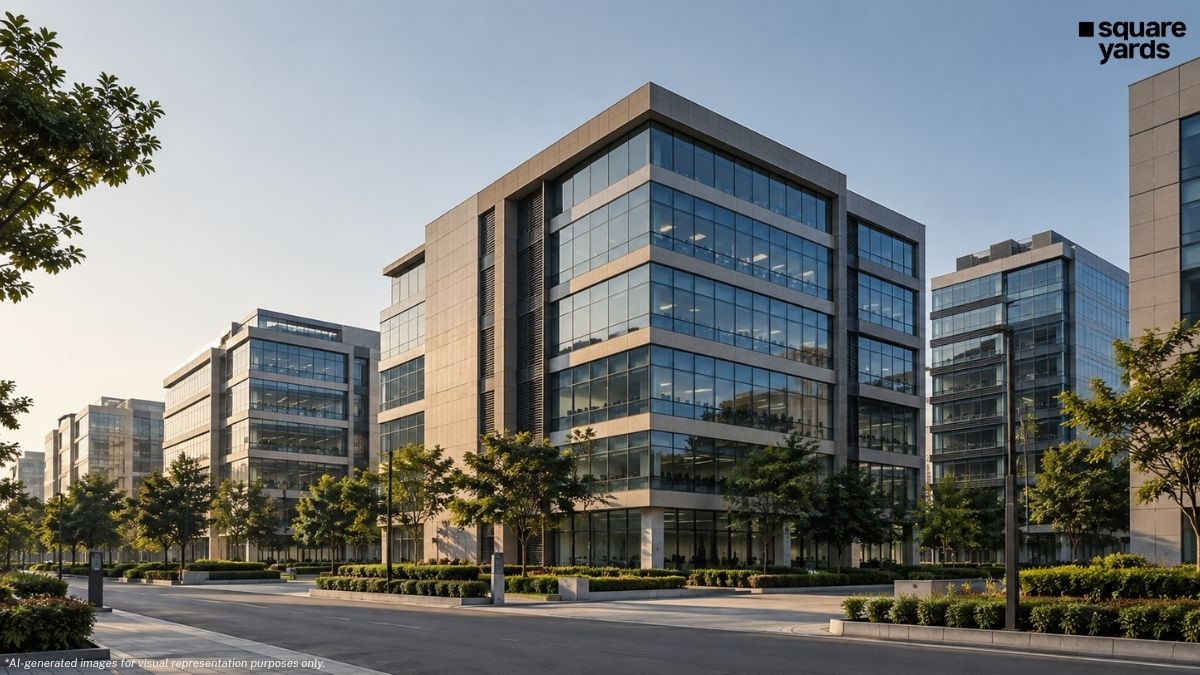
Chennai is emerging as one of India’s fastest-growing destinations for Global Capability Centers (GCCs) among Tier-I cities. With over 400 operating GCCs, the city’s expanding business ecosystem is creating fresh demand for commercial spaces, particularly across southern Chennai.
As global companies scale their operations in the city, demand for Grade A office space is bringing established business districts and emerging commercial corridors into focus. Locations with established business parks, strong connectivity and supporting infrastructure are drawing greater attention from commercial developers.
The impact, however, could extend beyond the office market. As employment hubs grow, nearby residential areas may attract professionals seeking shorter commutes and convenient access to everyday amenities. Planned connectivity improvements under Chennai Metro Phase II could reinforce this shift, influencing housing preferences and shaping future real estate development across the city.
GCCs are driving demand for office spaces in Chennai
According to industry reports, GCCs accounted for nearly half of Chennai’s gross office leasing in Q1 2026, highlighting their growing presence in the city’s commercial real estate market. Manufacturing, engineering, healthcare, logistics and financial services are all expanding their operations in Chennai.
Office affordability is a major factor supporting this growth. With average Grade A office rents estimated at Rs 75 psf. a month, Chennai offers a considerable cost advantage over other Tier-I markets, where occupancy costs can be 20-60% higher. For commercial developers, this creates an opportunity to serve companies seeking large, modern office spaces without the higher costs of other major business destinations.
Property prices rise across Chennai’s southern employment corridors
As GCCs expand across the city, the residential market around Chennai’s southern employment corridor is seeing movement in property rates.
Square Yards data shows that apartment rates in Sholinganallur increased from Rs 7,900 psf. in September 2025 to Rs 9,950 psf. in June 2026. Pallavaram saw a similar rise, with asking prices reaching Rs 10,800 psf. over the same period.
For homebuyers, the wider corridor offers different neighborhood settings and price points. Some may prioritize established infrastructure and access to public transport, while others may consider newer projects with modern amenities. For developers, this creates scope to serve varied housing needs, from apartments close to employment hubs to homes in surrounding residential areas.
OMR remains a key commercial & residential market
Old Mahabalipuram Road is one of Chennai’s major IT and commercial corridors. Office clusters around Perungudi, Tharamani and Sholinganallur extend further south toward Navalur and SIPCOT, creating a connected employment belt.
Residential development across adjoining locations has grown alongside these business districts. For people working in the corridor, where they live can depend on more than distance from the office. Commute times, public transport access, everyday conveniences and housing budgets all influence that decision.
This means that residential demand may extend beyond neighborhoods immediately next to office parks. Areas offering a manageable commute and a range of housing options could remain relevant to professionals working across the wider OMR belt.
Metro Phase II to connect more residential areas with employment hubs
Chennai Metro Phase II is a major infrastructure project for the city’s expanding commercial and residential corridors. The 118.9-km network comprises three corridors: Madhavaram to SIPCOT, Lighthouse to Poonamallee Bypass and Madhavaram to Sholinganallur. The approved project cost is Rs 63,246 crore.
The Madhavaram-Sholinganallur corridor will connect neighborhoods across the city with the southern employment belt. The Lighthouse-Poonamallee route will improve connectivity through western Chennai. Chennai Metro Rail Limited is also planning commercial development along the Phase II network. The proposed projects cover approximately 73.4 lakh sq. ft. across 37 locations and include office and retail spaces.
However, the impact on property prices will depend on distance from stations, feeder transport, and housing availability. Metro connectivity alone does not guarantee price appreciation, particularly where new residential supply is also entering the market.
How GCC expansion could reshape Chennai’s real estate market
Chennai’s GCC growth could gradually broaden real estate activity beyond its traditional commercial hubs. As companies expand their offices, demand for supporting housing, rental accommodation and commercial amenities may follow. This could bring more residential neighborhoods and emerging business locations into focus.
The impact will not be uniform across the city. Areas with strong transport links, suitable housing options and access to everyday services may respond differently from locations where connectivity or supply remains limited.
Ultimately, Chennai’s next phase of real estate growth will depend on how its employment centers, residential communities and infrastructure develop together. GCC expansion is one part of that change, and connectivity and housing availability will likely shape its effect.