
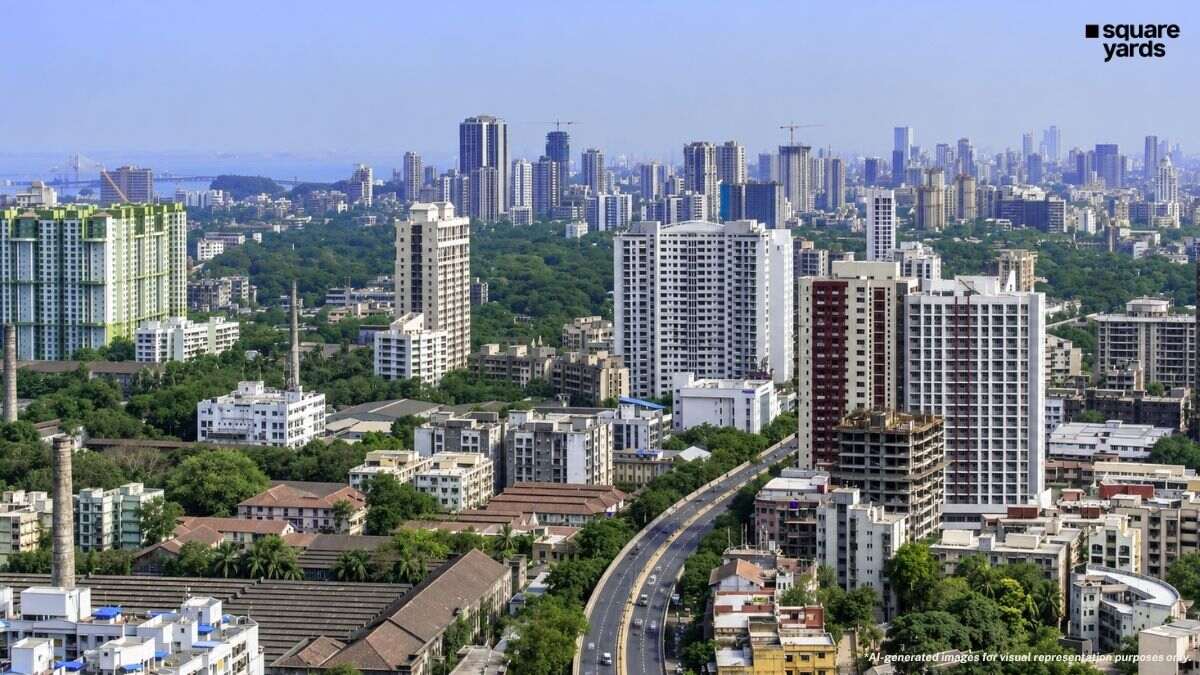
India’s real estate market recorded its highest-ever quarterly investment in Q3 2026, attracting $9.5 billion in equity capital, according to the latest report by CBRE. The investment surge reflects growing interest in commercial real estate, development land and data centers, with implications for property markets across major Indian cities.
The investment comes as the Indian property market sees significant development across established commercial centers and emerging real estate corridors. Housing sales across India’s top seven cities rose 3% year-on-year in Q3 2026, while office leasing increased by 9%, as per industry reports. Delhi-NCR also saw office leasing rise sharply, reaching more than twice its Q3 2025 level.
Capital flowing into development sites will support new residential and commercial projects, while investments in offices and data centers are expected to strengthen business hubs and create demand for housing in surrounding areas.
Office leasing rises 9% as Delhi-NCR records strong demand
Office leasing in India rose 9% year-on-year to 18.7 million sq. ft. (msf) in Q3 2026. In Delhi-NCR alone, 3.3 msf was leased, compared to 1.6 msf last year. The increase points to stronger demand for office space in the region, where commercial development and residential markets are closely linked.
For residential real estate, commercial growth can support demand for homes and rentals, especially around established business hubs. According to Square Yards, office rents on Golf Course Road in Gurugram rose 26% year-on-year to Rs 100 psf, while average home prices reached Rs 23,550 psf, up 10.2% from the previous quarter. The rise in both office rents and home prices shows how demand for commercial space is reflected in market property values.
While Delhi-NCR, Bengaluru and Hyderabad recorded higher office leasing, Mumbai, Pune and Chennai saw declines during the quarter. This makes local office absorption and vacancy levels important factors for developers planning new commercial projects.
Investment in data centers adds a new property segment
Data centers accounted for 57% of Q3 investment, making them the largest investment category. Along with built-up offices and land or development sites, they represented around 91% of total capital deployed.
The impact could extend beyond commercial property. Square Yards estimates that India’s data center expansion could generate demand for up to 195 msf of housing by 2030. While data centers employ relatively few people on-site, the supporting businesses, logistics and commercial activity can create demand for homes nearby.
Areas within 5-15 km of data center sites are potential growth zones for housing, retail and mixed-use projects. Mumbai, Pune, Hyderabad and Visakhapatnam are among the markets to watch. The demand is likely to spread into surrounding areas rather than remain limited to the data center sites themselves.
Land acquisitions to add to the pipeline of upcoming projects
Land and development site acquisitions accounted for a significant share of Q3 investment. Around 72% of the capital deployed towards these acquisitions was directed towards office, residential and data center developments, adding to the pipeline of upcoming projects. However, the actual supply reaching the market will depend on construction and launch timelines.
For homebuyers, more housing projects could mean a wider choice of properties, particularly in areas where developers are acquiring large land parcels. In markets with limited supply, new launches may help meet demand. With unsold homes already high, additional projects could increase competition and push developers to offer more flexible prices or payment plans.
Mumbai, Delhi-NCR and Chennai account for 53% of Q3 investment
Mumbai, Delhi-NCR and Chennai together accounted for about 53% of Q3 2026 investment, directing a large share of capital to these three property markets.
According to Square Yards, the average asking price in Sector 150, Noida rose from Rs 11,950 psf in September 2025 to Rs 12,300 psf in June 2026. This reflects the rising residential prices in Delhi-NCR as new investment supports further commercial and housing development.
The impact will depend on where projects are built and how quickly they reach the market. New office and housing projects could add to supply, while areas with strong demand may continue to see price growth.
New supply and local demand to affect property trends
The investment surge could support new commercial and residential projects, but it does not guarantee higher property prices across every market.
In office markets, stronger leasing can support demand for completed buildings and encourage further development. Where leasing is weaker, additional supply may face greater competition for tenants. Residential markets will depend on a similar balance. Employment growth, better connectivity and new commercial projects can support housing demand, while additional residential supply can give buyers more choices and limit price increases where demand is not keeping pace.
For buyers and investors, this makes it important to track property prices alongside new launches, available inventory and rental activity. A rise in asking prices alone does not establish that a locality is seeing stronger transactions or better rental returns.
What the investment surge means for the Indian property market
With $18.6 billion invested in Indian real estate during the first nine months of 2026, the sector has recorded a strong flow of capital, according to CBRE.
Delhi-NCR, Mumbai, and Chennai remain key markets to watch, but opportunities will differ by location and property type. The impact will depend on how much of this capital translates into actual commercial spaces, new development projects and supporting infrastructure. For residential markets, the impact will become clearer through changes in housing supply, buyer activity and prices across individual localities.