Vastu Verdict
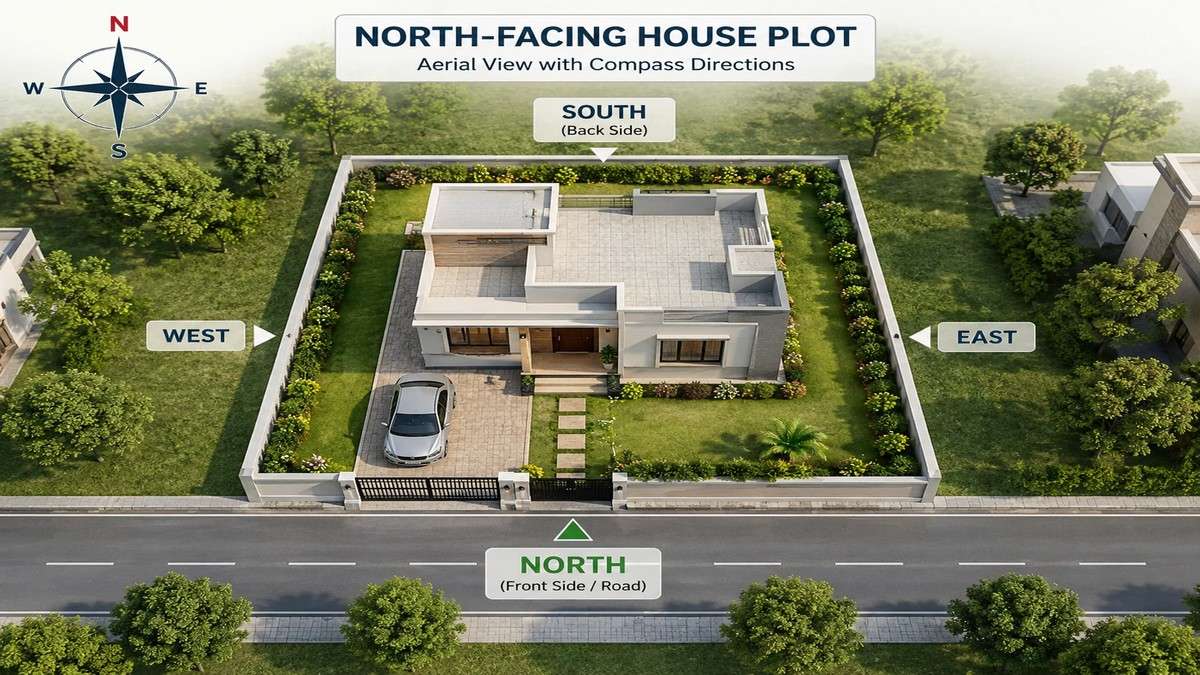
A north facing house is among the most auspicious orientations in Vastu Shastra. Governed by Lord Kuber – the deity of wealth – and associated with the Moon god Soma for peace and stability, a north-facing home correctly planned as per Vastu invites financial growth, career success, and lasting harmony.
- Vastu Verdict
- Everything About North Facing House
- Is a North Facing House Beneficial?
- About Main Door and Pada
- Alternative to the Fifth Pada
- Living Room in a North Facing House
- Bedroom in a North Facing House
- North Facing House Vastu Plan for Pooja Room
- Bathroom in a North Facing Home
- Staircase Placement in North-Facing Property
- Vastu Tips for North Facing Homes
- Home Office in a North Facing House
- Car Parking Direction
- North East Facing House Vastu
- North Facing Duplex House Plans as per Vastu
- Luck in North-Facing House
- Some Additional Tips on Vastu of North Facing House
- Things to Avoid in a North Facing House
- Conclusion
- You May Also Like :
Everything About North Facing House
Here’s a simple question – when you walk out your front door and face the road, which direction are you looking?
If the answer is north, you are sitting on one of the most in-demand home orientations in Indian real estate. And honestly, most people who live in a north facing house either know it and feel proud about it, or have no idea what that really means for their daily life.
But here’s the thing – just knowing your house faces north is only half the picture. What actually matters is what you do with the space inside. Vastu Shastra, India’s ancient science of spatial design, has very clear principles for homes that face north. Get them right, and the home genuinely supports the family – in terms of wellbeing, career, and finances. Get them wrong, and even a well-built, beautiful property can feel like it’s constantly working against you.
This guide walks through everything you need to know. Main door padas, room placements, duplex plans, what to avoid, what to fix – whether you are buying your first apartment or planning to build your own home from scratch.

Is a North Facing House Beneficial?
Short answer – yes. And the reasoning holds up on multiple levels, not just mythology.
Let’s start with science. The earth’s magnetic energy travels from north to south. When your main entrance faces north, that magnetic current flows directly into the home, which is believed to support better mental clarity, sharper focus, and calmer emotional states for the people living there. from a Vastu perspective, north is the direction of Lord Kuber – the god of wealth and the divine treasurer. The north-east corner of any plot, called Ishaan, is considered the most spiritually charged zone in the entire space. A north facing home essentially puts your entrance right at the doorstep of that positive energy field.
And then there’s the practical side, which many buyers overlook:
- Comfortable, indirect light – the front of the house doesn’t get blasted by harsh afternoon sun, so the interiors stay naturally cooler
- Better airflow – when the east side of the home is kept open
- Stronger resale demand – in cities like Delhi-NCR, Mumbai, and Bengaluru, Vastu-aware buyers specifically search for north-facing properties and often pay a premium for them
For people working in banking, finance, business, or government, a north facing house Vastu plan carries extra significance – the direction is considered directly supportive of career growth and financial opportunity. For families, it brings grounding and long-term stability, as long as the internal layout follows the principles properly.
About Main Door and Pada
If there’s one thing you remember from this entire guide, make it this: the main door placement is the most critical decision in a north facing house Vastu plan. Every Vastu expert will say the same thing. The entrance is where all energy – good and bad – comes in. Getting it right from the start saves a lot of trouble later.
Significance of Padas in Vastu Shastra
Vastu divides each facing wall into nine equal sections called padas. For a north facing house, these nine padas are spread across the north wall, starting from the north-east corner and ending at the north-west corner. Each pada has a name, a governing energy, and a specific effect on the household.
|
Pada (from NE to NW) |
Name |
Energy Quality |
Suitability for Main Door |
|
1st |
Shikhi |
Sacred fire energy |
Avoid |
|
2nd |
Parjanya |
Rain / abundance |
Moderate |
|
3rd |
Jayanta |
Victory, prosperity |
Highly recommended |
|
4th |
Mahendra |
Wealth, authority |
Highly recommended |
|
5th |
Sürya (Vithhi) |
Solar / unstable |
Strictly avoid |
|
6th |
Satya |
Truth / discipline |
Acceptable |
|
7th |
Bhriśa |
Heavy / burdening |
Avoid |
|
8th |
Ākāsh |
Void / loss |
Avoid |
|
9th |
Aditi |
Scattered energy |
Avoid |
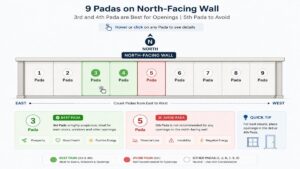
The 3rd and 4th padas – Jayanta and Mahendra – are the positions you want. Counted from the north-east corner, these two spots bring in prosperity, victory, and financial strength.
To Manifest Wealth
If wealth and career growth are your primary goals, the 4th pada (Mahendra) is your best bet. It sits directly in Lord Kuber’s zone of influence and is considered the strongest position for attracting consistent income, professional authority, and material abundance.
Alternative to the Fifth Pada
The 5th pada has a specific name – Vithhi pada – and it falls exactly at the midpoint of the north wall. Vastu is very firm about this one: do not place your main door here. A door at the Vithhi pada is believed to bring financial instability, recurring stress, and obstacles that seem to keep coming back no matter what you do.
If you’ve already moved into a home where the main door falls at the 5th pada, don’t panic. There are remedies:
- Install a Kuber Yantra on or near the entrance wall
- Put a brass nameplate with auspicious symbols near the door
- Place green plants like money plant or holy basil at the entrance – they help redirect energy flow
- Speak with a Vastu expert about whether a secondary entrance can be created to compensate
Living Room in a North Facing House
Think of the living room as the social heart of the home – it’s where energy gathers and circulates. In a north facing house Vastu plan, the north or north-east zone is the right placement for the living room. These directions keep the space naturally bright and create a welcoming atmosphere for both guests and family.
A few practical tips to get the living room right:
- Keep the north and east walls free from heavy furniture – these sides need to breathe
- Arrange seating so that family members face north or east when seated – not south
- Don’t pile up storage units or almirahs in the north-east corner of the room
- For wall colours, go with whites, creams, light greens, or soft blues on the north and east-facing walls
- A small water feature or aquarium in the north-east corner of the living room is considered very auspicious – and honestly looks great too
Bedroom in a North Facing House
Not all bedrooms follow the same rule. Placement depends on who is sleeping there.
|
Bedroom |
Recommended Zone |
Why |
|
Master bedroom |
South-west |
Promotes stability, deep sleep, marital harmony; head of family gains authority |
|
Children’s bedroom |
West or north-west |
Supports focus, discipline, academic growth |
|
Guest bedroom |
North-west |
Ensures guests leave on time; good energy without overstaying |
One thing that comes up again and again – do not put the master bedroom in the north-east corner. That zone is meant for prayer and spiritual activity. Using it as a sleeping space can lead to restlessness, disrupted sleep, and a general feeling of unease over time.
Also worth noting: in a north facing house, the healthiest sleeping direction has your head pointing south or east. Sleeping with your head toward north creates a magnetic alignment conflict, and many people notice poorer sleep quality when this rule isn’t followed – whether or not they connect it to Vastu.
North Facing House Vastu Plan for Pooja Room
The north-east corner of a home – called the Ishaan zone – is where divine energy concentrates. It gets morning sunlight first, and spiritually it is considered the purest zone in the entire plot. Naturally, this is where the pooja room belongs in a north facing house.
A few things to keep in mind when setting up the pooja room:
- Place deity images or idols on the east or north-east side of the room, facing west – so the person praying faces east
- Keep the room small, clean, and completely clutter-free. Sacred spaces need to breathe
- The pooja room should not share a wall with a bathroom, and definitely not sit above one
- Use marble, white stone, or wood for surfaces – avoid dark materials in this space
Bathroom in a North Facing Home
Bathroom placement is one of the most common places where Vastu gets ignored – and then quietly blamed for everything that goes wrong in a home. In a north facing house Vastu plan, bathrooms and toilets belong in the north-west or west direction.
Three things to avoid completely:
- A toilet in the north-east corner – this is probably the single worst Vastu placement in any home
- Bathrooms directly above the pooja room or kitchen
- A bathroom that shares a wall with the main entrance
If you’re already living with an unfavourable bathroom placement, a simple remedy that many Vastu practitioners recommend is placing a bowl of sea salt inside the bathroom and replacing it weekly. It won’t fix the structural issue, but it is believed to neutralise some of the negative energy.
Staircase Placement in North-Facing Property
Staircases are about movement – both physical and energetic. In a north facing house, staircases work best in the south, south-west, or west zones.
Four rules that matter most:
- Stairs should always go up in a clockwise direction when viewed from above
- Never put a staircase in the north-east corner – it blocks the upward flow of spiritual energy
- Avoid placing any staircase at the centre of the home, called the Brahmasthan. This is the energetic core of the space and should be left open
- The space underneath a staircase should not become a toilet or kitchen – these are
Vastu Tips for North Facing Homes
Slopes in Homes Facing North
If you are evaluating a plot to build on, pay attention to how the land slopes. The ideal slope for a north facing plot goes from south to north – meaning the ground is slightly higher on the south side and dips toward the north. Vastu sees this as water flowing northward, which is considered a very positive sign – it’s as though wealth and good fortune are flowing toward the home rather than away from it.
If a plot slopes southward, that is generally considered inauspicious and something worth flagging before you commit.
Kitchen for a North Facing House
The south-east corner is the natural home for the kitchen in Vastu – it’s called the Agni (fire) zone, and cooking belongs here. In a north facing house, this remains the same rule: kitchen in the south-east, never in the north-east. Placing fire energy in the sacred Ishaan corner creates a conflict of energies that Vastu considers genuinely harmful.
If the south-east is structurally not an option, the north-west is the acceptable second choice.
Inside the kitchen:
- The stove faces east – whoever is cooking should face east
- The sink and water elements belong in the north-east part of the kitchen
- Don’t position the stove directly under a window or across from the main kitchen door
Stay Away from Clutter
This one sounds simple but it’s where most households fail. The north and north-east sides of the home must stay clean, open, and uncluttered. These are the zones through which prosperity and positive energy enter. Heavy furniture, old boxes, broken items, or even a pile of shoes in these areas acts like a blockage at the doorway.
Make it a habit to declutter the north side of your home regularly. It really does make a difference – and you don’t need to believe in Vastu to notice it.
Placement of Religious Items
Sacred objects, deity images, and religious items all belong in the north-east zone. If a dedicated pooja room isn’t possible in your layout, a clean, well-maintained shelf in the north-east corner of any room works just as well.
Avoid the south, south-west, or bathroom for anything religious – these placements are considered disrespectful and energetically misaligned.
Position of Trees
Trees are not just landscaping – in Vastu, they carry directional energy of their own.
- Tall trees (neem, peepal, mango) belong on the south or west side of the plot. They act as a natural energy buffer on the more intense solar sides
- Small plants and shrubs work well on the north and east sides – they keep these zones alive without blocking them
- Keep tall trees entirely out of the north-east corner – they block morning light and disrupt the sacred energy of the Ishaan zone
Placement of Electricity Board
The electricity meter and main switchboard belong in the south-east zone – consistent with the fire element that governs electrical energy. The north-east corner should be kept completely free of electrical infrastructure.
The Direction of the Study Room
For students and learners of any age, a study room in the north or north-east zone of the house is ideal. North is connected to wisdom, knowledge, and intellectual focus in Vastu. Students who study in this direction – facing north or east while at their desk – are believed to absorb and retain information better.
Facing south while studying is considered unfavourable and worth correcting even with a simple desk repositioning.
Home Office in a North Facing House
Remote work has made home office placement a genuine priority for most households now. And in a north facing house, the north zone is the strongest spot for a home office or study room – not just by Vastu logic, but because it tends to receive consistent, comfortable indirect light that makes long work hours easier.
A few things to set up the home office right:
- Sit facing north or east – this is the clearest Vastu instruction for focus and productivity
- Keep the desk away from the south-west wall – that wall carries stability energy better suited to the bedroom
- Financial documents, important files, and work materials are best stored in the north or north-east section of the room
- For professionals in finance, law, or business, placing a small Kuber Yantra on the north wall of the office is considered beneficial
Car Parking Direction
Car parking in a north facing home should sit on the north-west or east side of the plot. The north-west governs movement and transit energy, which makes it naturally suited to a vehicle.
Keep the north-east corner completely free – no structures, no parking, no storage. And avoid parking in the south-east corner, which is the fire zone. Vastu associates that placement with mechanical issues and a higher likelihood of vehicle-related problems.
North East Facing House Vastu
A north-east facing house – where the main entrance opens toward the Ishaan corner – is considered one of the most powerful and auspicious orientations in Vastu Shastra. It combines the best of two directions: north for wealth and career, east for health and the energy of the rising sun.
What makes north-east facing homes special:
- Strong alignment with spiritual growth, health, and family harmony
- Particularly good for people in education, healthcare, or spiritual work
- The front of the home receives beautiful morning sunlight through the main entrance
- The Ishaan energy, when unobstructed, radiates positively through every corner of the home
If you’re weighing a north-facing plot against a north-east-facing one, most Vastu experts would give the north-east the edge – especially for families prioritising health and long-term well-being alongside financial goals.
North Facing Duplex House Plans as per Vastu
For a duplex – ground floor plus one upper floor – Vastu principles don’t stop at the ground level. They extend vertically.
|
Floor |
Recommended Use |
Notes |
|
Ground floor north-east |
Living room or pooja room |
Keeps sacred energy anchored at ground level |
|
Ground floor south-west |
Master bedroom |
Maximum stability and authority at the base |
|
Ground floor south-east |
Kitchen |
Fire zone works best on ground floor |
|
Upper floor south-west |
Second master / senior bedroom |
Stability energy continues upward |
|
Upper floor north-west |
Children’s rooms or guest rooms |
Movement energy suits upper floors |
|
Upper floor north-east |
Meditation room or open terrace |
Sacred energy should flow freely upward |

For the staircase in a north facing duplex house plan, south or west placement is the rule – climbing clockwise. The Brahmasthan (centre of the home) should remain open on both floors wherever structurally possible.
Luck in North-Facing House
People talk about “lucky homes” all the time – and most Vastu experts would reframe that word. Luck, in Vastu terms, is really just energy alignment. When a home’s orientation, room placement, and design work together correctly, the environment quietly supports better thinking, calmer relationships, and fewer disruptions. Which over time translates to what most people call good fortune.
For a north facing house specifically, a few things work in your favour:
- Keeping the north side of the plot lower than the south side (the slope runs south to north) is considered one of the strongest luck indicators in Vastu
- Water features – a fountain, aquarium, or even a simple pot of water – in the north or north-east attract Kuber’s blessings and keep the financial energy of the home moving
- Green on the north wall and blue or indigo on the east are the most auspicious colour choices for north facing homes
- Avoid blocking the 5th, 6th, and 7th padas on the north wall with permanent structures – these positions carry stagnating energy that can slow progress
Some Additional Tips on Vastu of North Facing House
A few more things that don’t fit neatly into one room but make a real difference overall:
- Build the south and west boundary walls taller than the north and east walls – it creates an energy shield on the more intense solar sides
- The overhead water tank goes on the south-west, not the north-east – added weight in the Ishaan corner disrupts its sacred quality
- Mirrors on the north wall of the living room or office are considered enhancers of the north’s positive energy
- A Kuber idol or Kuber Yantra placed on the north wall of the home is a widely recommended addition for financial energy
- The main door should open inward and swing clockwise – never push outward or counter-clockwise
- Wood or brass is the preferred material for a north facing main door – avoid iron or steel
Things to Avoid in a North Facing House
The don’ts matter just as much as the dos. Here’s a consolidated reference:
|
What to Avoid |
Why |
|
Main door at the 5th pada (Vithhi) |
Creates financial instability and persistent mental stress |
|
Kitchen in the north-east |
Fire energy conflicts with the sacred spiritual zone |
|
Master bedroom in the north-east |
Disrupts sleep quality and causes restlessness over time |
|
Toilet in the north-east |
Destroys the most spiritually important zone in the home |
|
Staircase in the north-east |
Blocks the upward flow of spiritual energy |
|
Heavy structures on the north or east |
Blocks positive energy from entering the home |
|
Tall trees in the north-east |
Cuts off morning light and divine energy flow |
|
Overhead water tank in the north-east |
Excess structural weight in the sacred corner is inauspicious |
|
Clutter near the main entrance |
Physically and energetically blocks wealth and opportunity |
|
Sleeping with head pointing north |
Creates magnetic conflict that disturbs sleep quality |
Conclusion
A north facing house Vastu plan, done properly, is not really about ritual or belief – it is about designing a space where light, airflow, purpose, and energy all point in the same direction. When the main door sits in the right pada, when the kitchen anchors the south-east, when the pooja room holds the north-east, and when the master bedroom grounds the south-west – the home stops feeling like a neutral container and starts actively supporting the people inside it.
Whether you are a first-time buyer sifting through apartment floor plans, or a family about to break ground on a new construction – these principles give you something concrete to work with. Not just hope, but a framework. If you’re shortlisting properties and want a proper Vastu evaluation of floor plans and orientation, Square Yards’ property experts are available to help you assess options across every major city in India
You May Also Like :
Frequently Asked Questions:
1. Is a north facing house good according to Vastu?
Yes. North facing homes are among the most auspicious orientations in Vastu Shastra. The north direction is governed by Lord Kuber – the deity of wealth and prosperity. With the right main door placement and a proper internal layout, a north facing house consistently attracts financial growth, career opportunities, and family harmony.
2. Which pada is best for the main door in a north facing house?
Yes. North facing homes are among the most auspicious orientations in Vastu Shastra. The north direction is governed by Lord Kuber – the deity of wealth and prosperity. With the right main door placement and a proper internal layout, a north facing house consistently attracts financial growth, career opportunities and family harmony.
3. Which pada is best for the main door in a north facing house?
The 3rd pada (Jayanta) and 4th pada (Mahendra), counted from the north-east corner, are the most recommended positions. The 4th pada is specifically associated with wealth and authority. The 5th pada – Vithhi – should always be avoided regardless of other constraints.
4. Where should the kitchen be in a north facing house?
South-east is the ideal zone – it is the Agni (fire) corner in Vastu, naturally aligned with cooking energy. If south-east is not structurally feasible, north-west is the acceptable alternative. Never place the kitchen in the north-east corner.
5. Is a north-east facing house better than a north facing house?
Both are highly auspicious. A north-east facing entrance combines the energy of north (wealth) and east (health, morning sun), making it especially strong for spiritual growth and family well-being. For career and financial focus specifically, north is equally powerful.
6. Where should the master bedroom be in a north facing house?
The south-west zone is the right placement. It supports stability, restful sleep, and strong marital bonds. The north-east is the one zone where the master bedroom should never go – it is reserved for spiritual activity and disrupts sleep quality when used as a bedroom.
7. Can a north facing house have a duplex or two-floor plan as per Vastu?
Yes, absolutely. In a north facing duplex house plan, the ground floor follows standard Vastu room placement. The upper floor mirrors the same key principles – south-west for bedrooms, north-east kept light or open as a terrace or meditation room, and the staircase in the south or west climbing clockwise.