

As per Vastu Shastra, the best directions for windows are north, east and northeast. Vastu suggests keeping your largest windows on these walls. Windows on the south, west and southwest walls are usually kept smaller and fewer.
In Vastu, windows are seen as channels that bring in fresh air and light. They are also believed to let stale energy flow out. That is why their direction, size and number matter so much. This guide covers the right window position as per Vastu for every direction and room. It also covers simple remedies if your home already has a south or southwest window.
- What Is Vastu for Windows?
- Best Window Direction as per Vastu
- Window Position as per Vastu: Where to Place Windows
- How Many Windows as per Vastu?
- Window Size and Shape as per Vastu
- Window Colours as per Vastu
- Vastu for Windows in Each Room
- Doors and Windows as per Vastu
- Do’s and Don’ts of Vastu for Windows
- South and Southwest Window Vastu Remedies
- Checking Window Direction Before You Buy a Home
- Explore More on Vastu
- Final Thoughts
What Is Vastu for Windows?
Vastu for windows is a set of traditional guidelines on where to place windows, how big to make them and how many to have. The core rule is simple. The right direction to have a window at home is the north, east or northeast.
Moreover, these guidelines apply to homes and also to offices, shops and other workspaces. Vastu links each direction to a different element and energy. So a window’s direction is believed to shape the mood and energy of the room it opens into.
There is a practical side too. A well-placed window gives good daylight and fresh air. It also keeps a room from getting too hot. Following Vastu and planning for comfort usually point in the same direction.
Best Window Direction as per Vastu
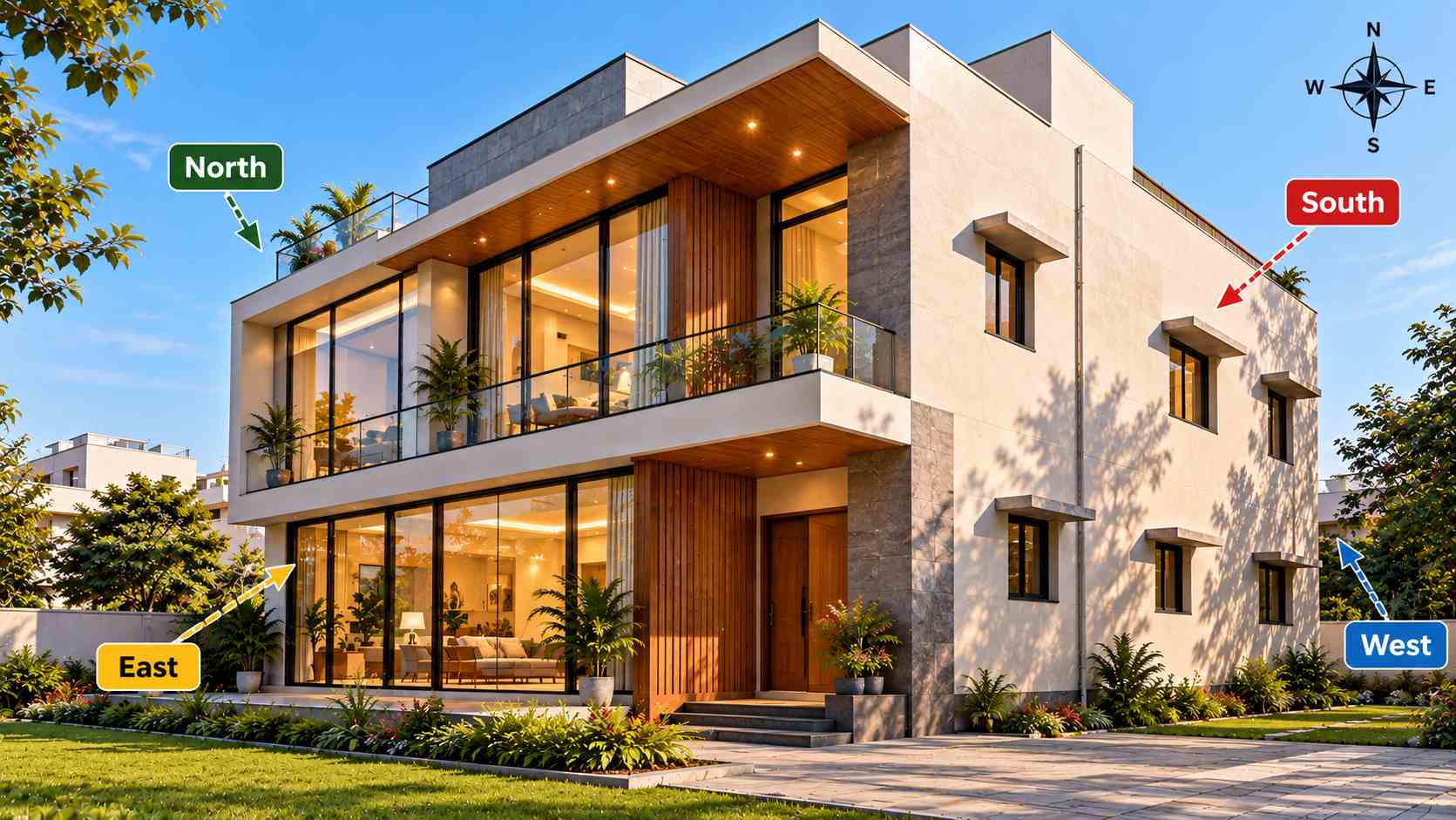
The window direction as per Vastu decides how big a window should be. Vastu prefers large windows on the north, east and northeast walls. It suggests medium windows on the southeast and northwest. South and southwest windows should be small and few.
Here is a quick direction-wise guide.
| Direction | Vastu view | Suggested window size | Practical tip |
|---|---|---|---|
| North | Highly favourable, linked to Lord Kubera and wealth | Large | Gives soft, steady daylight for most of the day |
| Northeast | Most favourable, seen as the most sacred zone | Large | Ideal for pooja and study corners |
| East | Highly favourable, brings in the morning sun | Large | Use light curtains if the morning glare is strong |
| Southeast | Acceptable, linked to fire (Agni) | Medium | Works well for kitchen windows |
| Northwest | Acceptable, linked to air (Vayu) | Medium | Helps fresh air move through the house |
| West | Acceptable when kept moderate | Medium or small | Afternoon sun can heat rooms, so add shades |
| South | Not preferred, keep windows few | Small | Gets strong sun for much of the year; a chajja helps |
| Southwest | Least preferred | Small or none | Keep it shut on hot afternoons and use thick curtains |
Note: This table reflects common traditional Vastu guidance. Different Vastu guides can differ on small details.
North-Facing Windows
North-facing windows are among the best in Vastu. North is the direction of Lord Kubera, the god of wealth. That is why windows here are linked to money and career growth. In India, north windows also get soft, indirect light through the day. This keeps rooms bright without making them too hot.
East-Facing Windows
The eastern-facing windows are said to attract the most positivity. They let in the first light of the morning. Vastu links this light with health, energy and festivity in the home. Build large windows on this wall wherever you can.
Northeast-Facing Windows
Vastu treats the northeast as the most sacred corner of a home. Windows here are believed to bring calm and spiritual energy. That makes the northeast a great spot for a pooja room or study window. Keep this corner open, light and free of clutter.
West-Facing Windows
Windows in the west direction are fine as per Vastu, as long as they are not too large. The west is linked to Varuna, the god of water. A west window suits people who enjoy evening light and sitting in the sun. Vastu links this direction with gains and stability.
The one issue is heat. West windows get the strong afternoon sun. In Indian summers, this can make a room very warm. A medium-sized window with a chajja, blinds or thick curtains solves this.
South-Facing Windows
Vastu does not prefer windows on the south wall. South is linked to Yama, the god of death, in traditional texts. So most guides suggest keeping south windows small and few.
You do not have to avoid them fully. A small south window still helps with airflow. Just keep it smaller than your north and east windows. Use the remedies covered later in this guide.
Southwest-Facing Windows
The southwest is the least preferred spot for a window. Vastu sees this zone as heavy and stable, linked to the earth element. A large window here is believed to let that stability leak out.
If your home already has one, there is no need to break the wall. Keep the window small, keep it shut on hot afternoons and use the southwest remedies below.
Southeast-Facing Windows
The southeast belongs to Agni, the fire element. Medium-sized windows work well here. This direction is a good match for a kitchen window, since the kitchen is also linked to fire.
Northwest-Facing Windows
The northwest is the zone of Vayu, the air element. A medium-sized window here helps fresh air flow through the house. Vastu links this direction with good relationships and social support.
Window Position as per Vastu: Where to Place Windows
Direction is only half of the story. The window position as per Vastu also depends on where the window sits on the wall and what it faces.
Try to place windows opposite each other, or opposite a door. This lets fresh air cross the room from one side to the other. Vastu sees this cross-flow as healthy energy movement. In practical terms, it simply means better ventilation.
Keep the space in front of every window open. Do not push a wardrobe, a tall shelf or a bed against it. Blocked windows are believed to trap stale energy, and they also cut out light.
Windows on one wall should be at the same height. A neat, even line of windows looks balanced. Vastu values that balance too.
How Many Windows as per Vastu?
Vastu suggests an even number of windows in a house, such as 2, 4, 6 or 8. Most guides also say to avoid a total of 10 windows. Even numbers are believed to keep the energy in the home balanced.
Some guides add one more rule: avoid multiples of 8. This is confusing, because the same guides often list 8 as an ideal number. In most guides, 8 windows is treated as fine. If you follow a strict tradition, check with your Vastu consultant.
The same even-number rule is often applied to doors and windows together. Count each window frame as one window, even if it has two panes.
Window Size and Shape as per Vastu
The window size as per Vastu follows the direction table above. Large windows go on the north, east and northeast walls. Medium windows suit the southeast, northwest and west. Small windows suit the south and southwest.
All windows in the same room should be the same size and height. Symmetry matters a lot in Vastu. A room with one huge window and one tiny one is believed to feel off-balance.
For shape, Vastu prefers simple, regular forms.
Rectangular windows are the first choice in most Vastu guides. They are easy to fit, easy to clean and let in plenty of light. Square windows are also used, though many guides prefer rectangles.
Arched windows are an old design used by the Romans. You still see them in churches and heritage homes. They bring in good light, need low maintenance and work well as a style feature in Vastu homes.
Bay and bow windows stick out from the wall. They have more glass panels that wrap around the outer edge. This lets in extra light and can create a small sitting nook. Place them on the north or east side for the best Vastu results.
Avoid odd, sharp or irregular window shapes. Vastu sees them as a source of uneven energy.
Window Colours as per Vastu
Light colours around windows are the safest choice in Vastu. White, cream and pastel shades make a room look brighter and more open. Avoid black or very dark frames, especially on small windows.
Many Vastu guides also suggest colours based on the window’s direction.
| Window direction | Commonly suggested colours |
|---|---|
| North | Green, light blue, white |
| Northeast | Light blue, white, cream |
| East | White, light yellow, cream |
| Southeast | Orange, pink, light red |
| South | Coral, light red, orange |
| Southwest | Beige, light brown, peach |
| West | Blue, grey, white |
| Northwest | White, light grey, cream |
You can use these shades for the window frame, the wall around it or the curtains.
Vastu for Windows in Each Room
Each room has a different job, so its windows follow slightly different rules.
Living Room Windows
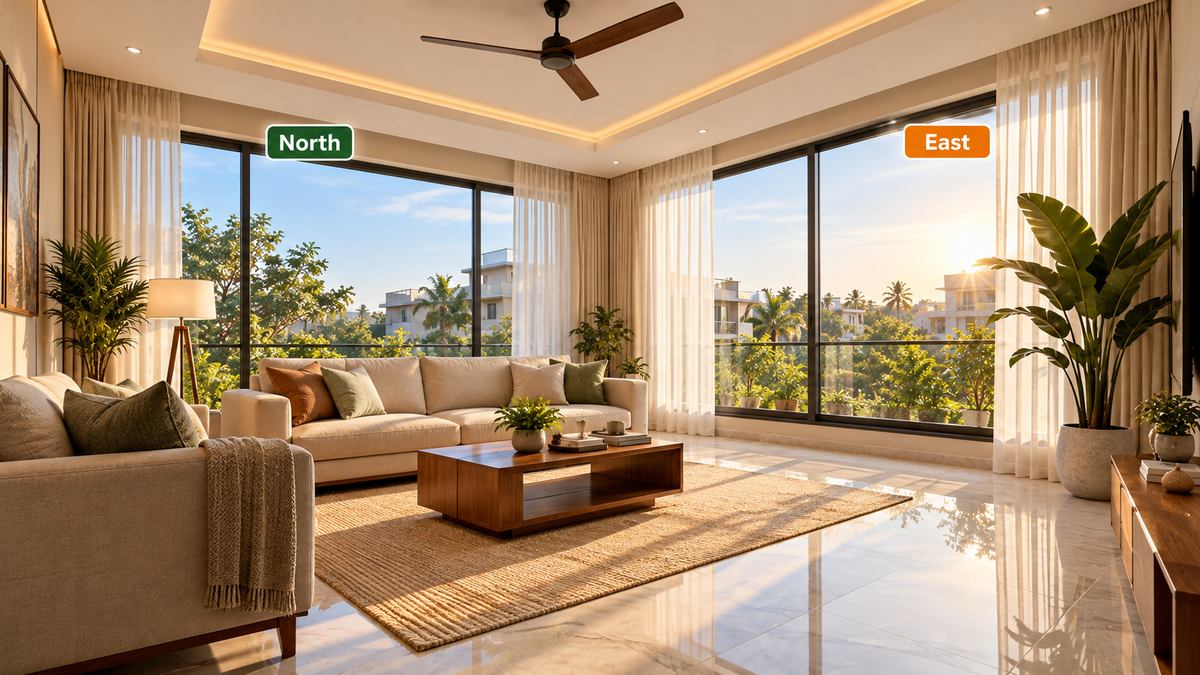
The living room should have its largest windows on the north or east wall. This keeps the room bright for guests and family through the day. Place the sofa so it does not block the window. Light, sheer curtains work best here.
Bedroom Windows
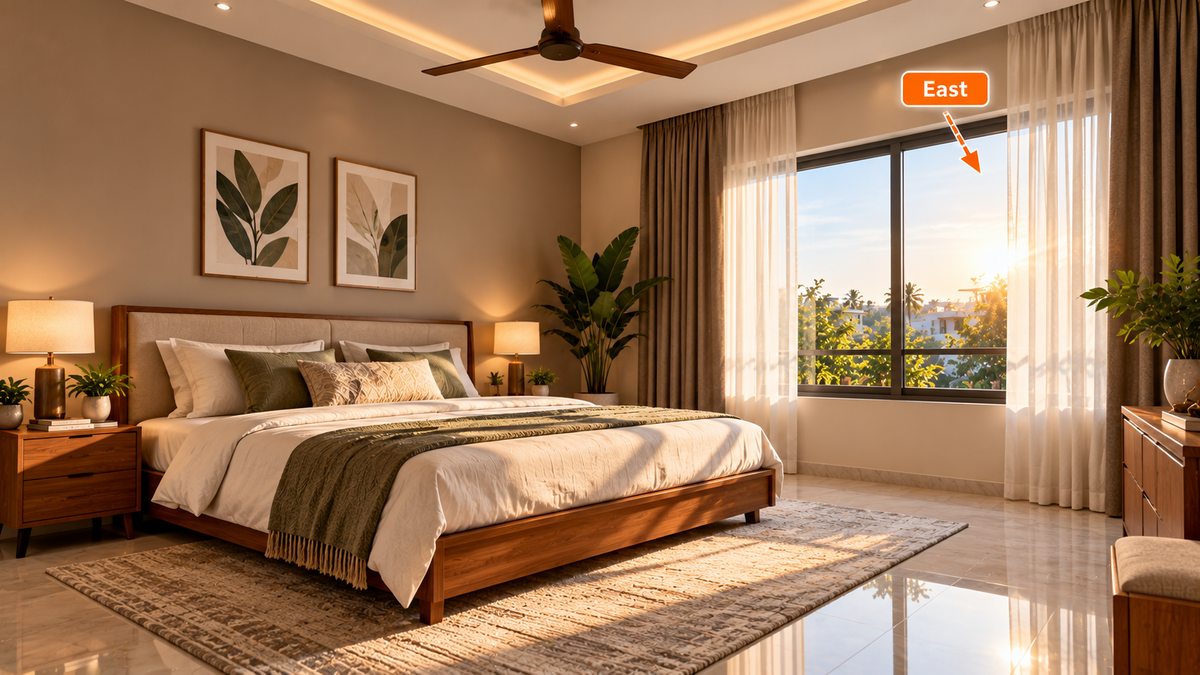
For Vastu for windows in the bedroom, keep windows on the east or north wall. The master bedroom is usually in the southwest, so avoid a large window on its southwest wall.
Do not place the bed directly under a window. Many Vastu guides say a solid wall behind your head gives better support and sleep. Use thicker curtains in the bedroom so you can block light at night.
Kitchen Windows
A kitchen window as per Vastu works best on the east wall. The ideal kitchen sits in the southeast, and cooking while facing east is preferred. A window on the east lets in morning light right where you work.
A northwest window is also fine for kitchens. Whatever the direction, the window should help remove smoke, heat and smells. Add an exhaust fan if the window alone is not enough.
Pooja Room Windows
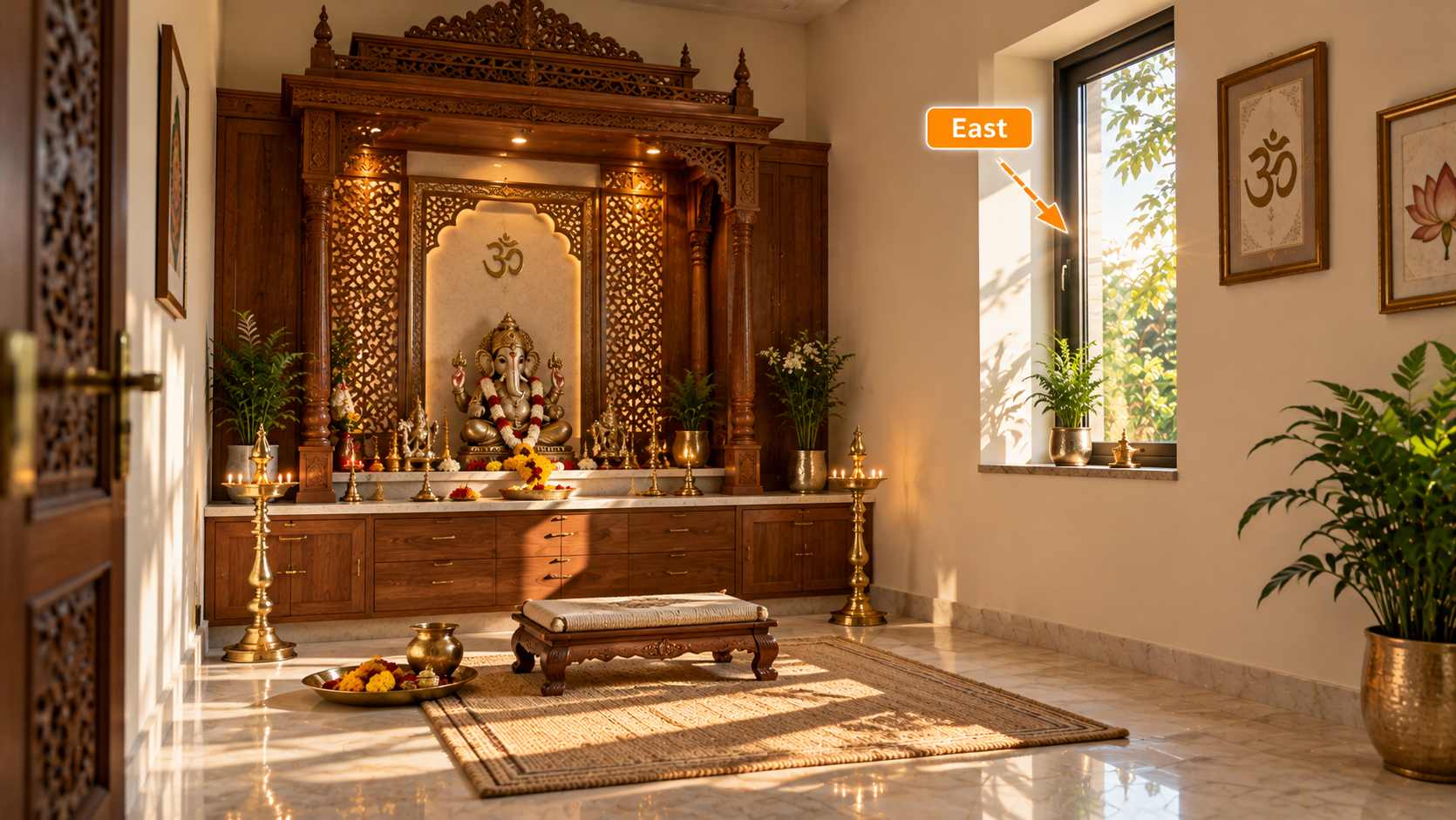
A window in the pooja room as per Vastu should be on the north or east wall. The northeast corner is the best place for the pooja room itself. Avoid a window on the south wall of the pooja room. Keep the window small to medium and the room well lit.
Study Room Windows
Students should face north or east while studying, as per Vastu. A window on the east or north wall gives good natural light on the desk. Place the desk beside the window rather than with your back to it. This keeps glare off your screen too.
Office and Work-From-Home Windows
In an office, sit facing north or east while you work. Most Vastu guides prefer a solid wall behind your chair, not a window. A window behind the desk is believed to leave you without support.
What if your office has a big window on the south wall? Do not sit with your back to it. Use heavy blinds to cut the afternoon heat. Place your desk so you face north or east.
Doors and Windows as per Vastu
Vastu treats doors and windows as the two main gateways for energy. So they are planned together.
Here is what Vastu suggests for doors and windows:
- Place windows opposite doors where possible, for good cross-ventilation.
- Keep the total number of doors and windows even.
- Make sure doors and windows open smoothly in a clockwise direction.
- Keep the main door the largest door in the house.
Do’s and Don’ts of Vastu for Windows
Small habits make a big difference to how your windows work.
Do’s:
- Keep window glass and frames clean.
- Make sure windows open smoothly, ideally outward or in a clockwise direction.
- Keep the largest windows on the north and east walls.
- Use light, airy curtains on north and east windows.
- Keep all windows in a room at the same height and size.
- Repair stuck hinges and loose handles quickly.
Don’ts:
- Do not keep broken glass or cracked frames. Vastu believes they trap negative energy.
- Do not block windows with heavy furniture or clutter.
- Do not use very dark colours around small windows.
- Do not place pictures of gods facing outward on a window.
- Do not build large windows on the southwest wall.
- Do not let windows creak or jam. Oil the hinges often.
South and Southwest Window Vastu Remedies
Already have a south or southwest window? You do not need to break the wall. Vastu offers simple remedies, and some practical fixes help too.
South Window Vastu Remedies
Try these south window Vastu remedies:
- Hang thick, heavy curtains in red, coral or maroon shades.
- Keep the window closed during hot afternoon hours.
- Place a few potted plants near the window.
- Add a chajja or external shade to block the harsh sun.
- Keep the south window smaller than your north and east windows if you renovate.
Southwest Window Vastu Remedies
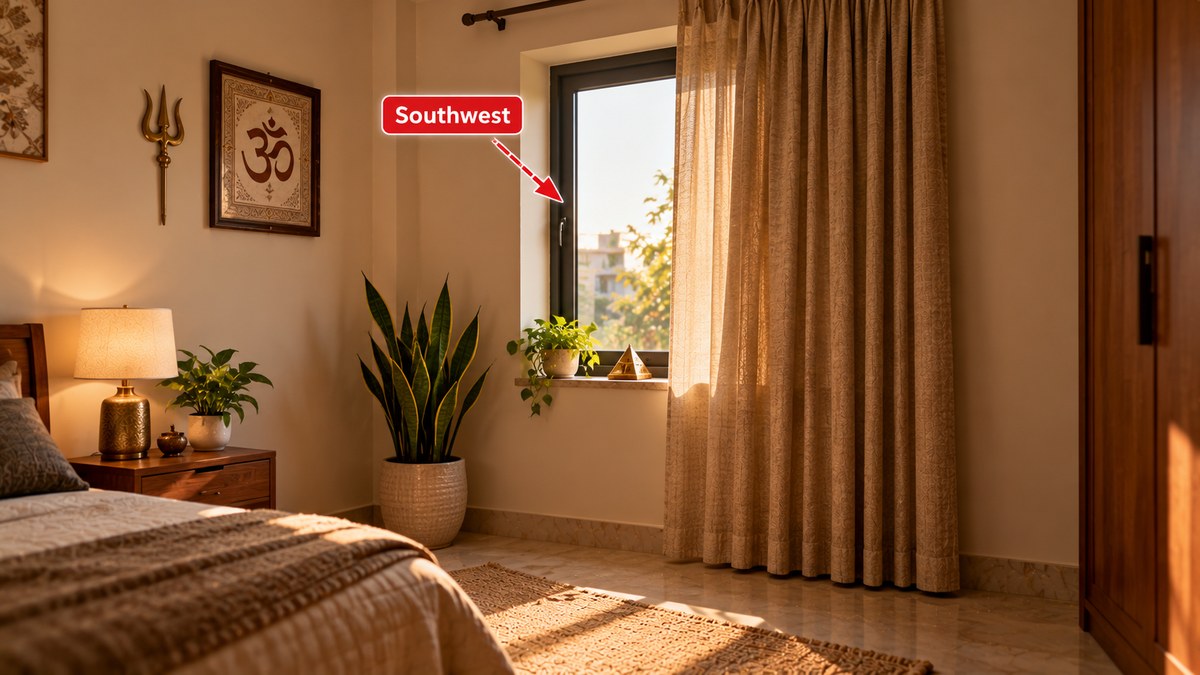
Try these south west window Vastu remedies:
- Place Om, Trishul or Swastika symbols near the window, as many Vastu followers do.
- Keep Vastu plants, a Vastu pyramid or wind chimes near the window.
- Use thick curtains in earthy shades like beige, brown or peach.
- Keep the window shut for most of the day, especially on hot afternoons.
- Place heavy furniture along the southwest wall, without blocking the window.
- Use blinds or frosted film for privacy and heat control.
These are traditional remedies followed by many families. If you plan a big structural change, like closing or moving a window, talk to an architect first.
Checking Window Direction Before You Buy a Home
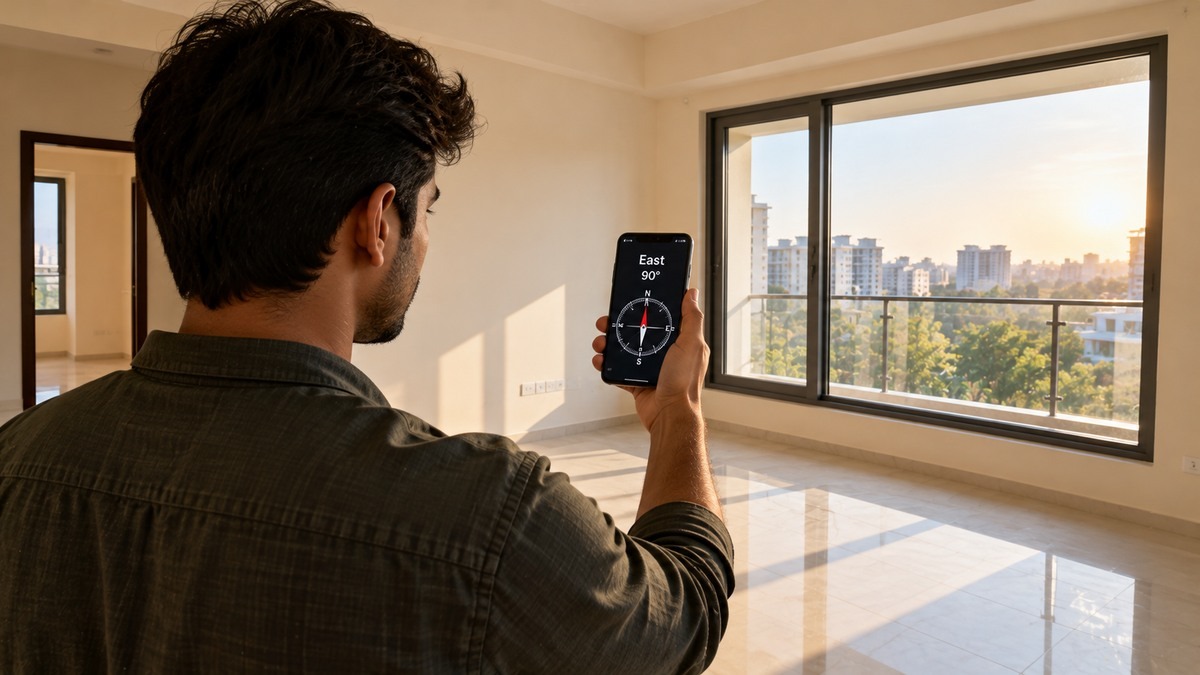
If you are buying a flat or house, check the window directions during your site visit. It is much easier than fixing them later.
Open a compass app on your phone. Stand near each main window and note the direction it faces. Check where the largest windows are. Ideally, they should face north, east or northeast.
Next, look at the floor plan. See which rooms have windows on the south or southwest. Check whether the master bedroom and pooja space get the right window directions. Also see if windows in each room allow cross-ventilation.
In apartments, you cannot always choose window directions. That is fine. Pick a flat where most windows face the better directions. Use the remedies above for the rest.
Explore More on Vastu
| Vastu shastra | Vastu for Pooja Room |
| 7 Hourse Painting | Money Plant Vastu |
| Water fountain Vastu | Vastu Tips for Broom |
Final Thoughts
Windows play a big role in Vastu Shastra. They manage the flow of light, air and energy in a home. The simplest rule is to keep large windows on the north, east and northeast walls. Keep south and southwest windows small and few.Beyond direction, keep an even number of windows, choose simple shapes and keep them clean and unblocked. If your home has a south or southwest window, simple remedies can help. Planned well, your windows can make your home both Vastu-friendly and comfortable to live in.
Frequently Asked Questions:
1. Which direction is best for windows as per Vastu?
The best direction for windows as per Vastu is north, east or northeast. Vastu suggests keeping your largest windows on these walls. North is linked to wealth, east to health and fresh energy, and northeast to peace and spirituality.
2. Should windows face east or west as per Vastu?
East is better. East-facing windows bring in the morning sun, which Vastu links with health and positivity. West-facing windows are acceptable, but keep them medium-sized. They get strong afternoon sun, so add shades or curtains to control the heat.
3. Are south-facing windows good as per Vastu?
South-facing windows are not preferred in Vastu. Traditional texts link the south with Yama. You can still have small south windows for airflow. Keep them smaller than your north and east windows, and use thick curtains or a chajja.
4. How many windows should be in a house as per Vastu?
Vastu suggests an even number of windows, such as 2, 4, 6 or 8. Most guides advise avoiding a total of 10 windows. Even numbers are believed to keep the energy in the home balanced.
5. Can we have 8 windows as per Vastu?
Yes, most Vastu guides list 8 as an ideal even number. Some guides also say to avoid multiples of 8, which creates confusion. If you follow a strict Vastu tradition, confirm this with your consultant before finalising your plan.
6. Can we have a window on the southwest wall?
It is best to avoid large windows on the southwest wall. If you already have one, keep it small and shut on hot afternoons. Use thick curtains in earthy shades, and place Vastu remedies like plants or a pyramid near it.
7. Which direction should a pooja room window face?
A pooja room window should face north or east as per Vastu. The pooja room itself is best placed in the northeast corner. Avoid windows on the south wall of the pooja room.
8. Is a window behind the office desk good as per Vastu?
No, most Vastu guides prefer a solid wall behind your chair. A window behind the desk is believed to leave you without support. Sit facing north or east, with the window to your side or in front of you.