Assam is moving closer to a major infrastructure project that could change more than how traffic crosses the Brahmaputra. The Gohpur-Numaligarh corridor, which includes India’s first underwater road-cum-rail tunnel, has a total capital cost of Rs 18,662 crore and is now moving towards the construction stage. The project is expected to cut the road distance between Gohpur and Numaligarh from around 240 km to 34 km and reduce travel time from nearly six hours to about 20 minutes.
For real estate, the bigger story is what happens around that connectivity. A faster link between the two sides of the Brahmaputra could improve access to industrial, logistics and commercial centres, creating new opportunities for housing and other real-estate segments as the region develops.
A 34-km corridor replacing a 240-km journey
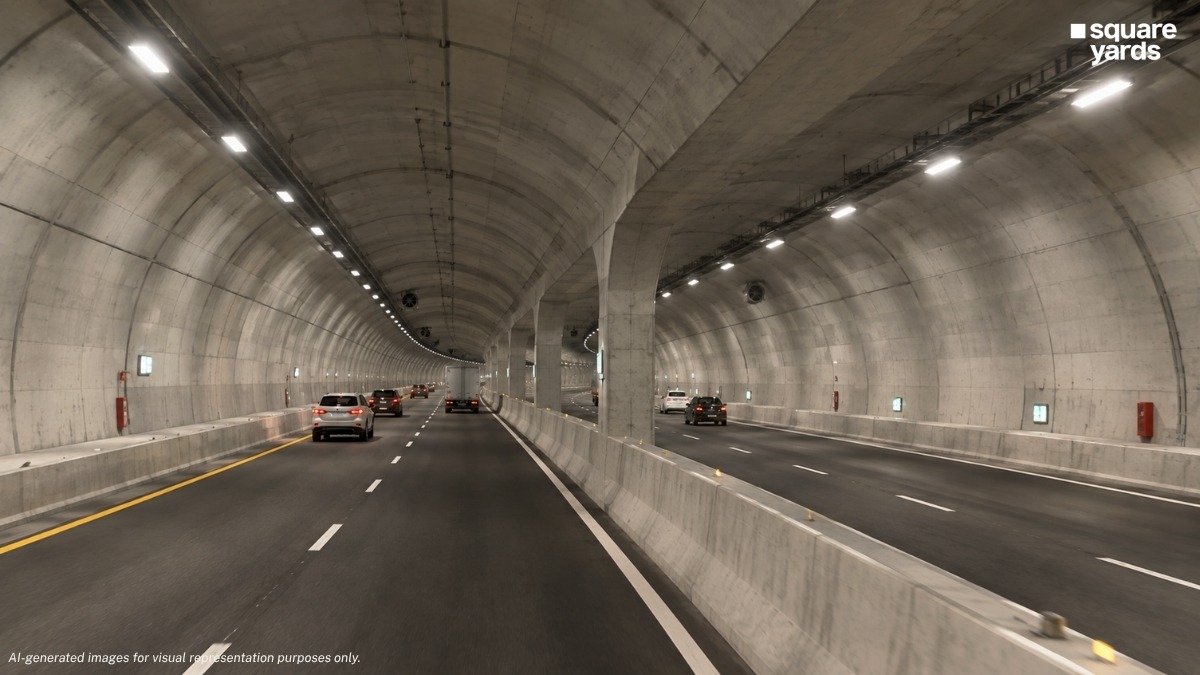
The approved project is a 33.7 km, four-lane, access-controlled greenfield corridor connecting Gohpur on NH-15 with Numaligarh on NH-715. At its centre is a 15.79-km twin-tube tunnel beneath the Brahmaputra, with two road lanes in each tube and railway infrastructure provided in one of the tubes. It will be built using Tunnel Boring Machine technology under the EPC model.
The connectivity gain is substantial. The existing route between Gohpur and Numaligarh is about 240 km and takes around six hours. Once the new corridor is operational, the journey is expected to fall to approximately 34 km and 20 minutes.
That is more than a reduction in travel time. It changes the accessibility of locations that have historically been separated by the Brahmaputra.
More than a tunnel
The project’s real significance lies in the network around it.
The corridor will connect NH-15 and NH-715 with two railway lines; the Rangia-Murkongselek section on the Gohpur side and the Furkating-Mariani loop line on the Numaligarh side. It will also connect four major railway stations, two airports and two inland waterway terminals.
The wider network includes 11 economic nodes, three social nodes, two tourist nodes and eight logistics nodes. The identified tourist nodes include Kaziranga National Park and the Deopahar Archaeological Site.
That multimodal connectivity gives the project a much larger economic and real-estate angle than the tunnel alone.
Gohpur, Numaligarh and the wider corridor could see the first impact
The immediate real-estate impact is likely to emerge around Gohpur and Numaligarh, where the tunnel will create a much faster connection across the Brahmaputra. But the project’s influence could extend towards Arunachal Pradesh, Nagaland and other parts of the Northeast as connectivity between major economic centres improves.
Better access can make previously peripheral locations more attractive for industrial, logistics and commercial activity. Numaligarh could particularly benefit from the corridor’s freight and industrial potential, while Gohpur could see greater interest in residential and mixed-use development as its connection to the wider economic network improves.
The logistics component could be especially significant. With eight logistics nodes planned across the wider network, the corridor could create demand for warehouses, distribution centres, industrial land and supporting commercial assets. Tourism could add another layer, with Kaziranga and Deopahar identified as tourist nodes.
The government estimates that the project could generate around 80 lakh person-days of direct and indirect employment during its development. But for real estate, the longer-term impact will depend on what follows the infrastructure, whether businesses, industrial activity and employment expand enough to create sustained demand for housing, rentals and commercial space.
The real estate story starts beyond the tunnel
The project’s bigger significance is that it could alter the economic geography of a wider part of the Northeast by bringing markets, employment centres and transport networks closer together.
That creates a potential chain reaction. Better connectivity can attract economic activity, which can create jobs and sustained employment can generate demand for housing, rentals and commercial space.