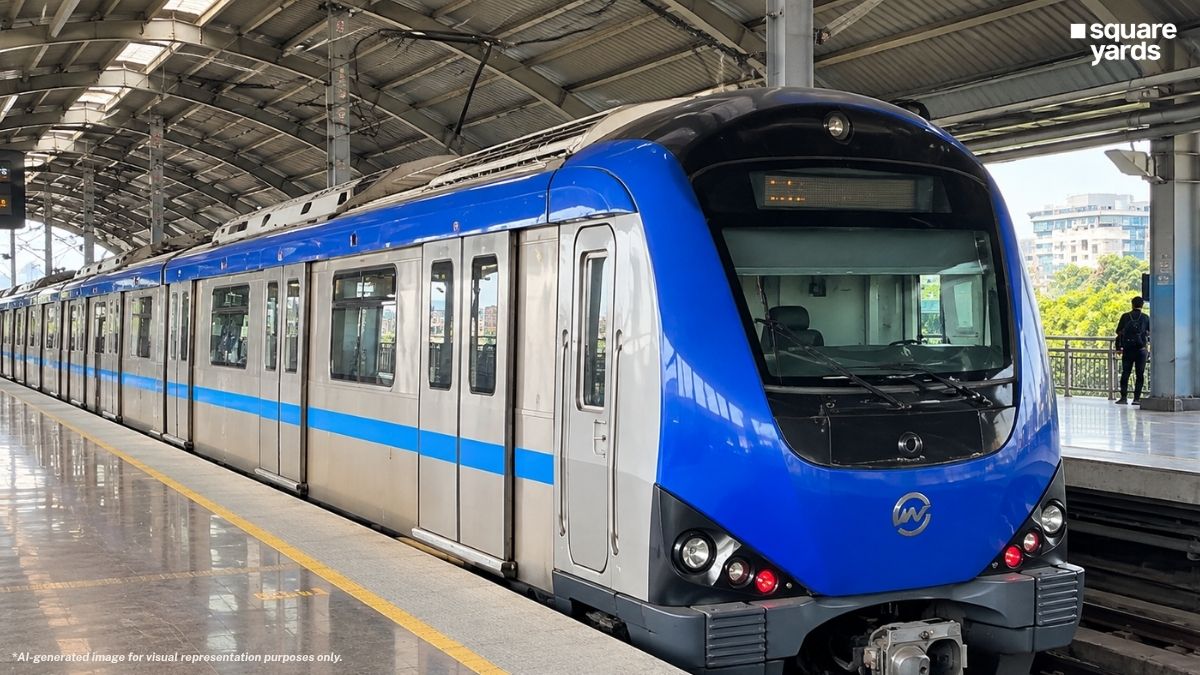
The proposed Vizag Metro project is awaiting the Centre’s final approval, with the Andhra Pradesh government seeking clearance to take the Phase 1 network forward. Once approved, the state plans to fast-track route finalization, remaining land acquisition and construction-related tendering for the project.
The proposed Phase 1 network will cover 46.23 km across three elevated corridors with 42 stations. These corridors will link established neighborhoods with major industrial and residential areas, bringing some of the city’s more affordable, emerging and premium property markets into a single transit network.
What the first phase of Vizag Metro will cover
Estimated to cost around Rs 11,498 crore, the Vizag Metro Phase 1 will include a 46.23-km elevated metro network. The longest stretch, from Steel Plant Junction to Kommadi, will span 34.40 km with 29 stations. The other two corridors will connect Gurudwara Junction to the Old Post Office over 5.08 km and Thatichetlapalem to Chinna Waltair over 6.75 km.
The construction tender has already been floated for the network, including 20.16 km of double-decker flyover-cum-metro viaduct. Approximately 99.8 acres of land have been identified for Phase 1, most of which is owned by the government or public institutions.
How Vizag Metro could shape the property market
The metro’s impact on the property market is likely to differ across the three corridors. The Steel Plant Junction-Kommadi corridor has the clearest potential to influence residential expansion because it connects an established industrial belt with the northern side of the city.
For the other two corridors, the effect is more likely to be concentrated around existing urban and commercial areas. Rather than creating completely new property markets, improved public transport could make established neighborhoods more accessible and support rental, retail and residential demand.
The localities most likely to be impacted by the proposed Metro network include:
Madhurawada is emerging as a key growth market
Madhurawada is one of the key residential markets at the northern end of the proposed network. Currently, the average asking price in Madhurawada is Rs 5,250 psf, according to Square Yards.
The locality’s position within Visakhapatnam’s northern growth belt makes the proposed metro particularly relevant. Better access to the wider city could support its appeal among buyers looking for residential options outside the more expensive established areas.
Kommadi could gain from stronger links to the city
As the northern endpoint of the 34.40-km Steel Plant Junction-Kommadi corridor, Kommadi’s biggest advantage could be improved access to the city’s industrial and established residential areas. This could make it more attractive to buyers who want newer residential markets without being too far from major employment centers. Currently, the average property price in Kommadi is Rs 5,300 psf.
Gajuwaka offers a more affordable entry point
Gajuwaka offers a different property proposition. Its average property rate is around Rs 3,950 psf, making it considerably more affordable than Kommadi, Madhurawada and Chinna Waltair.
Its location within Visakhapatnam’s industrial belt adds another advantage. Better metro access could make it easier for residents to travel between housing and employment areas, while its lower price point could keep it relevant for buyers and tenants looking for relatively affordable housing.
Gopalapatnam could see an accessibility-led impact
Unlike the northern growth markets, the metro’s role in Gopalapatnam is more about improving access to an existing residential market. Its location along the broader Steel Plant Junction-Kommadi route could make it easier for residents to reach employment and commercial areas across the city.
Chinna Waltair to add a premium market to the network
Chinna Waltair is at the premium end of the property markets covered by Phase 1, with an average asking price of Rs 7,750 psf. The proposed Thatichetlapalem-Chinna Waltair corridor could strengthen the locality’s appeal by adding better public transport to an already established residential market.
A connectivity boost for Vizag’s real estate market
The proposed Visakhapatnam Metro is significant for the city’s real estate as the corridors cut across markets with very different price points and development potentials. The planned corridors connect industrial catchments with established neighborhoods and newer residential pockets, bringing these markets into closer reach.
Over time, the network can influence how the city’s residential and commercial activity expands. The impact may not be limited to properties around individual stations. Better links between employment centers and housing markets could gradually support a more connected urban property market across Visakhapatnam.