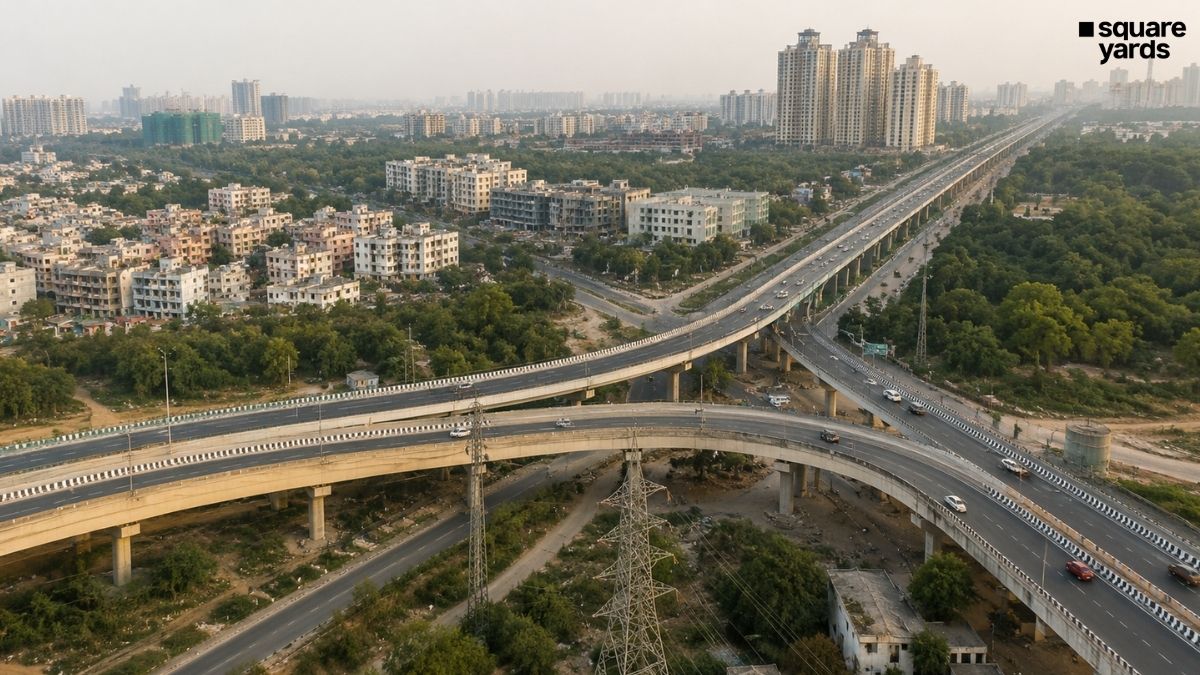
Infrastructure development is becoming an important factor in the growth of India’s suburban real estate. New highways, ring roads, tunnels and suburban rail corridors are improving access to major employment centers and creating new opportunities for residential, commercial and industrial development outside established city areas.
The impact, however, is not the same across cities. In some areas, better connectivity is strengthening demand in established residential markets. In others, new roads are making peripheral land more accessible for industrial and logistics activity, which will eventually create demand for housing around employment centers.
Mumbai Metropolitan Region (MMR) is seeing several such projects simultaneously, while Bengaluru, Hyderabad, Pune, Chennai and Gurugram are also expanding their transport networks into their outer areas.
Thane-Borivali Twin Tunnel to cut travel time across MMR
The Thane-Borivali Twin Tube Tunnel will make MMR’s important east-west routes much shorter. The 11.84-km project includes 10.25 km of twin tunnels under the Sanjay Gandhi National Park. The existing road journey between Thane and Borivali can take around 1 to 1.5 hours. The tunnel will reduce travel time to about 15 minutes once completed.
The real estate impact is more relevant for areas that already have housing but face longer travel times to other parts of the MMR. The tunnel could make locations such as Ghodbunder Road and Kasarvadavali more practical for buyers whose work or daily commute spans Thane and Mumbai’s western suburbs.
Ghodbunder Road is already an established residential market rather than an emerging location waiting for its first major development. The current average property rate in the area is already about Rs 14,500 per sq ft. That means the tunnel is more likely to strengthen an existing housing market than create a new one.
Goregaon-Mulund Link Road to close a key east-west gap
The Goregaon-Mulund Link Road is addressing another long-standing gap in Mumbai’s road network. The 12.2-km project will connect Goregaon in the western suburbs with Mulund in the east. This will include 2 tunnels under the Sanjay Gandhi National Park. As of now, it takes around 75-80 minutes to travel from Mulund to Goregaon. Once the road is operational, this travel time will be reduced to 20-25 minutes.
For property markets, the project’s importance lies in its connection to established residential and employment areas. Mulund, Bhandup and Nahur on the eastern side can get a more direct road connection to Goregaon and the wider western suburban belt.
The project is therefore unlikely to create a completely new housing market. Its more immediate effect could be on the relative attractiveness of existing residential areas by reducing the road distance between homes and employment centers. This could also make redevelopment and new housing supply in well-connected eastern suburbs more relevant as the road network improves.
Panvel-Karjat railway brings Karjat closer to Mumbai
The Panvel-Karjat suburban railway corridor is taking a different route to improving access. The route is around 29.6 km long and includes new tracks, bridges and tunnels. The construction is now in its final stages.
The line will connect Karjat with Panvel and the wider suburban railway network. This is significant for Karjat, where property demand has traditionally included a large second-home and weekend-home component.
A suburban rail connection can add another layer to that market by making regular commuting more practical. The effect will depend on train frequency, station access and connections beyond Panvel, but the project gives developers a stronger basis to consider housing aimed at regular commuters rather than only buyers looking for second homes.
Bengaluru suburban rail opens another route to the north
Bengaluru’s suburban rail project is planned as a 148-km network with four corridors and 57 stations. One of the most important routes for the northern side of the city is the corridor connecting KSR Bengaluru City with Devanahalli. The network will connect several outer areas with the city’s established employment centers.
The project, however, has faced delays. The original completion target was 2026, but none of the four corridors is operational yet. Current reports indicate that the project could extend to 2028.
That is important when looking at property prices in North Bengaluru. Devanahalli has already recorded strong growth due to the airport, highway connectivity and development along the airport corridor. The average property price in Devanahalli is around Rs 9,250 per sq ft, having risen sharply over the past few years.
Suburban rail would add another transport option to a market that is already established. Its effect is therefore likely to be stronger on areas close to stations and on locations where road connectivity remains a constraint, rather than across the entire North Bengaluru market.
Hyderabad RRR to connect peripheral areas with key growth corridors
Hyderabad’s Regional Ring Road (RRR) is different from the urban road projects in Mumbai. The proposed road is expected to create a larger regional network around the city, connecting several districts outside the existing Outer Ring Road.
The project is still in the planning and land acquisition stage. In July 2026, the Center said its investment decision would be based on the detailed project report. The Telangana government has agreed to share 50% of the land acquisition cost.
At the same time, HMDA has expanded the Hyderabad Metropolitan Region up to the RRR, with a buffer of up to 2 km. This will bring a much larger peripheral area into the metropolitan planning framework.
The property impact of Hyderabad Regional Ring Road is therefore likely to extend beyond housing. Better connections among highways, industrial areas, and the city can support logistics, warehousing and manufacturing activities. Residential development will eventually follow in areas where jobs and supporting infrastructure are also added.
Pune Ring Road connects the city’s growing outer markets
Pune’s expanding road network is creating better links between the city and its outer residential and industrial areas. The proposed 173-km Pune Ring Road is planned to connect key employment corridors around the city. Along with that, PMRDA’s separate Inner Ring Road is planned over 83.12 km, which includes connectivity to important locations such as the airport, Hinjewadi and Chakan.
Pune’s residential growth has already moved well beyond the established city areas. Wagholi, Punawale, Charholi and other outer locations have seen substantial project activity as buyers look for larger homes at prices below those in the more established parts of the city.
But infrastructure doesn’t automatically mean unlimited price growth. Wagholi, for example, has seen property prices rise enough to reduce some of its earlier affordability advantage. The market recorded a fall in annual transactions in the area. The next phase of development will therefore depend on whether new infrastructure is followed by improvements in local roads, public transport, and social infrastructure.
Chennai peripheral ring road to support industrial growth
Chennai’s Peripheral Ring Road has a stronger industrial and logistics angle. The planned 133.64-km corridor is intended to improve connectivity between the northern port areas and locations such as Sriperumbudur, Oragadam and Mamallapuram.
The project is being developed in stages, and the final stretch between Singaperumal Koil and Mamallapuram is still moving through the tender process in 2026.
The real estate impact is already visible in Chennai’s industrial belt. Sriperumbudur and Oragadam have become major manufacturing and warehousing locations, supported by the presence of automobile, electronics and other manufacturing companies.
Better road links can reduce the time and cost of moving goods between factories, warehouses, ports, and highways. That can increase demand for industrial land and logistics facilities. Residential demand can also benefit where industrial activity creates a larger local workforce, but that effect depends on the pace of job creation and the availability of housing.
Gurugram road projects improve access to Sohna and southern sectors
Gurugram’s Southern Peripheral Road (SPR) is already surrounded by extensive residential and commercial development. The next phase of road improvements aims to reduce congestion and improve connections among SPR, NH-48, Sohna Road, Dwarka Expressway and the Delhi-Mumbai Expressway.
Authorities have approved a cloverleaf interchange at Vatika Chowk to improve movement between these major corridors. A separate signal-free corridor is also planned to make the stretch of the SPR between NH-48 and the Vatika Chowk signal-free via an elevated road and related infrastructure.
The property market has already responded strongly along SPR and Sohna. The sectors around SPR have seen numerous residential and commercial launches over the past five years, particularly between Sectors 69 and 79. Improved connectivity between SPR, Sohna, and the major expressways could make these locations more accessible to people working in different parts of Gurugram and Delhi-NCR.
What changes for India’s suburban real estate
The bigger change is in where people can realistically choose to live and where developers can build. As connectivity improves, locations that were once too far from major employment and business centers can become viable residential markets, while established suburbs will gain from shorter commutes. That is where the infrastructure push is likely to leave its strongest mark on India’s suburban real estate.