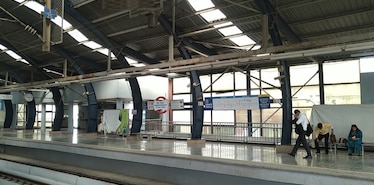

- Strong metro access makes daily travel easier.
- Established markets handle most everyday needs.
- Good mix of schools, coaching centres, and hospitals nearby.
- Central East Delhi location with access to key roads.
- Stable residential environment with long-term residents.
- Regular demand for rental housing.
Locality Snapshot
About Preet Vihar, Delhi
Advantages & Considerations
Why choose Preet Vihar for Living?
An honest look at what residents love — and what to watch out for.
- Traffic builds up on Vikas Marg during peak hours.
- Parking can be difficult in narrower lanes.
- Older buildings in some parts need renovation.
- Limited space for new large-scale projects.
- Noise increases near market and main road areas.
Recent & Future Developments
What's New in Preet Vihar, Delhi
Live news feed — last updated 21 September 2026
21 Sept2026
Barapullah Phase III Flyover Set for Inauguration on September 29
The long-delayed Barapullah Phase III elevated corridor is scheduled to be inaugurated on September 29. This five-kilometer corridor will provide a signal-free link between Mayur Vihar Phase I in East Delhi and Sarai Kale Khan, with onward connectivity to AIIMS and South Delhi.
Source: Hindustan Times
Explore Key Amenities & Commute
What's Around Preet Vihar, Delhi
Schools, transit, healthcare and essentials within walking distance — plus quick travel-time estimates to Delhi's top business hubs.

Nearby Places
-
Durga Mandir0.0 km
-
Swami Vivekanand University0.1 km
-
Metro Hospital And Cancer Institute0.1 km
-
F Block Digamber Jain Temple0.2 km
-
Icici Bank Preet Vihar0.2 km
Plan your Commute Travel time from Preet Vihar, Delhi
Please Select the Starting Point to calculate the travel time

Data Intelligence
Price Insights for Preet Vihar, Delhi
Quarterly trends, asking-price distribution, transactions and rental supply — powered by Square Yards' transaction graph.
Property Price Insights in East DelhiProperty Demand vs Supply
Where the Market is Moving
Real-time signals from buyer searches and active inventory in Preet Vihar, Delhi.
Trusted Developers
Top Builders in Preet Vihar, Delhi

Meru Resorts LLP
Delhi
- 1Total Projects
Browse Inventory
Properties Available in Preet Vihar, Delhi

Builder Floors in Preet Vihar Delhi
for Sale

Independent Houses in Preet Vihar Delhi
for Sale

3 BHK Flats
in Preet Vihar Delhi for Sale

4 BHK Flats
in Preet Vihar Delhi for Sale
Neighborhood
Localities in & around Preet Vihar, Delhi
Compare top neighbouring localities and discover micro-markets nearby.

Avg Rental
₹ 23/sq. ft
Rental Yield
3.9%
6
For Sale
40
For Rent
Explore more Localities Nearby
Share Your Preet Vihar, Delhi Experience
Share your experience and help others make better property decisions.
Write a Locality Review

 Earn reward points
 after approval.
FAQ
Frequently Asked Questions
Find answers to common queries about Preet Vihar, Delhi.
Is Preet Vihar, Delhi, a good place to live?
For many, Preet Vihar works because things are already set up. Markets, metro access, and daily services are close by. Within Delhi, it suits people who prefer a ready neighbourhood rather than a newly developing area.
What is the average property price in Preet Vihar?
Prices in Preet Vihar usually move around 30,150. You will still find variation within ₹ 1.7 Crore to 16 Crore depending on whether the property is newly rebuilt or part of an older structure.
How is the rental market in Preet Vihar?
Rentals here stay active because people want to live near metro routes and main roads.
What types of properties are available in Preet Vihar?
Many are builder floors or rebuilt homes, which is reflected in 57 across different blocks.
How is connectivity in Preet Vihar?
Metro connectivity near Preet Vihar Metro Station, Nirman Vihar Metro Station, Karkardooma Metro Station, IP Extension Metro Station, Mandawali West Vinod Nagar Metro Station supports easy daily commuting across the city.
Which nearby localities are close to Preet Vihar?
Areas listed under IP Extension, Patparganj, Chitra Vihar, Hargobind Enclave, Swasthya Vihar is around Preet Vihar and form part of the same East Delhi residential stretch.
Are there schools, hospitals, and malls near Preet Vihar?
Hospitals such as Metro Hospital And Cancer Institute, Taneja Hospital, Centre for Sight Eye Hospital, Cosmos Institute Of Mental Health And Behavioural Sciences Delhi Psychiatry Center, Dental Zone Academy are just a few minutes away. For shopping, Croma, Kidz Lounge, Meditrix Education, Dizzi Planet, Madhu Vihar Market and local markets handle most requirements.
What is the real estate development status of Preet Vihar?
There are not many large new projects. Growth in Preet Vihar mostly comes from rebuilding older homes.
What do residents like and dislike about Preet Vihar?
Overall, feedback balances strong connectivity with typical challenges of an older, busy neighbourhood.
What is the PIN code of Preet Vihar, Delhi?
The area falls under the PIN code 110092, which identifies Preet Vihar within Delhi for postal and address use.